

Post-op hygiene without the overhead reach
How to Wash Your Hair After Shoulder Surgery
Without Overreaching
The first hair wash after shoulder surgery can feel oddly enormous. Shampoo becomes slippery engineering. A towel becomes a negotiation. Your good arm suddenly has a full-time job, and your healing shoulder sits nearby like a royal guest who must not be disturbed.
This guide is for the practical middle ground: you want clean hair, but not at the cost of pulling on an incision, breaking sling rules, twisting in the shower, or reaching overhead “just for one second.” That one second is where many bathroom disasters begin, wearing a tiny shampoo crown.
You will learn how to set up a no-overreach shampoo station, choose between shower, sink, dry shampoo, caregiver help, or salon support, and recognize when washing should wait until you call your surgical team. Your surgeon’s instructions always win, but a calm plan makes those instructions easier to live with.
Reduce reaching
Use lower setups, pump bottles, and head movement instead of shoulder movement.
Protect the incision
Avoid soaking, scrubbing, and guessing about dressings or drainage.
Stay steady
Plan for balance, pain medicine fog, wet floors, and caregiver timing.
🫧 The goal is not a perfect salon wash. The goal is clean hair with a calm shoulder, dry incision care, and zero bathroom acrobatics.
Snapshot: This article is for shoulder surgery patients, caregivers, and family members who need a safe hair-washing routine without lifting the surgical arm. You will compare shower, sink, dry shampoo, caregiver, and salon options, then build a simple 5-minute setup before the next wash.
Use this as a planning guide, not a replacement for your discharge paperwork or surgeon’s instructions.
Table of Contents
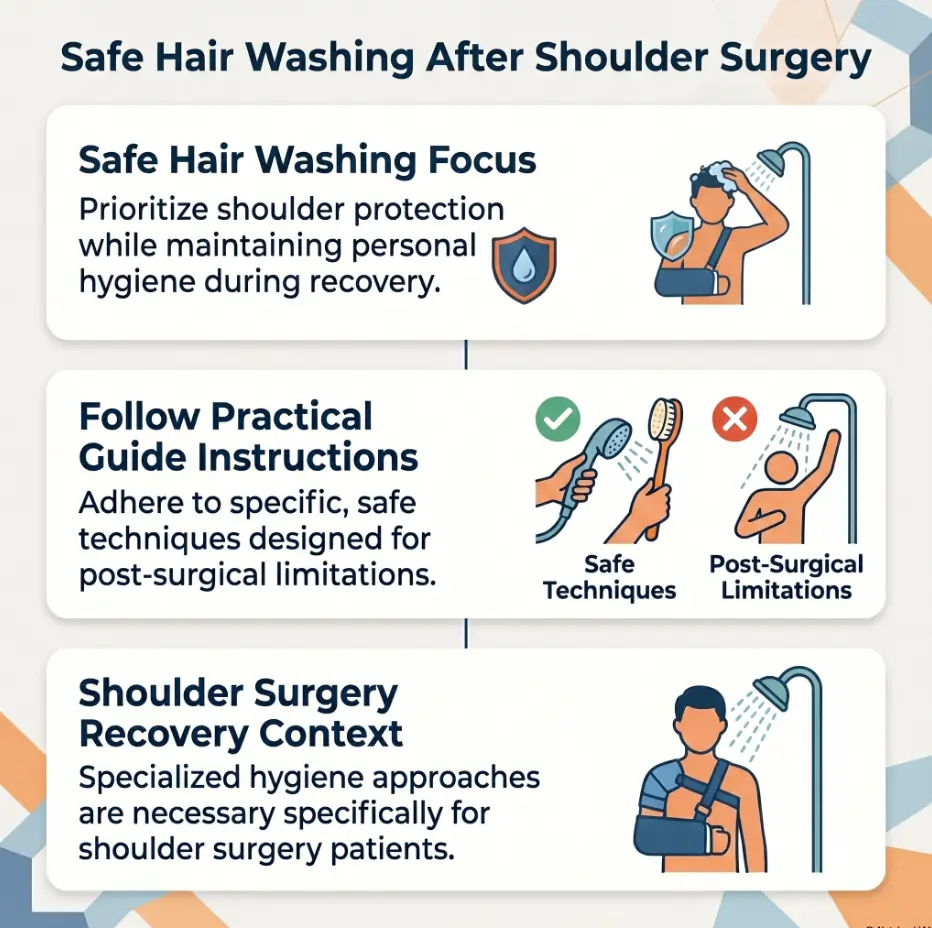
Safety First: Check Your Shoulder Surgery Rules Before Water Starts
Shoulder surgery recovery is not one tidy instruction sheet shared by everyone. A person recovering from shoulder arthroscopy may have different limits than someone recovering from rotator cuff repair, labrum repair, biceps tenodesis, fracture fixation, or shoulder replacement. Even two people with the same procedure can have different restrictions because repairs, incisions, dressings, and surgeon preferences vary.
That is why this guide keeps returning to one steady rule: your surgical team’s protocol outranks every internet tip, including the friendly ones wrapped in clean formatting and good intentions. Hair washing is ordinary life, yes, but after shoulder surgery ordinary life becomes a tiny obstacle course. The safe route is usually the boring route, and boring is beautiful when the floor is wet.
Before you wash your hair, confirm three things: whether you are cleared to shower, whether your dressing can get wet, and whether your sling or immobilizer may be removed for hygiene. Do not assume the answer because a neighbor, forum post, or cousin’s roommate had a different timeline. Shoulder protocols are fussy little creatures.
Who this guide is for
This guide is for adults who have been cleared by their surgical team to begin some form of bathing, showering, or hair care but feel nervous about reaching, slipping, or disturbing the incision. It is also for caregivers helping with the first shampoo after surgery, which can be more emotionally loaded than expected.
It may also help family members who are trying to make the bathroom safer before the patient comes home. That might mean moving shampoo from the shower floor to a waist-height shelf, installing a handheld showerhead, or realizing that a shower chair is not a dramatic announcement of frailty. It is furniture with a job.
Who should skip the routine for now
Skip hair washing and contact your surgeon’s office if your wound is draining, bleeding unexpectedly, opening, smelling unusual, or surrounded by spreading redness. Also pause if you have fever, chills, worsening swelling, sharp new pain, numbness, tingling, new weakness, dizziness, or confusion from medication.
Clean hair is pleasant. Avoiding complications is more pleasant. If your body is waving a red flag, do not try to shampoo around it like a determined raccoon with a calendar appointment.
Key takeaway
- Your surgeon’s shower, dressing, and sling instructions come first.
- Hair washing should not require lifting the operated arm overhead.
- Drainage, fever, sharp pain, or dizziness means the wash should wait.
Apply in 60 seconds: Find your discharge instructions and circle the shower, dressing, and sling rules before planning your next wash.
Safety / disclaimer block
This article is educational and does not replace medical advice. Shoulder surgery aftercare can differ widely by procedure, repair strength, incision status, dressing type, and surgeon preference. If your instructions say not to shower, not to remove the sling, not to bend, or not to get the dressing wet, follow those instructions and call your surgical team if anything is unclear.
If you live alone, have balance problems, take sedating pain medicine, or feel faint in hot showers, consider having someone nearby for the first hair wash. They do not have to perform a spa ceremony. They may simply stand outside the door, listen for trouble, and help you avoid a wet-floor plot twist.
Are You Actually Cleared to Wash Your Hair Yet?
The first question is not “Which shampoo should I use?” It is “Am I allowed to get wet?” Many post-op instructions separate showering, soaking, dressing changes, and incision exposure. That distinction matters. A quick shower may be allowed while a bath, pool, hot tub, or long soak is still off limits.
Some patients are allowed to shower after a certain number of days if the wound is dry. Others must keep a dressing dry until a follow-up visit. Some waterproof dressings can tolerate brief water contact, while others should be protected carefully. Your paperwork may mention waterproof bandages, gauze, adhesive strips, staples, glue, or steri-strips. Each has its own small personality.
Shower timing depends on your incision, dressing, and procedure
Shoulder arthroscopy incisions are often small, but small does not mean “ignore them.” Shoulder replacement, fracture repair, and open procedures may involve larger incisions and different wound care instructions. Rotator cuff repair may require careful sling use for weeks, especially early in recovery, because the repaired tendon needs protection.
Your shower timeline may also depend on whether your incision has stopped draining. If the wound is still leaking fluid, your team may want you to keep it dry or change dressings in a specific way. If you are unsure whether drainage is normal, call. Nobody at a surgeon’s office is shocked by wound questions. They hear them all day, along with medication questions, sling questions, and the occasional “Can I sleep like a pretzel?” question.
“No soaking” means more than no bathtub
When instructions say not to soak the incision, think broadly. That usually means no bath, pool, hot tub, lake, long steamy soak, or standing under water so long that the dressing becomes soft and defeated. Even if you are allowed to shower, hair washing should be brief and targeted.
Let water pass gently where allowed. Do not scrub incision areas. Do not peel adhesive strips unless your instructions say to. Do not aim a strong spray at the wound. Afterward, pat dry with a clean towel instead of rubbing. Patting may feel like a tiny Victorian ritual, but it protects healing skin.
Quick clearance checklist before washing
If you cannot confidently check these items, choose a lower-risk bridge option: dry shampoo, a caregiver-assisted sink wash, or a call to your surgeon’s office. The goal is not bravery. The goal is a clean scalp without turning recovery into a bathroom incident report.
Build a One-Handed Shampoo Station Before You Get Wet
A safe hair wash begins before water touches your head. Once you are wet, chilly, medicated, and trying not to drip on the floor, every missing item becomes a little emergency. The shampoo is too low. The towel is across the room. The clean shirt is folded on a chair that suddenly seems to live in another county.
Set up your hair-washing area while fully dressed, dry, and unhurried. Move everything to waist height or chest height on the non-surgical side. You should not need to bend to the floor, reach overhead, twist sharply, or pull open stiff caps with two hands.
Put shampoo, towel, comb, and clothes at waist height
Think of waist height as your recovery sweet spot. It keeps items visible and reachable without overhead motion. Use a counter, rolling cart, shower caddy hung at a safe level, or sturdy stool outside the shower. Do not place bottles on the shower floor unless you enjoy playing post-op bottle bowling.
Lay out a clean towel before you start. If you have long hair, add a second small towel for blotting. Put clean clothes where you can reach them without opening high drawers or pulling heavy closet doors. The fewer decisions you make while wet, the better.
Choose pump bottles instead of slippery flip caps
Pump bottles are tiny recovery luxuries. A flip cap can require grip, pressure, and awkward wrist angles. A pump lets your good hand do the work while your operated arm stays close and quiet. If your favorite shampoo comes in a stubborn bottle, pour some into a clean pump container before surgery or before your first wash.
Use less shampoo than usual. A quarter-size amount is often enough for a careful scalp wash, especially if you are not styling heavily. More shampoo means more rinsing, more time, and more temptation to reach behind your head. Foam is not a moral achievement.
Make the floor boring: non-slip mat, no towel traps
A safe bathroom floor should be boring in the best possible way. Use a non-slip mat inside the shower if approved for your setup. Place an absorbent bath mat outside the shower, but avoid loose towels that slide, bunch, or catch your foot. If you use a walker, cane, or caregiver support, keep the path clear.
Hot water can make some people lightheaded, especially while taking pain medicine. Warm is enough. If you feel woozy, sit, stop, and ask for help. Your hair can survive another day of questionable texture. Your shoulder and skull deserve better odds.
No-Overreach Hair Wash Flow
1. Confirm
Shower, dressing, and sling rules.
2. Choose
Shower, sink, dry shampoo, or help.
3. Lower
Place supplies at waist height.
4. Support
Keep operated arm close and protected.
5. Stop
Pain, drainage, dizziness, or confusion.
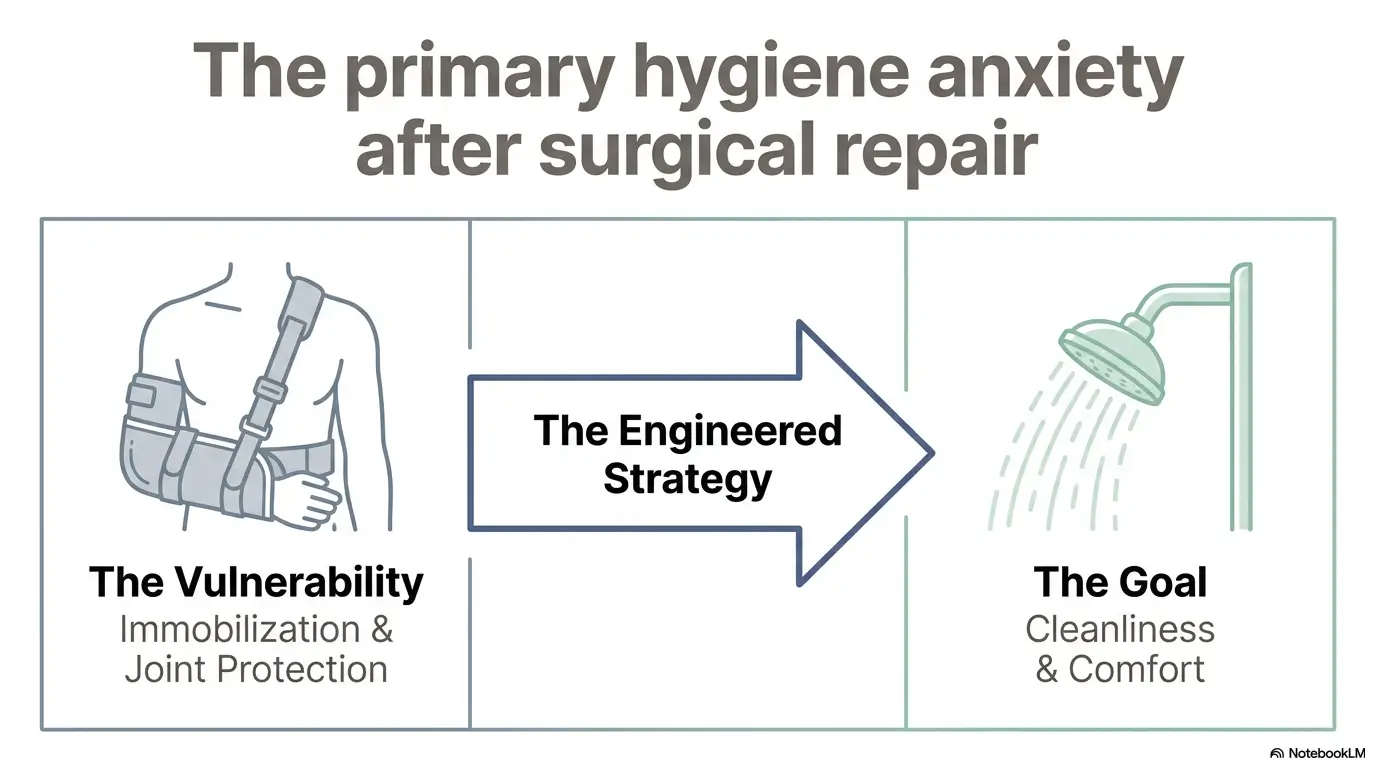
Method 1: Handheld Showerhead With Your Non-Surgical Arm
A handheld showerhead is often the cleanest, most controlled method once showering is allowed. It lets you bring water to your head instead of bringing your shoulder into risky positions. The trick is to move your head, torso, and water source while keeping the surgical arm supported and close to the body.
Before starting, test the motion without water. Sit or stand where you plan to wash. Hold the showerhead with your non-surgical hand. Bend your head slightly forward and to the side. Can you wet the scalp without lifting the operated elbow away from your body? If not, change the setup before you add water.
Sit or stand with your surgical arm supported
If your surgeon allows showering without the sling, your operated arm may still need support. Some people keep the arm gently against the torso. Others use a shower-safe support plan recommended by their care team. Do not improvise by leaning on the surgical arm, propping it on a slippery wall, or letting it dangle painfully.
A shower chair can help if you feel tired, unsteady, or nervous. Sitting reduces the number of things your body must manage at once. That matters when your brain is juggling pain, water temperature, incision protection, and the quiet existential question of why shampoo caps are so tiny.
Wet the scalp by bending your head, not lifting your shoulder
Bring your chin slightly down. Aim the handheld showerhead at the top and back of your head from the safe side. If needed, turn your body slightly with your feet instead of twisting the torso sharply. Think “move the whole person,” not “reach with the shoulder.”
For longer hair, let the hair fall forward. This makes rinsing easier and reduces the temptation to reach behind your head. If bending forward increases dizziness, neck pain, or shoulder pulling, stop and switch to a sink wash or caregiver method.
Apply shampoo with fingertips from the safe side
Use your non-surgical hand to apply shampoo to the top, sides, and front of your scalp. You do not need a vigorous scrub. Gentle fingertip pressure is enough. Let the shampoo travel with water instead of chasing every strand. The back of the head can be handled by tilting your head forward and massaging from the safe side.
If you cannot comfortably reach the far side of your scalp, do not force it. Ask for help, use a sink method, or accept a “good enough” wash. Recovery hair care has its own humble poetry: clean enough, safe enough, done.
Key takeaway
- A handheld showerhead reduces reaching because the water moves, not the healing shoulder.
- Bend your head forward only if it feels steady and allowed.
- Use less shampoo so rinsing is shorter and easier.
Apply in 60 seconds: Do a dry run with the showerhead before turning on the water.
Method 2: Sink Wash When the Shower Feels Too Risky
A sink wash can be a smart middle option when a full shower feels like too much. It reduces whole-body slipping risk, keeps water more targeted, and can be done with caregiver help. It may not feel glamorous. It may have the atmosphere of a campground sink at 7 a.m. But safe and slightly awkward is a fine recovery aesthetic.
The best sink is usually the one that lets you bend gently without straining your shoulder, neck, or back. For some people, that is the kitchen sink because it is larger and often has a spray nozzle. For others, it is the bathroom sink because it is closer to towels and mirrors. Test both while dry.
Kitchen sink vs bathroom sink: which is easier?
A kitchen sink often wins for long hair because it has more space, better water control, and sometimes a pull-down sprayer. The downside is standing longer and possibly leaning over a deeper basin. If your kitchen floor is hard or slippery, place a secure non-slip mat where you stand.
A bathroom sink can work for short hair or partial washing. It may be easier to reach towels, combs, and clean clothing. The downside is smaller basin space and more splash. If the bathroom sink is low, bending may tug on your shoulder or make you dizzy.
| Sink option | Best for | Watch out for | Simple upgrade |
|---|---|---|---|
| Kitchen sink | Longer hair, caregiver help, spray nozzle rinsing | Standing fatigue, leaning too far | Use a stable stool or have a helper rinse |
| Bathroom sink | Short hair, quick scalp wash, small space | Splashing and awkward neck angle | Use a cup and extra towel around shoulders |
| Salon-style basin | Caregiver setup or professional wash | Neck discomfort, getting in position | Bring a small towel roll for support |
Use a cup, spray nozzle, or caregiver pour method
If you are washing alone, a lightweight plastic cup may be easier than a heavy pitcher. Fill it halfway so it is not awkward to control. Pour slowly from the non-surgical side while your operated arm stays close to your body. Keep your head supported by leaning from the hips, not collapsing through the shoulder.
If a caregiver helps, they can control the water while you focus on staying balanced and keeping your arm protected. Agree on simple words before starting: “pause,” “too hot,” “towel,” and “stop.” This sounds theatrical until water runs into an ear and everyone begins speaking in startled dolphin.
Keep your operated arm close to your body
At the sink, the risky movement is often subtle. You may brace your surgical-side hand against the counter without thinking. You may let the elbow drift away. You may twist to grab a towel. These tiny cheats can pull on healing tissue or trigger pain.
Before the wash, decide where the operated arm belongs. If your sling must stay on, protect it from water as instructed. If your sling may come off for hygiene, keep the arm supported and close. If you are not sure, stop and ask your care team.
Show me the nerdy details
Hair washing after shoulder surgery is not mainly about shampoo. It is about reducing shoulder elevation, abduction, extension, sudden rotation, and load through the healing side. Reaching overhead can combine several motions at once: the elbow moves away from the body, the shoulder blade rotates, the upper arm lifts, and the repaired or irritated tissues may be stressed. A sink or handheld shower setup changes the task geometry. Instead of moving the arm toward the hair, you move the water source, head position, and supplies into a smaller, safer zone. This is why waist-height preparation, pump bottles, chair support, and caregiver commands matter. They remove surprise motions before they happen.
Method 3: Dry Shampoo as a Short Bridge, Not a New Identity
Dry shampoo can be useful when you are not cleared to shower, too tired for a sink wash, or trying to stretch one more day before caregiver help arrives. It absorbs oil, adds a fresher feel, and helps hair look less like it has been negotiating with a pillow for three nights.
It is not a substitute for real washing forever. Buildup can make the scalp itchy or flaky, and heavy fragrance may irritate some people. Use it as a bridge, not a lifestyle. Think of it as a temporary truce between your scalp and your shoulder.
When dry shampoo buys you 24 to 48 hours of sanity
Dry shampoo is most helpful for mild oiliness at the roots. It works best when sprayed or sprinkled lightly near the scalp, left for a few minutes, and gently brushed or patted through. If you have a sensitive scalp, choose a fragrance-free or low-fragrance option.
If you recently had anesthesia, feel nauseated, or are sensitive to strong smells, test a small amount first. Use it in a ventilated space and avoid inhaling the spray. A powder version may be easier for some people, though it can be messier.
How to apply without twisting, reaching, or shaking your arm
Place the dry shampoo on a counter at waist height. Use your non-surgical hand. Tilt your head rather than lifting your surgical arm. Apply to the crown and visible roots first. If you cannot reach the back safely, let it go or ask someone to help.
Do not use the operated arm to shake an aerosol can or lift hair sections unless your surgeon has cleared that motion. The can may be light, but the movement can still be wrong for early recovery. Small objects become surprisingly sneaky after surgery.
When buildup means it is time for a real rinse
If your scalp feels itchy, gritty, sticky, or irritated, dry shampoo has done its temporary job and should retire. Plan a sink wash, caregiver wash, or salon wash once allowed. If you notice rash, burning, or unusual scalp irritation, stop using the product.
For long hair, a loose braid, soft scrunchie, or low ponytail may reduce tangling until you can wash properly. Avoid tight styles that require two arms, heavy brushing, or tugging. This is not the week for an ambitious updo. Let the hair be a minor weather event.
Caregiver Method: How Someone Else Can Wash Your Hair Safely
Having someone wash your hair after surgery can feel strangely vulnerable. Many adults are used to managing their own bodies without commentary, towels, or instructions shouted over running water. But accepting help is not a personal failure. It is a safety tool with warm water attached.
A caregiver wash works best when both people know the plan before the water starts. Decide where the patient will sit or stand, where the operated arm will rest, what dressing precautions apply, and what words mean stop. The helper should not make sudden adjustments to the head, shoulder, sling, or towel.
Agree on commands before water starts running
Use short, clear commands. “Pause” means stop the water. “Arm” means check the operated arm position. “Too hot” means adjust temperature. “Done” means end the wash, even if the rinse is not perfect. The patient should not have to explain a full paragraph while shampoo is sliding toward one eye.
If the patient is taking pain medicine, they may be slower to react or less steady than usual. The caregiver should move calmly and keep the wash short. A successful caregiver shampoo is not judged by volume, shine, or bounce. It is judged by whether the patient gets through it safely.
Support the operated arm before adjusting the head or towel
Before the caregiver moves a towel, changes head position, or reaches around the patient, check the surgical arm. Is it supported? Is the elbow close if required? Is the sling protected or positioned according to instructions? Do not pull a towel behind the neck in a way that drags the shoulder backward.
A small towel roll, pillow, or approved support can help keep the arm comfortable. Ask the patient what feels pulling, not just what feels painful. Pulling can be an early warning. Pain is the louder cousin who arrives later with cymbals.
Short Story: The First Shampoo That Became a Safety Plan
Marian thought she would wash her hair alone on day five after shoulder surgery. She had a chair, a towel, and the stubborn pride of someone who had once assembled patio furniture without instructions.
Then she dropped the shampoo. It landed on the shower floor with a small plastic thud that sounded, in that moment, like a courtroom verdict.
Her daughter, waiting nearby, handed her a pump bottle and moved everything to the counter. They tried again at the kitchen sink. Marian leaned forward, her arm stayed tucked and supported, and her daughter rinsed slowly with a cup.
The wash was not elegant. One towel got soaked. A little water ran down Marian’s neck. But nothing hurt, nothing pulled, and nobody reached for the floor. Afterward, Marian taped a note near the sink: “Set up first. Shampoo second.” That note did more for recovery than courage did.
Key takeaway
- Caregiver help is safest when planned before water starts.
- Use short commands, not long explanations.
- Support the surgical arm before adjusting towels, head position, or clothing.
Apply in 60 seconds: Choose four command words with your helper: pause, arm, towel, stop.
Common Mistakes That Turn Hair Washing Into a Shoulder-Pain Opera
Most hair-washing trouble after shoulder surgery does not come from one grand, foolish decision. It comes from small normal habits that return before your shoulder is ready. You reach for the towel. You lift the elbow to scrub. You twist to grab conditioner. Your body remembers the old routine, but your shoulder is living under new laws.
The safest recovery routines interrupt those habits. They make risky movements inconvenient and safe movements easy. This is not about becoming anxious. It is about designing the bathroom so your future distracted self has fewer chances to improvise.
Mistake 1: Reaching up “just for one second”
Overhead reaching is the classic trap. You may think one quick reach will not matter, especially if pain is controlled. But pain medicine can blur feedback, and some repairs need protection even when the movement does not hurt immediately.
Replace overhead reaching with head positioning, caregiver help, or a handheld showerhead. If you cannot wash an area without lifting the surgical arm, skip that area or ask for help. A slightly uneven shampoo is better than a setback.
Mistake 2: Removing the sling without knowing the rules
Some patients are allowed to remove the sling briefly for hygiene. Others must keep support in place except for specific exercises or dressing changes. Do not assume. The sling is not decorative. It is a boundary marker for healing tissues.
If the sling may be removed, plan exactly where the arm goes. If it must stay on, ask whether and how it should be protected from water. If the sling gets wet unexpectedly, follow your discharge instructions or call for guidance.
Mistake 3: Letting shampoo bottles live on the floor
Anything on the floor becomes a temptation to bend, twist, or reach with poor balance. Move bottles up. Use pump containers. Put only what you need in the shower or sink area. Recovery is not the moment for a full hair-care tasting menu.
Keep the bottle count simple: shampoo, maybe conditioner if essential, towel, comb. The bathroom counter does not need to look like a beauty aisle after a tiny storm.
Mistake checklist: stop these before they happen
- Reaching behind the head with the operated arm.
- Leaning on the surgical-side hand at the sink.
- Twisting to grab a towel or bottle.
- Scrubbing near incisions.
- Using hot water because it “feels relaxing.”
- Rushing because needing help feels embarrassing.
- Trying the first wash while home alone and lightheaded.
Products That Help Without Turning Your Bathroom Into a Gadget Museum
You do not need to buy every recovery product that glows at you from the internet. A few simple items can reduce reaching, slipping, and frustration. The best tools are not fancy. They are boring, sturdy, reachable, and easy to clean.
Before buying anything, ask what problem it solves. Does it reduce overhead motion? Does it reduce fall risk? Does it help protect the incision? Does it make one-handed use easier? If not, it may be clutter wearing a helpful costume.
Handheld showerhead: the quiet hero
A handheld showerhead can make hair washing easier because it gives you control over water direction. Look for one with a long hose, easy grip, and simple settings. A pause feature may help, but avoid complicated controls that require two hands.
If you rent, choose a model that can be installed without permanent changes, or ask your landlord if needed. If you cannot install one, a cup or caregiver pour method can still work. The tool is helpful, not sacred.
Shower chair: not dramatic, just practical
A shower chair reduces fatigue and improves stability. It is especially useful if you are taking pain medicine, feel nervous, have low blood pressure, or are washing for the first time after surgery. Choose a chair that fits your tub or shower and has non-slip feet.
Make sure the chair does not wobble before you use it. Sit down and stand up while dry first. If the chair shifts, adjust it or choose another method. Your first wet test should not be an audition for slapstick.
Microfiber towel or hair wrap: less arm effort after rinsing
A lightweight microfiber towel can absorb water without heavy rubbing. For long hair, a loose wrap may help, but only if you can place it without lifting the operated arm or twisting awkwardly. Many people need caregiver help for a hair wrap early on.
Avoid vigorous towel drying. Blot the scalp and hair gently. If your hair drips afterward, place a towel around your shoulders and let time do the work. Time is the least glamorous recovery product, but it is wonderfully reliable.
| Item | Why it helps | Best for | Skip if |
|---|---|---|---|
| Handheld showerhead | Moves water instead of shoulder | Shower-cleared patients | You cannot grip it safely |
| Shower chair | Reduces fatigue and fall risk | First washes, medication fog, balance concerns | It does not fit securely |
| Pump bottles | One-handed dispensing | Almost everyone | The pump is stiff or hard to press |
| Microfiber towel | Less rubbing and weight | Long or thick hair | Wrapping requires unsafe arm motion |
| Dry shampoo | Short-term oil control | Waiting for clearance or help | Scalp irritation or fragrance sensitivity |
Key takeaway
- Choose products that reduce reaching, slipping, or two-handed work.
- A shower chair is a safety tool, not a defeat.
- Simple pump bottles often help more than fancy hair tools.
Apply in 60 seconds: Move shampoo into a pump bottle and place it at waist height today.
For a fuller bathroom safety setup after shoulder surgery, you may also find this shoulder-surgery bathroom setup guide useful. If your main concern is whether your sling is being used correctly, review the difference between a shoulder immobilizer and a sling before changing your routine.
When to Seek Help or Stop Before Washing Again
Hair washing should not make your recovery feel worse. Some mild awkwardness is normal. A little fatigue may happen. But certain symptoms should make you stop, dry off if safe, and contact your surgical team or seek urgent care depending on severity.
Do not try to “finish quickly” if something feels wrong. The body is not a podcast episode. You do not need to reach the end before responding to danger signs.
Call about drainage, bleeding, odor, or opening incisions
Call your surgeon’s office if you notice increasing drainage, pus-like fluid, unexpected bleeding, wound edges opening, worsening warmth, unusual odor, or spreading redness. If your dressing becomes soaked or contaminated, follow your discharge instructions or call for specific guidance.
Also call if shampoo, conditioner, or dirty water gets under a dressing that was supposed to stay dry. Do not scrub aggressively to “fix” it. Gentle drying and professional guidance are safer than heroic bathroom chemistry.
Ask about fever, chills, swelling, or feeling sick
Fever, chills, feeling generally ill, or rapidly worsening swelling can signal a problem that needs medical attention. After surgery, it is better to call early than to wait and wonder. Your care team can tell you whether symptoms fit expected recovery or need evaluation.
Keep a small note on your phone with your temperature, symptom timing, pain level, and any photo details your team asks for. Clear information helps them help you faster.
Stop for sharp pain, numbness, tingling, or new weakness
If washing triggers sharp shoulder pain, new numbness, tingling, hand color changes, or sudden weakness, stop. Support the arm and contact your surgical team. Do not keep testing the movement to see if it happens again. The shoulder has already submitted its complaint.
If symptoms are severe, sudden, or paired with chest pain, shortness of breath, fainting, or confusion, seek urgent medical help. Hair washing can wait. Safety cannot.
Get help if dizziness, balance problems, or pain medicine makes showering unsafe
Showering can expose hidden weakness. Warm water, standing still, pain medicine, and poor sleep can combine into lightheadedness. If you feel unsteady, sit down if possible, turn off the water, and ask for help. If you live alone, schedule the first wash when someone can check in.
Consider washing at the sink instead of showering. Use lukewarm water. Keep the session short. If you repeatedly feel dizzy, tell your clinician. The solution may involve timing medication, hydration, shower temperature, or having assistance until you are steadier.
Key takeaway
- Stop washing if you feel sharp pain, dizziness, or new nerve symptoms.
- Call about drainage, fever, spreading redness, or opening incisions.
- Do not scrub or self-treat a wound problem with shampoo nearby.
Apply in 60 seconds: Save your surgeon’s office number in your phone under “Shoulder surgery questions.”
FAQ
How soon can I wash my hair after shoulder surgery?
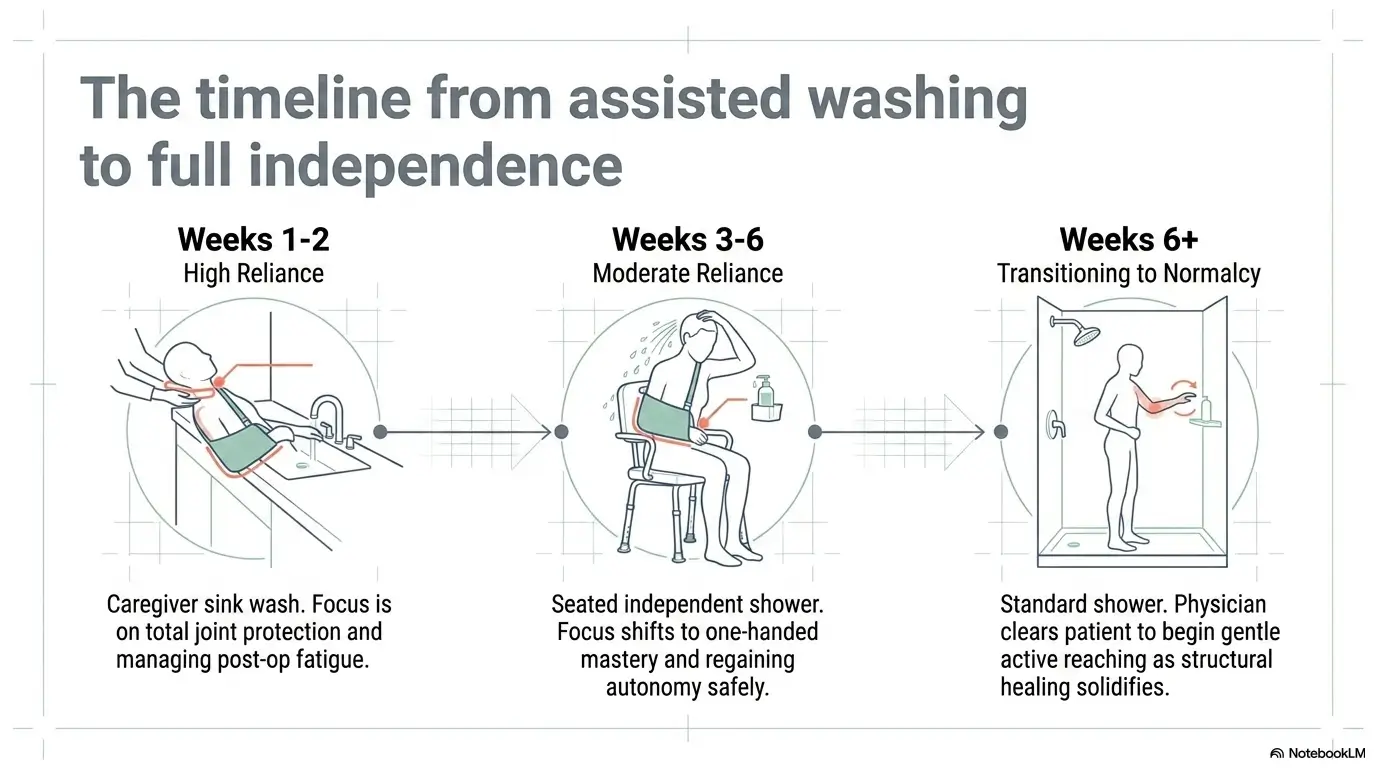
It depends on your procedure, dressing, incision status, and surgeon’s instructions. Some patients may shower after a specified number of days if wounds are dry. Others must wait longer or keep the dressing dry. If your paperwork is unclear, call before washing.
Can I take my sling off to wash my hair?
Only if your surgical team says you may remove it for hygiene. Some people can remove a sling briefly while keeping the arm supported. Others need the sling or immobilizer more consistently. Never remove it just because hair washing seems easier.
Is it better to wash hair in the shower or sink after shoulder surgery?
The best method is the one that follows your restrictions and reduces risk. A handheld showerhead works well for many people cleared to shower. A sink wash may be safer if you feel unsteady, need caregiver help, or want to keep water more targeted.
Can I bend forward to rinse my hair after shoulder surgery?
Maybe, but only if it does not violate your instructions, make you dizzy, or pull on your shoulder. Bend from the hips gently and keep the operated arm supported. If bending feels risky, use caregiver help, a sink setup, or dry shampoo until you can ask your team.
What if I live alone after shoulder surgery?
Prepare before washing. Put supplies at waist height, use pump bottles, keep a phone nearby, choose lukewarm water, and consider a sink wash. For the first full wash, ask a friend, neighbor, family member, or home health aide to be nearby if possible.
Can I go to a salon for a shampoo after shoulder surgery?
Possibly, if your surgeon allows travel and your incision precautions can be followed. Call the salon first. Ask for gentle positioning, no shoulder pulling, no hot water, and help avoiding awkward chair transfers. Bring your sling instructions if needed.
How do I keep my incision dry while washing my hair?
Follow your discharge instructions. Some dressings are water-resistant, while others must be covered or kept dry. Do not create a tight wrap that cuts circulation or traps moisture unless your team recommends it. If water reaches a dry-only dressing, call for advice.
What should I do if shampoo gets near the incision?
Do not scrub. Rinse gently only if your instructions allow water near the area, then pat dry with a clean towel. If shampoo gets under a dressing, the incision burns, or the wound looks irritated afterward, contact your surgical team.
Make a 5-Minute Hair-Wash Safety Kit Today
The easiest safe hair wash is the one you prepare before you need it. Set up a small kit today, even if you do not plan to wash until tomorrow. A few minutes of dry preparation can save you from wet improvisation, which is rarely where human brilliance peaks.
Your kit does not need to be fancy. It needs to be reachable, simple, and matched to your restrictions. Put it near the shower or sink, depending on your chosen method. Tell your caregiver where it is. If you live alone, keep your phone nearby and avoid washing when you are tired, rushed, or woozy.
Your 5-minute setup
- Move shampoo into a pump bottle and place it at waist height.
- Put one clean towel within easy reach and one backup towel nearby.
- Place clean clothes where you do not need to reach overhead.
- Check the floor for loose towels, cords, bath mats, or bottle clutter.
- Write your shower, dressing, and sling rules on a note near the bathroom.
- Do one dry run of the exact motions before using water.
- Ask for help before the first wash if you are unsure.
If you use a recliner or bed setup for recovery, it may also help to plan your wash around rest. Many patients do better when they wash hair earlier in the day, before fatigue arrives with its little suitcase. For sleep comfort after shoulder procedures, review this guide to recliner vs bed recovery after shoulder surgery.
One calm next step within 15 minutes
Within the next 15 minutes, choose your safest hair-washing method: handheld shower, sink wash, dry shampoo, caregiver help, or salon support. Then place shampoo, towel, and clean clothes at waist height. That one small setup turns a stressful recovery task into a manageable routine.
You do not need to win a cleanliness medal. You need a plan that respects the healing shoulder. Clean hair will return. Strength will return. For now, let the bathroom be quiet, boring, and safe: the three most underrated luxuries after surgery.
Key takeaway
- Prepare supplies before you are wet, tired, or in pain.
- A safe first wash may be short, imperfect, and assisted.
- The best routine protects the incision, sling rules, balance, and shoulder motion.
Apply in 60 seconds: Put your shampoo, towel, and clean shirt in one reachable place right now.
Last reviewed: 2026-05