

The Pattern-Matching Problem: Solving Commute-Triggered Sciatica
Twelve minutes from home is a strange place to lose an argument with your own leg.
In commute-triggered sciatica, the wrong support can make a short drive feel longer, not because your pain is mysterious, but because a seat cushion vs. lumbar roll is not really a comfort contest. It is a pattern-matching problem.
For many drivers, the flare starts at a red light, in stop-and-go traffic, or halfway through the same familiar route. The low back collapses, the buttock starts to burn, the thigh gets noisy, and suddenly a “helpful” accessory becomes one more expensive guess.
Keep guessing, and you do not just lose money. You lose easier drives, cleaner symptom clues, and sometimes the chance to notice when the problem deserves medical attention instead of better foam.
This guide helps you figure out which tool fits which pain pattern, how to test lumbar support and pressure relief without sabotaging your seat setup, and how to make smarter car ergonomics decisions before you buy the wrong fix twice.
The method is simple and grounded: track where the pain starts, what posture changes it, and whether symptoms begin later, feel smaller, or travel less far.
Table of Contents
Safety / Disclaimer
This article is for education, not diagnosis or treatment. “Sciatica” is a useful everyday word, but real life is less tidy. Pain in the low back, buttock, hip, thigh, calf, or foot can come from several structures, and a car seat can amplify almost all of them. That means a support accessory may help, may do nothing, or may annoy the exact tissue you were trying to calm down.
There are also moments when ergonomics stops being the right conversation. Cleveland Clinic warns that new bowel or bladder dysfunction, saddle-area numbness, rapidly worsening weakness, or major neurologic symptoms deserve urgent evaluation. That is not the hour for another memory-foam experiment, especially if you are seeing classic cauda equina syndrome red flags.
- Use accessories to test patterns, not to explain away red flags.
- Stop the DIY loop if symptoms are worsening or spreading.
- Urgent neurologic symptoms deserve urgent care.
Apply in 60 seconds: Decide now which symptoms would make you stop shopping and call a clinician.
Who this is for / not for
This is for US commuters whose leg pain flares during driving, traffic, or long seated travel
If your pain behaves politely during walking but starts negotiating aggressively in the car, you are exactly the reader I had in mind. Some people can stroll through a grocery store just fine, then wilt twenty minutes into stop-and-go traffic. The body can be dramatic like that. Not theatrical, exactly. More like a violin string that hates one particular note.
This is for readers comparing a seat cushion and a lumbar roll before spending money on the wrong fix
Commercial-investigation readers usually arrive with one hidden fear: “I’m about to buy the wrong thing twice.” Fair. Many support products are sold like universal answers. They are not. The useful question is not which product sounds smarter. It is which one changes your symptom pattern.
This is for people who notice sitting is the trigger, but standing or walking changes the story
That contrast matters. NHS guidance on sciatica emphasizes posture and staying active, and several NHS musculoskeletal resources note that sitting and driving can aggravate symptoms for some people. If your symptoms shift depending on movement, that can overlap with the same questions people ask about sciatica pain when walking.
This is not for readers with sudden severe weakness, numbness spreading quickly, fever, trauma, or bowel/bladder symptoms
If that is your situation, you do not need a buyer’s guide. You need appropriate medical evaluation.
Decision card: Buy now or test first?
- Test first if you can identify a clear sitting trigger and symptoms change with posture.
- Get evaluated first if symptoms are new, severe, progressive, or paired with numbness/weakness concerns.
- Delay buying if you have not yet tried simple seat-position changes and a rolled towel test.
Neutral next step: write down what makes symptoms worse, better, or spread farther.
First question first: where does the pain begin before it travels?
If the ache starts in the low back and shoots or burns downward, posture support becomes the first suspect
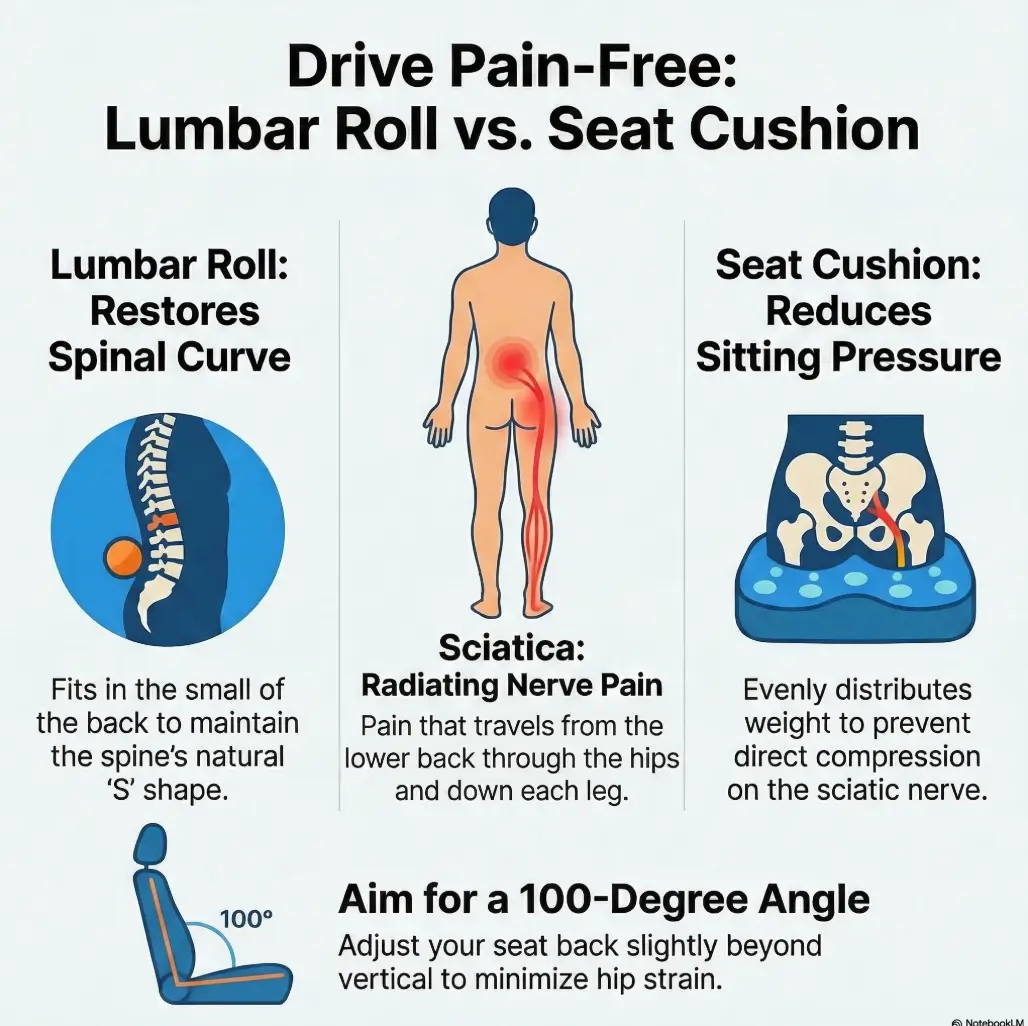
When the story starts in the low back, then moves into the buttock or leg, a lumbar roll often deserves first audition. Not because lower-back support is glamorous. It is not. It is basically the oatmeal of ergonomics. But it can quietly reduce the low-back collapse that some drivers fall into after ten or fifteen minutes.
If the pain starts in the buttock or under the thigh, pressure relief becomes a stronger clue
Different story. If the first complaint is under one sitting bone, at the tailbone, or deep in the buttock where the seat pan presses, then a cushion may be the more logical first move. In that case, the seat itself may be concentrating pressure in the exact place you least want it. It is also worth remembering that buttock pain is not automatically one thing, which is why readers sometimes need to sort out hip vs spine pain before they blame the seat alone.
If driving vibration makes everything louder, the seat setup may matter more than the product label
Some commutes are not “sitting” so much as “sitting plus micro-jostling.” If road vibration, firm suspension, or a rough route makes symptoms sharper, then support changes need to be modest and stable. Overly soft gear can feel heavenly in the driveway and strangely awful twenty minutes later.
Let’s be honest… most people buy support tools before they identify the trigger pattern
I have done this myself with office chairs. The box arrives. Hope enters the room wearing a name tag. Two days later, your hamstring is still annoyed and the only thing truly improved is the living room’s supply of packaging foam.
Ask one question before you buy: where does the pain begin, and what position seems to invite it?
Lumbar roll first: when back collapse is the real villain
Why prolonged sitting and slumped posture can aggravate sciatic-type symptoms
Mayo Clinic advises choosing a seat with good lower-back support and specifically suggests a pillow or rolled towel in the small of the back to maintain its normal curve. It also recommends keeping knees and hips level and changing position regularly.
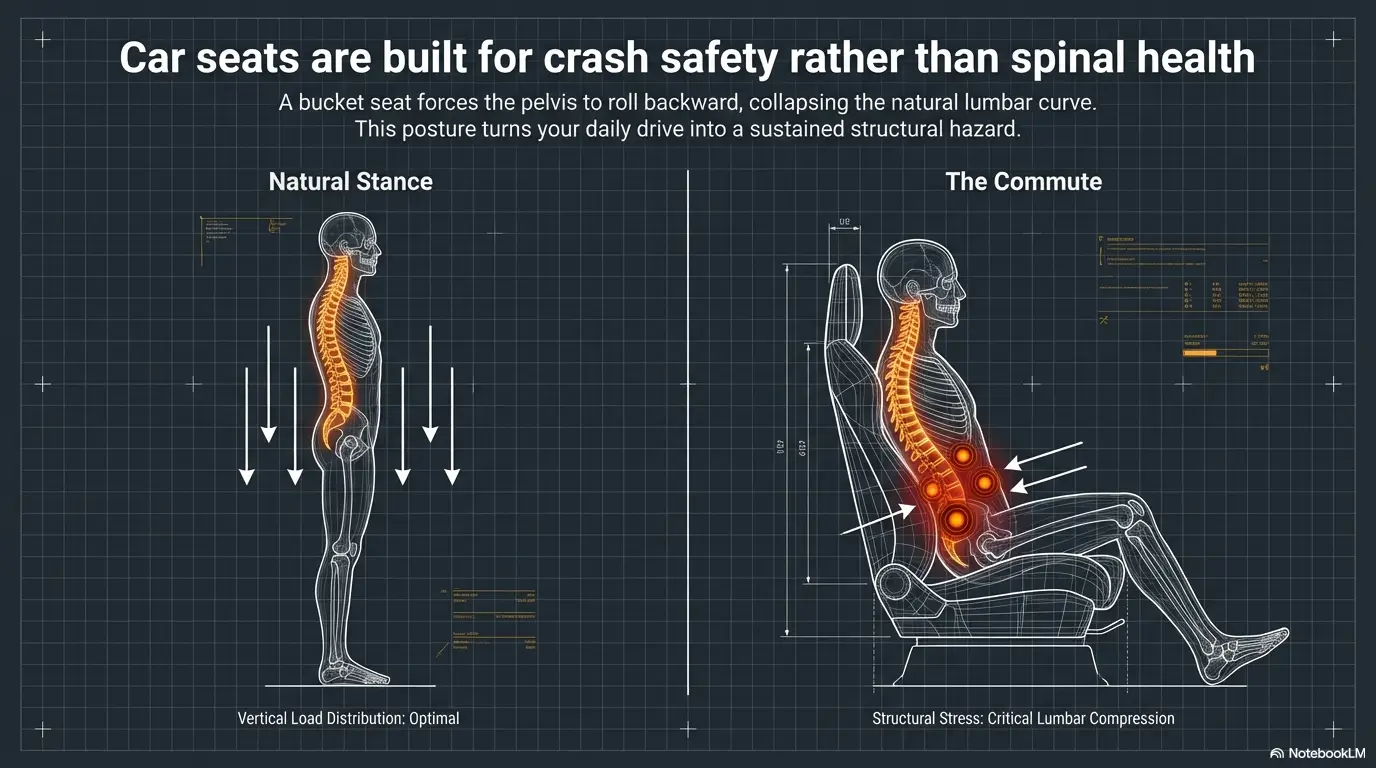
That advice matters in the car because many drivers slowly fold toward the wheel. Not all at once. More like a melting candle. The pelvis rolls back, the low back flattens, the chest sinks, and the body starts loading tissues in a way that may aggravate lumbar or radiating pain for some people.
How a lumbar roll helps restore the small natural curve in the lower back
A lumbar roll is not there to shove you into military posture. It should quietly fill the small hollow in the low back so you sit back into the seat rather than draping yourself over it. The best roll often feels almost underwhelming. That is good news. Drama is overrated in car ergonomics.
Why a rolled towel test can reveal more than a week of online shopping
This is my favorite frugal test because it costs nearly nothing and tells the truth quickly. Roll a hand towel, secure it loosely, place it low in the small of the back, and use it for one short drive. If symptoms begin later, feel less intense, or travel a shorter distance, you have a useful clue. You do not have a cure. You have a clue. That distinction saves money.
Best-fit scenario: pain worsens when you round forward, sink low, or fold into the wheel
If getting out of the car feels easier after you stand tall for a minute, or if the commute feels worse when you slouch, a lumbar roll often wins the first round.
- Start with a small roll, not a heroic one.
- Place it low, in the small of the back.
- Judge success by symptom timing and spread, not immediate comfort alone.
Apply in 60 seconds: Fold a towel now and picture exactly where it would sit on tomorrow’s drive.
Seat cushion first: when pressure under the pelvis is the louder problem
How a cushion can reduce pressure concentration under the buttock and tailbone area
A seat cushion can help when the seat pan feels like it is digging into one side, compressing the buttock, or making tailbone contact feel sharp. In those cases, the body is not chiefly complaining about spinal shape. It is complaining about pressure. Different villain, different tool.
Why some commuters feel better when the seat pan stops digging into the irritated side
For some drivers, the commute pain starts exactly where the body meets the seat. That local pressure can act like the opening scene of the whole pain drama. Reduce the pressure, and the rest of the chain reaction sometimes quiets down.
Best-fit scenario: pain spikes from contact pressure more than from slouching
If you find yourself lifting one hip, shifting away from one buttock, or feeling relief the second you stand up off the seat, a cushion becomes a more persuasive first experiment.
The quiet catch: a thick cushion can also change your hip angle and make things worse
This is where many people get tricked. A thick, soft cushion may reduce contact pressure but also raise you higher, change the angle of your hips, alter knee position, and push you forward out of the seatback. That can erase the lower-back support you badly needed. The result is a strange ergonomic betrayal: your seat feels softer, but your drive feels worse.
Show me the nerdy details
Seat cushions change more than pressure distribution. They can change hip flexion angle, effective seat depth, steering-wheel reach, mirror sight line, pedal reach, and how much contact you maintain with the seatback. A “good” cushion that breaks those relationships can still be a bad fit for driving.
Eligibility checklist: Is a seat cushion your better first trial?
- Yes: pain starts under the buttock or tailbone.
- Yes: you keep shifting off one side of the seat.
- Yes: slouching is not the clearest trigger.
- No: the main problem is low-back collapse or forward rounding.
- No: you already sit too high and barely fit under the steering wheel comfortably.
Neutral next step: if you answered “yes” three times, test a thin, stable cushion before a thick plush one.
The hidden tradeoff: the “wrong” cushion can sabotage the lower back
Too soft, too thick, too tilted: how a cushion can quietly erase spinal alignment
Imagine trying to write neatly on a mattress. That is roughly what an overly soft car cushion can do to your posture. Your pelvis sinks, your low back loses support, and your body starts working harder just to stay organized. The same product that reduces pressure can also create more collapse.
Too much lumbar roll: how over-arching the back can become its own irritation
A lumbar roll can also misbehave. If it is too large, placed too high, or pushed too aggressively into the back, some drivers feel over-arched, perched, or unable to relax into the seat. The result is not support. It is negotiation. With your spine.
Here’s what no one tells you… support that feels dramatic on day one can backfire by day four
Instant comfort is not the same thing as good fit. Some support tools create a honeymoon effect. The new position feels novel, and novelty can feel hopeful. Then, by the fourth day, you notice the symptoms are arriving just as early, only in a slightly different neighborhood. That is why a short, repeatable test matters more than a one-ride miracle.
Plain-English rule: In the car, “supportive” should feel stable, not theatrical.
Seat cushion vs lumbar roll: who wins by symptom pattern?
Lumbar roll usually wins when the trigger is slumping, forward rounding, and long static sitting
If your symptoms build as you round forward, sink backward into a posterior pelvic tilt, or feel folded into the wheel, start with the lumbar roll. Mayo Clinic’s sitting guidance aligns with this logic: lower-back support, knees and hips level, and frequent position changes can reduce stress during sitting.
Seat cushion usually wins when the trigger is seat pressure, buttock compression, or tailbone discomfort
If the commute feels like one spot is being pressed into rebellion, try a cushion first, but keep it thin and stable. Your goal is pressure relief without turning the rest of the seat geometry upside down.
Combination setup wins when posture and pressure are both feeding the pain loop
Some drivers need both. This is especially common when the factory seat is both flat in the low back and harsh under the pelvis. In that case, a small lumbar roll plus a modest cushion can work well. Small is the important word. A support stack the size of a wedding cake rarely ends well.
No one wins when you stay frozen in one position for the whole commute
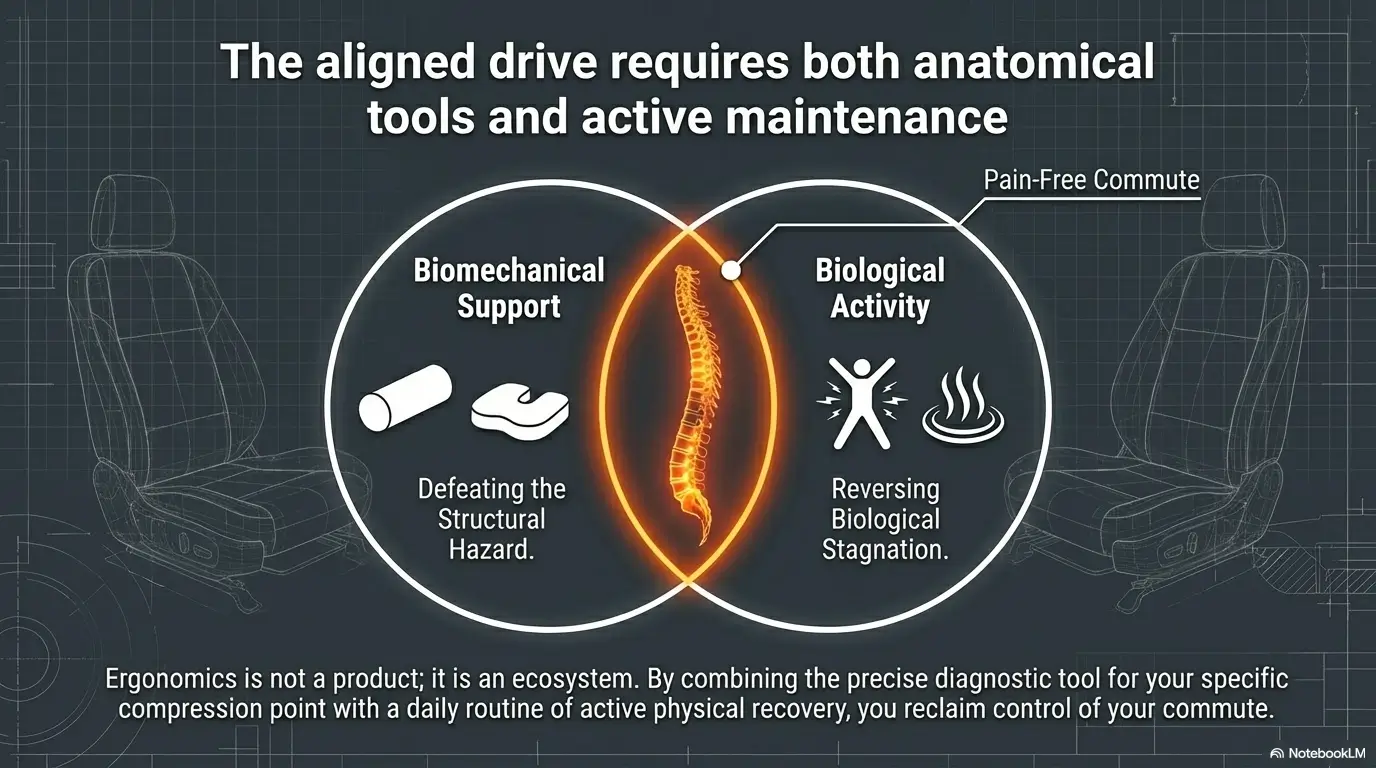
Mayo Clinic’s advice to change position regularly deserves more attention than most accessories get. Even the right support setup can fail if you become a statue for forty minutes.
- Pain starts with slouching
- Low back feels collapsed
- Forward rounding worsens symptoms
- Standing tall helps after the drive
- Buttock or tailbone pressure starts the pain
- You keep shifting off one side
- Seat pan feels hard or intrusive
- Standing up removes pressure fast
Middle lane: If both lists sound true, test a small lumbar roll first, then add a thin cushion only if pressure remains the louder problem.
Commute mistakes that keep the nerve irritated
Don’t place lumbar support too high and call it “back support”
If the roll sits near the middle back instead of the small of the back, you are not supporting the curve you meant to support. You are just adding a lump with good intentions.
Don’t buy the thickest cushion and accidentally raise the knees above the comfort zone
Hip and knee position matters. Mayo Clinic explicitly recommends keeping knees and hips level when sitting with good lower-back support.
Don’t test a new support on your worst pain day and assume the tool failed
That is like judging an umbrella during a hurricane. Test on an average day, on a familiar route, for a short drive first.
Don’t ignore wallet, phone, keys, or anything bulky in the back pocket
This sounds small. It is not. A single bulky wallet under one side of the pelvis can create exactly the kind of asymmetry that makes a commute feel cursed.
Don’t treat a support accessory like permission to sit longer without breaks
A better seat setup should make the drive more tolerable. It should not become a tiny ergonomic hall pass for staying still forever.
Quote-prep list: What to gather before comparing products
- Your approximate commute time in minutes
- Where the pain starts first
- Whether slouching or pressure is the clearer trigger
- Whether standing or walking helps within 2 to 5 minutes
- Your car seat’s biggest flaw: flat backrest, hard seat pan, or both
Neutral next step: use this list before reading product reviews so the reviews do not hypnotize you.
Common mistakes
Using a seat cushion to solve a posture problem
If your main issue is spinal collapse, a cushion alone may just raise you farther from the seatback and make the collapse easier.
Using a lumbar roll to solve a pressure-point problem
If your symptoms begin under the buttock or tailbone, a lumbar roll may feel respectable and still miss the target entirely.
Reclining without supporting the lower back
Many drivers think “more recline” equals “more relaxed.” Sometimes it equals “more reach,” more pelvic sliding, and more irritation.
Pushing through numbness and tingling because the pain is “only from commuting”
Cleveland Clinic notes that sciatica-related symptoms can include tingling, numbness, and weakness, not just pain. If those symptoms are persistent, worsening, or paired with weakness, the accessory aisle is not the whole answer. Sometimes readers also need a clearer map of L4 vs L5 vs S1 sciatica patterns when symptoms travel in a way that feels confusing.
Chasing softness instead of fit, angle, and symptom response
Softness is a marketing word. Fit is the useful one.
Before you buy: the 10-minute car test that saves money
Test 1: use a rolled towel for lumbar support on one short drive
Keep it small. Place it low. Drive a familiar route. Track whether symptoms start later or travel less far.
Test 2: remove pocket bulk and adjust seat distance before changing products
Move the seat so you can reach the pedals without stretching and the wheel without collapsing forward. Sometimes the smartest “product” is a seat adjustment you never bothered to finish. The same logic shows up when people are learning how to get in and out of a low car with sciatica without turning every trip into a tiny ambush.
Test 3: note whether pain begins later, feels smaller, or travels less far
Those are the three outcome measures that matter most in a real commute. Not “Did it feel comfy in the driveway?” The driveway is a notorious liar.
Test 4: if pressure is the main complaint, trial a thin pressure-relief cushion next
Use one change at a time. Do not stack three products at once unless you enjoy never knowing what helped.
Small clue, big payoff: the best product is the one that changes your symptom pattern, not the one with the prettiest foam
I once tried to “upgrade” a chair with two supports at once and learned nothing except that beige foam can be surprisingly expensive. Sequential testing is boring. It is also how adults keep their money.
Mini calculator: If your commute is 35 minutes and a support change delays symptoms by even 10 minutes each way, that is 20 fewer painful minutes per workday, or roughly 100 minutes across a five-day week. Neutral next step: decide what counts as a meaningful improvement for you before you test.
Car setup matters more than the accessory aisle suggests
Seat distance, steering wheel reach, and hip-knee position can change the whole equation
Mayo Clinic’s advice about sitting posture sounds simple because it is. Good lower-back support. Knees and hips level. Change position regularly. In the car, that translates into a seat position that lets you reach pedals and the wheel without folding yourself into a comma.
Why “hips and knees level” is a useful baseline instead of a rigid rule
It is a starting point, not a sacred geometry diagram. Cars vary. Bodies vary. Seat cushions vary wildly. Use the idea as a baseline, then let symptoms tell you whether the setup is helping.
How arm tension, foot reach, and tilted pelvis can mimic a bad support product
If you are reaching too far forward, bracing with one leg, or twisting slightly toward the wheel, you may blame the cushion when the real trouble is seat geometry. A support accessory can only do so much when the rest of the cockpit is asking your body to improvise. This is not so different from the broader posture traps that show up in desk job sciatica flare-ups, where the furniture gets blamed for a positioning problem.
Short Story: A friend once told me his “sciatica cushion” was useless. He was ready to write a review with the emotional intensity of a betrayed medieval poet. Then we looked at his driving position. His seat was so far back that he was pointing his right foot like a ballet student to reach the pedal, and his wallet was still in his left back pocket.
We removed the wallet, moved the seat forward a little, raised the backrest a touch, and added a small towel roll. He called me three days later, mildly offended. Not because the setup failed. Because the cheap towel had been more useful than the premium cushion he had researched for two evenings. The moral is not that towels are magical. It is that the body often prefers boring accuracy over expensive optimism.
Show me the nerdy details
In vehicle seating, small changes cascade. Altering seat height or cushion thickness can change lumbar contact, pelvic tilt, knee angle, hamstring tension, mirror position, and steering-wheel reach. That is why “just add a cushion” is often too simple for driving-specific symptoms.
When to seek help instead of buying another support gadget
Pain running below the knee with numbness, tingling, or weakness that keeps returning
That combination deserves more respect than many commuters give it. Especially if the symptoms are recurring, escalating, or starting to affect normal activity.
Symptoms that are worsening despite seat changes and shorter drives
If simple changes are not helping, that is useful information. Not a failure. Just information. The body is telling you the problem may be bigger than a seating tweak.
Night pain, fever, recent trauma, or new neurologic symptoms
Those clues move the conversation away from accessories and toward clinical evaluation. If the symptom mix feels alarming rather than merely annoying, it may belong in the same bucket as low-back pain emergency warning signs, not the car-accessory aisle.
The line in the sand: if a commute aid becomes a delay tactic, it is time for a clinician
There is a point when buying another support gadget becomes a ritual of avoidance. We have all done versions of this in life. New notebook instead of writing. New pan instead of cooking. New cushion instead of making the appointment. Grace to the human impulse. But also, let’s not let it drive the car.
- Progressive weakness is not a cushion problem.
- Bowel, bladder, or saddle-area symptoms are urgent.
- Repeated failure of simple seat changes is meaningful data.
Apply in 60 seconds: Write one threshold for yourself: “If this is worse in two weeks, I will book care.”
FAQ
Is a seat cushion or lumbar roll better for sciatica while driving?
Neither wins universally. A lumbar roll usually wins first when slouching and low-back collapse trigger symptoms. A seat cushion often wins first when buttock, tailbone, or under-thigh pressure is the clearer trigger.
Why does my sciatica get worse in the car but feel better when I walk?
Driving combines sustained sitting, fixed posture, and sometimes vibration. Walking changes load and posture, so some people feel better once they are no longer stuck in one seated position.
Can a lumbar roll make sciatica worse if it is too thick?
Yes. If it over-arches the low back, sits too high, or prevents you from relaxing into the seatback, it can irritate rather than help. Smaller is often better for testing.
What kind of seat cushion can aggravate sciatic-type pain instead of helping?
One that is too thick, too soft, or too unstable for driving. It may reduce pressure under the pelvis but worsen hip angle, steering reach, and low-back alignment.
Should I use both a seat cushion and a lumbar roll at the same time?
Sometimes, yes, but usually not on day one. Test one change first so you can tell what actually helped. If pressure and posture are both obvious triggers, a small lumbar roll plus a thin cushion can be reasonable.
How long should I test one support change before deciding it failed?
Give it several short, comparable drives if symptoms are stable enough to self-test. Judge it by whether pain begins later, feels less intense, or travels less far.
Does driving vibration make sciatica worse?
For some people, yes. The combination of fixed posture and repeated vibration can make symptoms feel louder, which is one reason vehicle-specific setup matters.
Is buttock pain during commuting always sciatica?
No. Buttock pain during sitting can have several possible sources. That is one reason this article treats accessories as symptom-pattern tools, not diagnostic shortcuts. In some cases, the better comparison is closer to sciatica vs piriformis syndrome than “which cushion should I buy?”
The next 15 minutes matter more than the next purchase
So here is the answer to the question we opened with at the red light. A lumbar roll often wins first when the commute pain story begins with slumping, low-back collapse, and static sitting. A seat cushion often wins first when the louder problem is pressure under the buttock, tailbone, or thigh. And if both are true, the wiser move is still not “buy everything.” It is to test one change carefully, then build from evidence instead of hope.
Within the next 15 minutes, you can do something useful. Remove back-pocket bulk. Adjust the seat so you are not reaching. Roll a small towel. Take one short drive. Track whether symptoms begin later, feel smaller, or travel less. That tiny trial will tell you more than another hour of scrolling product pages.
Last reviewed: 2026-03.