
Precision Orthopedic Support: Navigating Pain & HSA Eligibility
Orthopedic pain management with HSA-eligible braces gets slippery fast. Shoppers often try to solve two problems at once: calming a hurting joint and avoiding wasting tax-advantaged money on something that ends up living in a closet.
The real friction isn’t just pain. It’s pain mixed with time pressure, vague HSA assumptions, and sizing roulette. A knee brace or lumbar support only works when it matches the motion problem instead of the mood. Keep guessing, and you risk burning money on “brace theater” while missing signs that the issue needs more than a wearable fix.
This guide helps you choose with precision, document cleanly for HSA purposes, and avoid the common buying mistakes that turn a practical purchase into an annoying reimbursement story.
Once you prioritize this order, the shopping process gets quieter. You stop shopping for reassurance. You start buying for real life.
Table of Contents
The simplest useful idea in this whole article is this: a brace is not a medal for suffering. It is a tool. Good tools solve a narrow problem well. Bad tools make you sweat, pinch your skin, slide down your leg, and then retire to the closet with heroic speed.
Start Here First: What “Orthopedic Pain Management” Actually Means at Home
Why pain management is often about support, stability, and load reduction, not just pain relief
At home, orthopedic pain management usually means creating a calmer mechanical environment. That may involve reducing strain, limiting a motion that keeps provoking symptoms, or giving a joint enough support that everyday tasks feel less punishing. The goal is not always to erase pain completely. Often it is to lower the friction of ordinary life so you can walk, type, sleep, lift, or stand without turning every movement into a negotiation.
I learned this the boring way, which is usually the expensive way. Years ago I bought the most intense-looking wrist support I could find after a flare from too much keyboard time. It looked ready for battle. My wrist was not. The brace was so rigid that it made simple tasks clumsy, so I stopped wearing it after two days. A softer, more targeted option would have helped more. Vanity and panic had briefly become shopping assistants.
Where braces and supports fit between “do nothing” and “see a specialist now”
There is a wide middle ground between denial and an urgent appointment. Braces live in that middle ground. They can be sensible for mild to moderate strain, overuse, recovery support, temporary stability, and activity-specific relief. They can also be useful while you wait for an appointment, provided they are not masking obvious danger signs.
The hidden decision: symptom control today vs preventing a worse flare next week
Readers often think they are choosing a product. They are actually choosing a strategy. Are you trying to calm an acute flare for 3 to 7 days? Support a repetitive task for the next month? Reduce risk during walks, workouts, or sleep? The right brace for “get me through this week” may be very different from the right brace for “help me stop restarting the same problem.” That difference matters more than glossy packaging ever will.
- Support is about mechanics as much as comfort
- Temporary use and long-term use are different buying missions
- A wearable brace beats an impressive brace you abandon
Apply in 60 seconds: Write down one activity that hurts most: walking, typing, sleeping, stairs, lifting, or sitting.
Eligibility checklist
- Yes / No: Is there a specific body part and symptom pattern?
- Yes / No: Is the item aimed at support, treatment, or mitigation rather than general wellness?
- Yes / No: Would you still want this if the color, branding, and athlete photos disappeared?
Next step: if you answered “no” twice, pause the purchase and define the problem first.
HSA Eligible Braces and Supports: The Part Readers Usually Get Wrong
Why “medical-looking” does not always mean “safe to buy without checking”
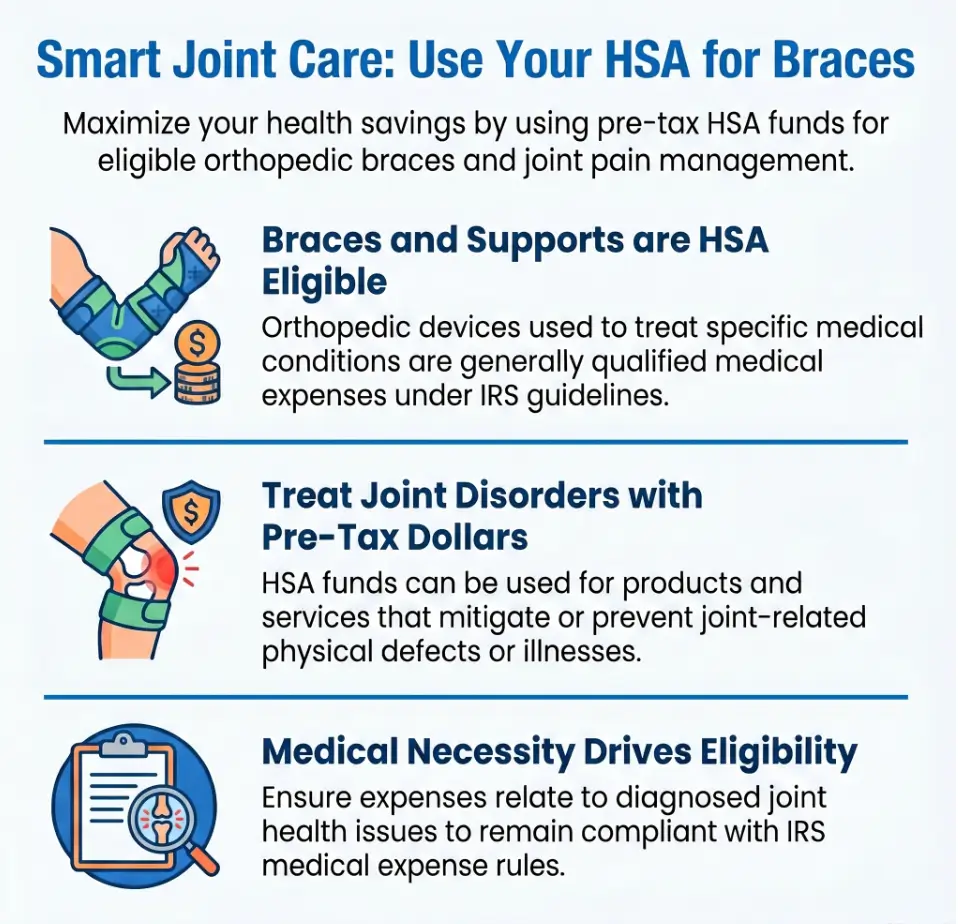
Here is where the fog rolls in. A product can look unmistakably medical and still create reimbursement headaches if the documentation is weak, the purpose is vague, or the item shades too far into general fitness or wellness. The IRS says HSA distributions can be tax free when used for qualified medical expenses, and it ties those expenses to the section 213 standard. The same IRS guidance also draws a sharp line between expenses for medical care and expenses that are merely beneficial to general health.
What IRS-style qualified medical expense logic changes in real life
In real life, this means you should think like a careful librarian. What exactly is this item for? Does the product language describe support, stabilization, recovery, immobilization, or mitigation of a condition? Or does it mostly speak the language of performance, training, comfort, and lifestyle? Those words matter because they help explain whether the purchase was primarily for medical care.
The IRS FAQ on medical expenses says medical expenses must be primarily to alleviate or prevent a physical or mental disability or illness, and not merely be beneficial to general health. That mechanism-based distinction is more useful than hunting for a magical “eligible” sticker.
The reimbursement trap: buying first, documenting later
The classic trap is not buying the wrong thing. It is buying the maybe-right thing with the memory of a goldfish. Weeks later, the box is gone, the product page changed, the receipt is buried in an email swamp, and your future self is trying to explain why a compression support was a medical purchase and not just athletic gear with better branding.
That is why documentation belongs before checkout. Save the receipt. Save the product page. Save the model name and body-part purpose. If your symptoms are tied to a clinician’s advice, keep that note too. You do not need to turn a wrist brace into a courtroom exhibit. But you do need enough paper trail to make the purchase legible. Readers trying to think through this more broadly may also want to compare the logic in this guide to orthopedic braces and supports that are HSA eligible.
Show me the nerdy details
For HSA purposes, the IRS instructions for Form 8889 say qualified medical expenses are generally unreimbursed medical expenses that could otherwise be deductible under the medical-expense rules. Publication 969 then points readers back to the same qualified-medical-expense framework. That is why product purpose and records matter more than checkout convenience.
Decision card
When A: Buy now if the item clearly supports a specific joint issue and you can document the medical purpose.
When B: Wait 24 hours if the item reads more like gym gear, recovery lifestyle gear, or comfort merch.
Time/cost trade-off: a one-day pause can prevent a months-later denial headache.
Next step: screenshot the product page before paying.
Match the Support, Not the Shelf: Knee, Back, Ankle, Wrist, and More
Knee pain: when compression, hinges, or patella support may serve different goals
Knee pain is not one thing wearing a trench coat. Compression can feel good for mild swelling and general support. Hinged braces are usually more about stability and motion control. Patella-focused supports can be more useful when the issue seems tied to tracking, kneecap comfort, or stair-heavy irritation. If your knee complaint changes with twisting, uneven ground, or a sense of giving way, your shopping logic should change too. For a narrower look at stair-related support decisions, see how a hinged knee brace can help on stairs.
MedlinePlus notes that people should call a provider for a lot of joint pain, swelling, or numbness, if they cannot put weight on the joint, or if an old injury now comes with more swelling or instability. That is a helpful line between “support at home” and “please do not keep guessing.”
Back pain: why lumbar support is not one single category
Back supports range from soft reminder-style supports to more structured braces that limit movement. Some people need a cue to avoid certain positions. Others need temporary stability during a sharp flare. Still others need to stop using a support as a permanent crutch for every grocery bag and laundry basket. Lumbar support is a category with many intentions hiding inside it.
I once saw a friend wear a bulky back brace to sit at a desk all day, which had the mood of bringing a canoe to a teacup. It helped him feel held together for two days. By week two, he was more uncomfortable because the support solved the wrong problem. The real issue was workstation setup and repeated static posture, not a need for heavy restriction from dawn to dusk. If that pattern sounds familiar, orthopedic pain management for remote workers and neck pain from laptop work may be more relevant than a bigger brace.
Wrist, ankle, elbow, and shoulder: support choice depends on motion you are trying to limit
For wrists, the question is often whether you need to limit flexion, extension, or rotational strain. For ankles, the issue may be inversion, instability, swelling, or return to activity after a sprain. For elbows and shoulders, supports may help with load management or activity-specific relief, but fit matters brutally. A shoulder support that bunches or a wrist splint that presses the wrong spot can turn “support” into a second problem.
Here’s what no one tells you… the wrong brace can make “support” feel like punishment
Good support should feel purposeful, not theatrical. It may be snug. It should not feel cruel. New numbness, skin irritation, coldness, worsening pain, obvious pressure points, or a sense that the brace is changing your gait or hand use for the worse are signs to stop admiring your purchase and rethink it.
Who This Is For / Not For
Best for readers trying to reduce strain, stabilize a joint, or support recovery at home
This guide is for readers who know roughly where it hurts, roughly what triggers it, and want a practical framework before spending HSA money. It is especially useful if you are deciding between a few brace types, wondering whether a product sounds medically specific enough, or trying to avoid turning a temporary pain problem into a recurring shopping habit.
Not for readers expecting a brace to diagnose the problem for them
A brace can support a plan. It cannot create one from thin air. If the diagnosis is fuzzy, the symptom pattern is changing fast, or the area feels unstable in a way you cannot explain, a brace may offer comfort while also delaying the real answer. Comfort is lovely. False certainty is not.
Not for red-flag situations where swelling, numbness, deformity, or sudden weakness changes the story
Red flags matter because they suggest the problem may be larger than an at-home support decision. MedlinePlus advises medical evaluation when joint pain comes with substantial swelling or numbness, when you cannot put weight on the joint, or when an old injury becomes more unstable. In back-related aftercare guidance, sudden numbness or tingling, weakness in the legs, or bowel or bladder changes are also treated as reasons to contact a provider. If your symptoms drift into that territory, it is smarter to think in terms of low back pain emergency red flags than better shopping.
- Good candidate: predictable pain with a clear trigger
- Bad candidate: dramatic swelling, numbness, deformity, or sudden weakness
- Best use: a tool inside a broader plan
Apply in 60 seconds: Ask: “Can I describe what motion or activity makes this worse?” If not, slow down and reconsider.
Buy With a Purpose: How to Choose Without Falling for Brace Theater
Why more rigid does not always mean more helpful
People in pain often reach for the brace that looks the most serious. It feels decisive. It photographs well. It may also be the wrong choice. More rigid can mean harder to wear, worse compliance, and new frustration around daily tasks. Support should match the job. A wrist support for desk work does not need the same personality as an immobilizer meant for a more acute scenario.
Fit, wearability, and repeat use often beat “premium features”
The quiet champions of good brace buying are fit, comfort, breathable material, ease of adjustment, and the ability to actually use the thing on day three when your initial enthusiasm has evaporated. The best brace is often the one that gets worn consistently for the right windows of time. This is not glamorous advice. It is, however, the sort that saves money.
The quiet ROI question: will this actually get worn three days from now?
If the answer is no, the product is probably all costume and no character. Ask whether you can put it on without irritation, whether it fits inside the rhythm of your day, and whether it supports the activity you actually want to improve. If a knee brace only works when you are sitting still in your living room, it may not be helping the part of life you were trying to rescue.
Mini calculator
Price ÷ expected wear days = cost per useful day.
Example: $48 brace ÷ 24 wear days = $2 per day. If a $28 brace gets worn 0 times, it costs infinitely more in practical terms.
Next step: compare two options using wearability, not just list price.
Short Story: A reader once described buying three braces in two weeks for ankle pain after a minor twist. The first was too soft and felt pointless. The second looked like something a small robot might wear into battle, but it pinched and made shoes impossible. The third was not dramatic at all: a more moderate support with decent side stability, easy straps, and enough give to walk normally.
That was the one she wore. The strange thing is that the third brace looked the least impressive on a product page. It just respected real life. She told me the lesson was not “buy cheap” or “buy premium.” It was “buy for the life you actually live.” Pain had made her shop for reassurance. Experience taught her to shop for use.
Don’t Do This: Common Brace Buying Mistakes That Waste HSA Money
Mistake 1: Buying by pain intensity instead of body mechanics
Pain can be loud while still being vague. If you buy according to how upset you feel, you may overshoot the support level you need. Ask what motion hurts, what activity triggers symptoms, and whether the problem is strain, instability, swelling, repetitive use, or a recent flare.
Mistake 2: Using a support long after the situation changed
Temporary supports sometimes linger like houseguests who never glance at the door. A brace that makes sense during a sharp flare may be unnecessary later, or may even keep you in a cycle of overreliance. Reassess after the first phase passes.
Mistake 3: Treating sizing charts like a suggestion
This one is pure avoidable chaos. If the size chart says measure, measure. “I am probably a medium” is how people end up with numb fingers, sliding sleeves, or supports that migrate south by lunch.
Mistake 4: Confusing athletic gear with medically relevant support
Some products are closer to general training accessories than medical supports. That does not make them useless. It does make them less straightforward for HSA purposes if the medical function is not clear. The IRS repeatedly draws the line between medical care and general health benefit. That framework should live in your head while you shop. The same mindset also matters for readers weighing bigger spending decisions under orthopedic pain management with an HDHP or high-deductible orthopedic pain management planning.
Quote-prep list
- Body part and symptom trigger
- Recent injury vs chronic overuse
- Needed activity: walk, type, sleep, lift, exercise
- Sizing measurements
- Any clinician guidance you already have
Next step: keep these notes open while comparing products so you do not drift into impulse mode.
Let’s Be Honest… Most People Are Trying to Solve Two Problems at Once
Problem one: the body hurts
This part is obvious. Pain shrinks patience. It makes a Tuesday feel oddly medieval. It also makes urgent-sounding copy more persuasive than it deserves to be. When something hurts, the promise of instant support can sound like a hymn.
Problem two: the budget hurts
The budget problem is subtler but no less real. HSA money still feels like money because it is money. You may also be juggling deductibles, co-pays, physical therapy, imaging questions, or the possibility that this brace is just one stop on a longer care path. A thoughtful support purchase is not just a medical decision. It is a sequence decision.
Why a good outline must address symptom relief and HSA spending discipline together
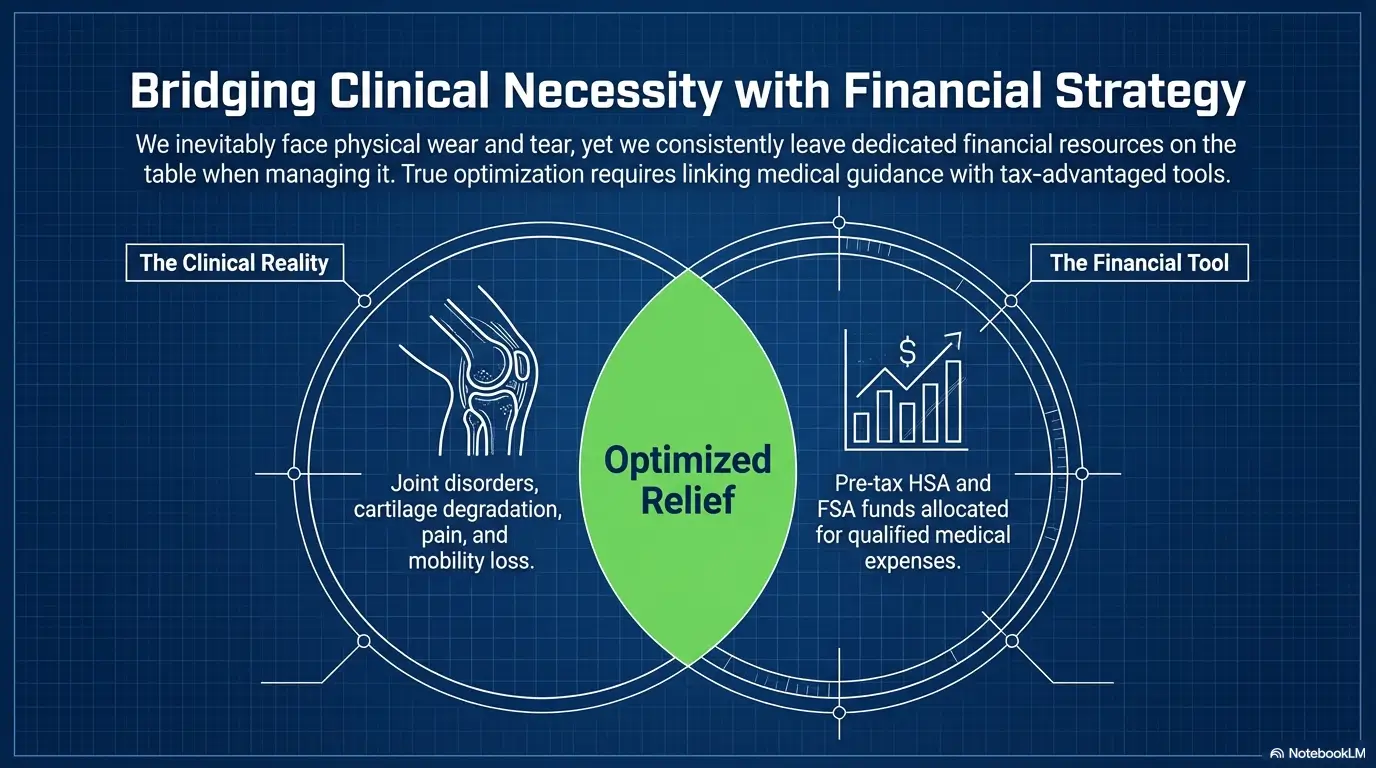
If an article covers symptoms but ignores reimbursement logic, it leaves readers exposed. If it covers tax language but ignores red flags and fit, it leaves readers uncomfortable and undersupported. The useful middle path is this: choose a support that fits the body problem, keep records that fit the HSA problem, and avoid pretending either side does not matter.
I think of this as the split-screen problem. On one side is your knee, back, wrist, or ankle. On the other side is a receipt that may need to defend itself later. Ignore either screen and the plot gets silly fast.
Infographic: The 4-step brace decision flow
1. Define the trigger
Stairs, typing, lifting, sleep, walking, twisting
2. Define the goal
Compression, stability, motion limit, flare relief
3. Define the use window
Acute, overuse, recovery, activity-specific, temporary
4. Define the proof
Receipt, product page, model name, purpose notes
Timing Matters More Than People Think: Acute Flare, Overuse, Recovery, and Maintenance
Fresh injury support vs chronic overuse support are not the same shopping mission
Acute flares often call for a calmer, more protective logic. You may care more about reducing aggravation for a few days. Chronic overuse problems often call for supports you can tolerate during the exact activities that provoke symptoms. These are not the same mission, and pretending they are creates bad purchases.
Post-procedure or post-rehab support needs a different level of caution
If you are in a post-procedure, post-rehab, or clinician-guided recovery phase, freestyle shopping gets riskier. The brace may need to align with a specific recovery goal, movement limitation, or return-to-activity plan. That is where “I found a highly rated option online” may be less helpful than “I matched the support to the plan already in motion.” For readers navigating that stage, choosing rehab after surgery can help frame the bigger recovery picture.
When “temporary support” quietly becomes permanent dependence
Temporary supports are useful. Permanent dependence is a different story. If you reach for the same brace month after month without understanding why the underlying issue never improved, that is a clue. Supports can reduce load. They cannot, by themselves, fix every driver of pain, weakness, or repeated irritation.
Show me the nerdy details
AAOS notes in wrist-sprain guidance that even injuries that seem mild can involve ligament damage requiring further treatment. That is a reminder that symptom severity and structural seriousness do not always travel together.
Don’t Ignore This: Signs a Brace Is Masking a Bigger Problem
Pain that keeps escalating despite support
If the brace is truly matched to the problem, you would generally expect some improvement in comfort, stability, or tolerance. If pain keeps rising, the fit may be wrong, the category may be wrong, or the problem may be bigger than the brace.
Numbness, skin changes, instability, or night pain that changes the risk picture
Numbness and tingling deserve respect, especially if they are new or worsening. MedlinePlus explains that numbness and tingling are abnormal sensations, and its joint-disorder guidance tells people to seek care for significant swelling, numbness, inability to bear weight, or worsening instability. Those are not “I’ll just order a second brace” clues. They are stop signs.
When improved comfort is real, but misleading
One of the trickiest scenarios is when a brace genuinely helps but also hides a worsening pattern. Maybe you can type longer, but your fingers go numb at night. Maybe your ankle feels steadier, but it still buckles without warning. Maybe your back feels better in the brace, but the pain now shoots down the leg. Relief is good. Relief without understanding can still mislead. When symptoms start behaving less like a simple support issue and more like a nerve-pattern problem, pieces such as sciatica MRI vs X-ray or why MRI findings and pain can mismatch can add useful context.
- Worsening pain deserves reassessment
- Numbness, weakness, and weight-bearing trouble raise the stakes
- A brace should reduce friction, not blur the signal
Apply in 60 seconds: Note one metric for improvement: stairs, keyboard time, walking distance, or sleep disruption.
The Documentation Layer: Receipts, Product Language, and Reimbursement Proof
What shoppers should save before checkout, not after
Save the receipt, yes. Also save the product title, model, size, and the page describing what body part and function the item supports. If there is a clinician note or after-visit summary mentioning support, keep that too. This is less about paranoia and more about future clarity.
Why product descriptions and category labels can matter later
When the IRS says medical expenses include equipment and supplies needed for diagnosis, cure, mitigation, treatment, or prevention of disease, it is describing a purpose test. Product language helps demonstrate that purpose. The more clearly the item fits support or mitigation of a specific orthopedic problem, the cleaner the story tends to be.
The small-paperwork habit that prevents a very annoying HSA denial
My favorite paperwork habit is stupidly simple: create one folder called “HSA medical supports” and drop screenshots and receipts into it on the day you buy. Five minutes now beats forty-five minutes of archaeologic sorrow later. That same folder mentality also helps when pain care expands into imaging or rehab bills, especially for people comparing HDHP imaging cost estimates or broader self-pay cash price ranges.
Coverage tier map
Tier 1: Clear medical support item + receipt + product page saved
Tier 2: Clear item + receipt only
Tier 3: Vague item name + no product page saved
Tier 4: Item blends into sports or wellness gear
Tier 5: You remember buying “some brace thing” and now it is February
Next step: aim for Tier 1 whenever you can.
Next Step: Build a One-Page Brace Decision Card Before You Buy
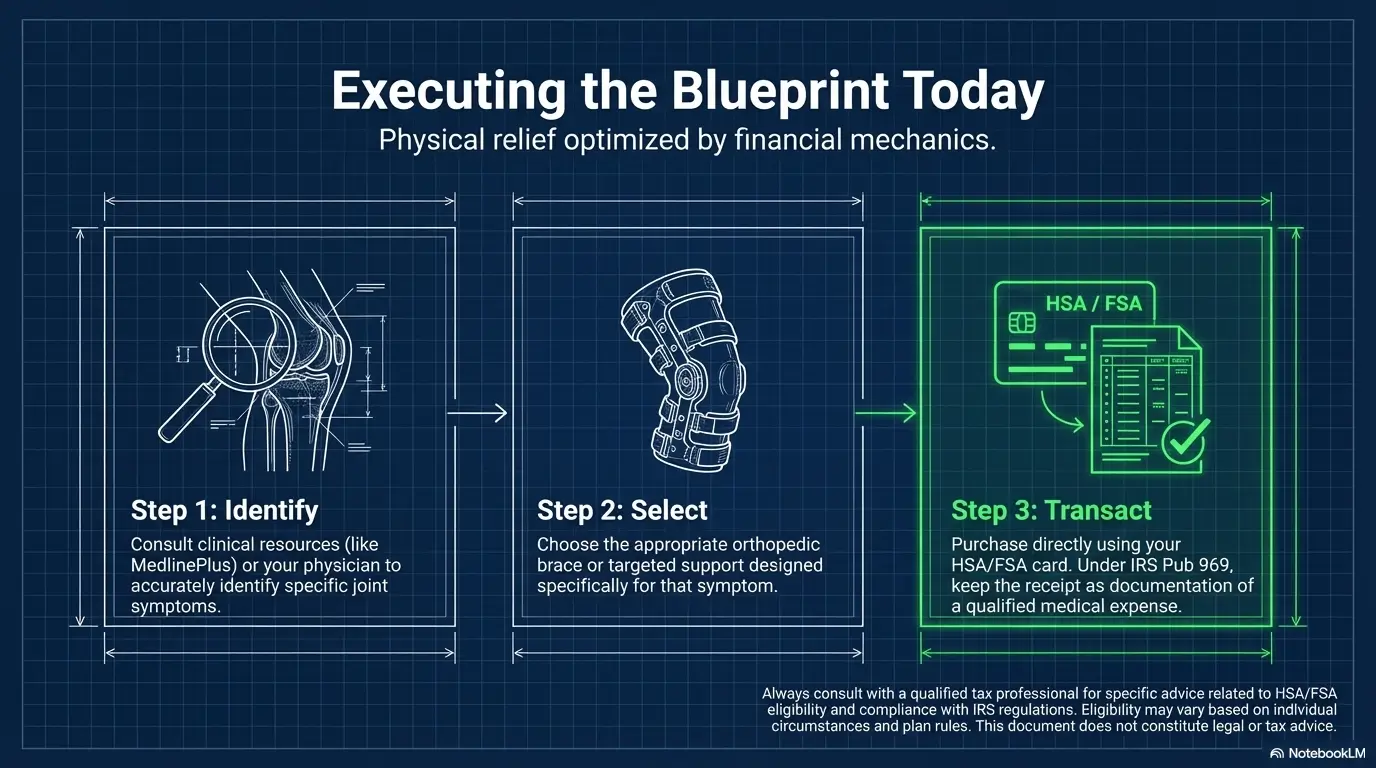
Write down the body part, symptom pattern, activity trigger, and support goal
This one-page card is where everything becomes saner. Write the body part, when symptoms happen, what motion seems to provoke them, and what you want the brace to do. Not “fix me.” Be specific. “Reduce wrist extension while typing.” “Add ankle stability on uneven ground.” “Give mild knee support for stairs.” Specificity cuts through panic beautifully.
Check HSA eligibility language and save the receipt before the package arrives
Before checkout, do three tiny things: confirm the product sounds medically specific, save the product page, and save the receipt. Do not wait for the package to arrive because that is when real life wanders in carrying groceries, deadlines, and amnesia.
Choose one concrete success measure, such as walking, sitting, sleeping, or lifting with less strain
Your success measure should be so simple you can test it in one week. Can you walk 20 minutes with less irritation? Type for an hour without a flare? Sleep with fewer wakeups? Carry a light bag with less strain? This keeps the brace from becoming a vague emotional purchase and turns it back into a tool with a job description.
FAQ
Are back braces HSA eligible in the US?
They often can be when the purchase fits qualified medical expense rules, but the clean answer depends on the item’s medical purpose and documentation. Think less in terms of “back braces always qualify” and more in terms of whether the item was primarily bought to mitigate or treat a physical problem rather than for general wellness. The IRS framework points back to medical care under section 213.
Are knee braces and ankle supports usually HSA eligible?
Many are commonly treated that way when they are true medical supports, but “usually” is doing a lot of work here. Purpose, product language, and records matter. A support aimed at joint stability or injury-related mitigation is easier to defend than generic athletic accessories.
Do I need a prescription for a brace to use HSA funds?
Not always, but stronger documentation is never a bad idea when the item sits in a gray area. Some straightforward support items may not require a prescription for HSA use, while more ambiguous purchases benefit from clinician context. When the medical purpose is not obvious, extra records are your friend.
What is the difference between a support brace and regular athletic gear for HSA purposes?
The practical difference is primary purpose. The IRS says medical expenses must be primarily to alleviate or prevent a physical disability or illness and not merely be beneficial to general health. That is why a medically focused support and a general performance accessory are not treated the same way in spirit or documentation.
Can I use HSA money for compression sleeves or wraps?
Sometimes, yes, but this is exactly where readers should slow down. Compression items range from clearly medical to vaguely sporty. The more the product and your records point to a specific medical support purpose, the stronger the case tends to be.
What if my HSA card works at checkout but reimbursement is later questioned?
Card acceptance is not a mystical verdict from the heavens. It is often just a point-of-sale process. Keep your receipt and product documentation, and be prepared to show the medical purpose if needed. Checkout approval and later substantiation are not identical events.
How do I know whether a brace is helping or just covering up a worsening issue?
Use one clear metric and watch the pattern. If comfort improves without new red flags, that is encouraging. If symptoms escalate, weight-bearing worsens, numbness appears, or function declines despite the brace, it may be masking a bigger issue and you should reassess. MedlinePlus specifically flags substantial pain, swelling, numbness, instability, and inability to bear weight as reasons to seek care.
Can I buy more than one support if I am comparing fit and comfort?
You can compare options as a shopper, but from an HSA perspective, tidy documentation and a sensible medical rationale matter. If you buy multiple items, keep the records straight and handle returns cleanly. The goal is not to build a brace museum. It is to find one that actually helps.
The hook at the top of this article was simple: pain makes shopping feel urgent. The way out is equally simple, just less glamorous. Define the motion problem. Match the support to the job. Save the proof. That is the whole lantern. If you do that, the brace stops being a panic purchase and becomes what it was supposed to be all along: a modest tool that helps your week run with less friction.
In the next 15 minutes, make your one-page brace decision card. Write the body part, trigger, goal, wear window, and one success metric. Then compare only products that fit that card. Your future joint may not send thank-you notes, but your future budget probably will.
Last reviewed: 2026-04-11.