
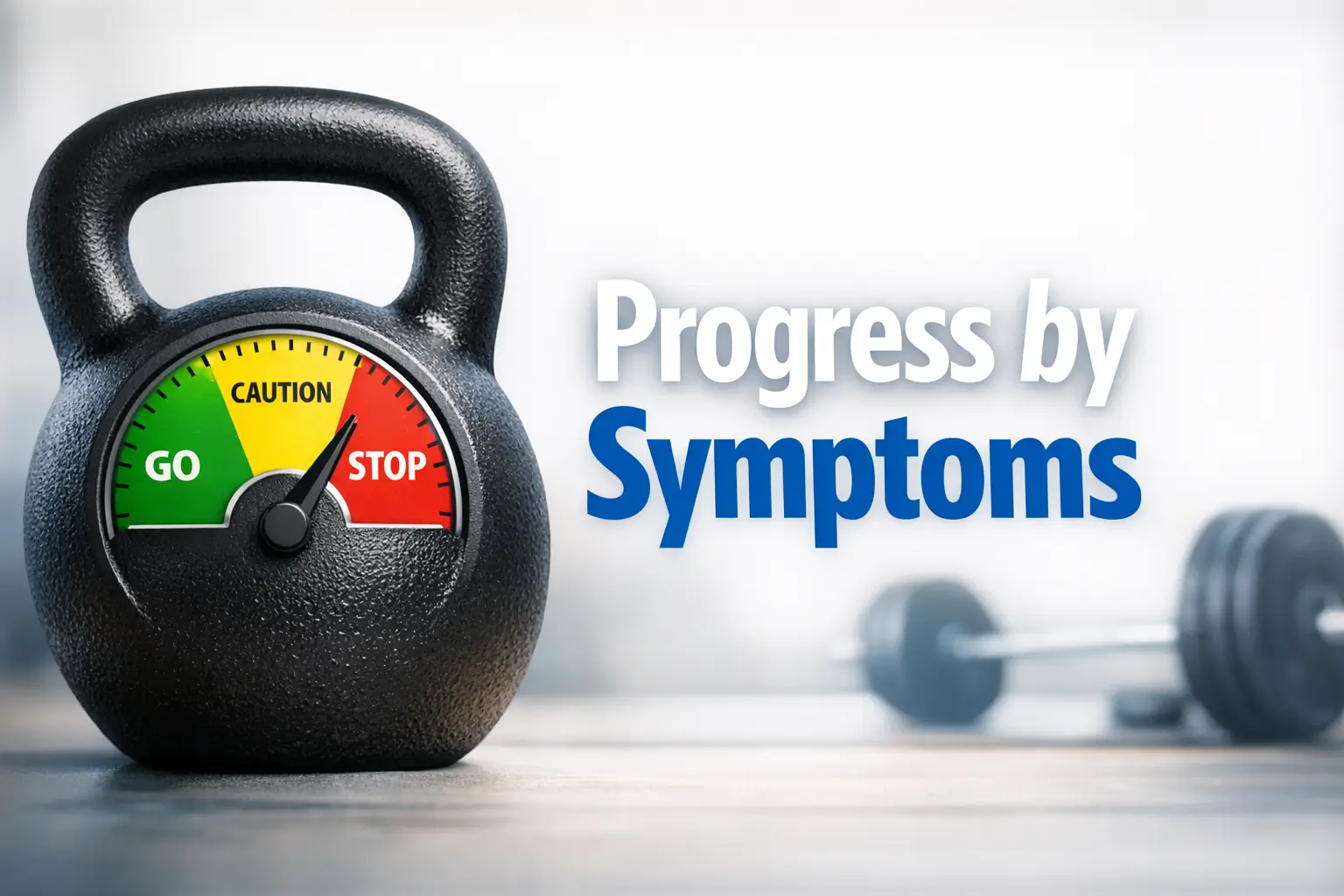
Rebuild Your Pull Without Gambling Your Nerve
Most deadlift comebacks don’t fail on the platform—they fail 24 hours later, when leg symptoms creep farther down the line and Monday’s “good session” becomes Friday’s setback.
If you’re dealing with sciatica and deadlifts, the issue usually isn’t effort; it’s dose, timing, and progression discipline. The modern pain point is brutal: you’re strong enough to train, but one wrong jump in load or range of motion can light up nerve symptoms, disrupt sleep, and reset weeks of work.
Table of Contents
Safety / Disclaimer
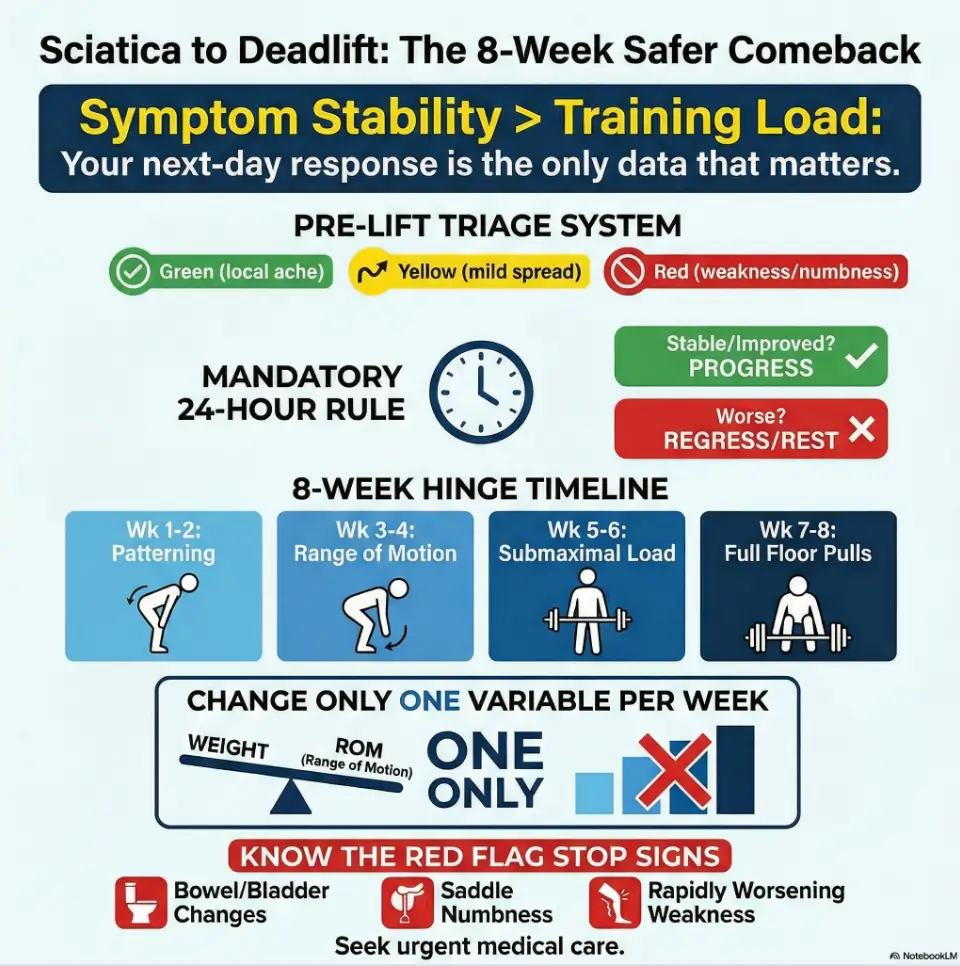
This article is educational and not a diagnosis or personal treatment plan. New bowel or bladder dysfunction, saddle numbness, or rapidly worsening weakness are emergency warning signs and need urgent in-person medical evaluation. Family medicine and spine guidance consistently treat these as red-flag scenarios rather than “watch and wait” problems; review this concise low-back-pain emergency checklist if you’re unsure.
If your pain is severe, persistent, or changing character, work with a licensed clinician (PCP, sports PT, or spine specialist). In the US system, a conservative lifting comeback is strongest when medical triage and training decisions are linked rather than siloed.
1) Start with Triage: Is This a “Train-Through” Day or a “Stop-and-Check” Day?
Pain map first: local back pain vs radiating leg symptoms
Before your warm-up, do a 30-second symptom map. Local low-back ache is one story. Pain, tingling, or burning that runs farther down the leg is a different story. If symptoms “travel outward” (peripheralize), treat that as a yellow-to-red signal. The goal is not zero sensation forever; the goal is no worsening pattern across the session and the next day. If you need a quick differential refresher, compare sciatica vs herniated-disc symptom patterns.
Irritability test: what happens during set, 2 hours later, next morning
Use a three-check system:
- In-session: Do symptoms spike with each set?
- +2 hours: Do you feel settled or progressively hot/guarded?
- Next morning: Are leg symptoms same/better, or clearly worse?
I once ignored the +2 hour signal because the bar speed looked great. Thursday me regretted what Monday me called “confidence.” Don’t negotiate with your own data.
Let’s be honest… if symptoms spread down the leg, it’s not a grit problem
Deadlift comebacks fail when lifters confuse courage with denial. Your nervous system does not respond to pep talks. It responds to tolerable dose, repeatable movement, and recovery bandwidth.
- Map symptoms before loading
- Run 3 checkpoints (during, +2h, next AM)
- Escalate if symptoms spread or intensify
Apply in 60 seconds: Write your green/yellow/red criteria in your training log before your first set.
2) Who This Is For / Not For: Fit the Plan Before You Lift
For: lifters with stable, non-worsening symptoms and medical clearance when needed
This plan is for lifters who can walk, hinge, and train at low-to-moderate effort without progressive neurological change. If symptoms are stable and your daily function is not trending downhill, conservative progression is reasonable.
Not for: progressive weakness, saddle symptoms, bowel/bladder red flags
If you notice foot drop progression, new numbness in saddle region, urinary retention/incontinence, or bowel changes, stop self-programming and seek urgent care. These are not “mobility deficits.” They are medical red flags.
Borderline cases: when to shift from self-coaching to clinician-led rehab
Shift to clinician-led rehab when your training weeks become a loop of “small progress, then same flare.” A skilled physical therapist can screen movement strategy, neural irritability, and load response faster than guesswork. In practice, this saves weeks—especially when built around a structured physical therapy plan for sciatica.
Eligibility checklist (yes/no)
- Symptoms are not progressively worsening down the leg
- No new bowel/bladder/saddle warning signs
- You can perform unloaded hinge with controlled form
- Next-day symptoms are stable after light training
Neutral next step: If any answer is “no,” pause progression and get medical/rehab review first.
3) Red-Flag Filter: When to Seek Help Before Week 1
Urgent signs you do not “mobility-drill away”
Emergency signs include new bowel/bladder dysfunction, saddle anesthesia, and rapidly progressive motor deficits. If these appear, skip forum advice and seek urgent in-person care. Major family medicine references emphasize immediate evaluation here.
“I’ll wait a week” errors that can cost recovery time
Classic error: symptoms are marching down the leg, but training load still goes up because “pain is only 3/10.” Pain intensity alone can mislead. Distribution, weakness trend, and recovery time matter more. If symptom spread is confusing, this breakdown on hamstring tightness vs nerve pain is useful for context.
Who to see first in the US system (PCP, sports PT, spine specialist)
Good default path:
- PCP/urgent care for triage and red-flag screening
- Sports PT for graded exposure and movement strategy
- Spine specialist when neuro deficits progress or conservative plan stalls
Short version: triage first, ego later.
4) Week 0 Baseline: Set Your Non-Negotiables Before Touching the Bar
Baseline metrics: pain score, neural symptoms, sleep, walking tolerance
Track four baseline metrics for 7 days:
- Pain (0–10) at rest and after activity
- Leg symptom map (where it travels)
- Sleep hours and wake quality
- Walking tolerance (minutes before irritation)
When lifters skip baseline, every week feels random. When they log baseline, patterns become obvious by day 5–7. If walking itself is provocative, compare your pattern with sciatica pain when walking triggers.
Movement screen: hip hinge, brace, unloaded RDL pattern
Film 2 sets of unloaded hinge and light RDL. Look for repeated lumbar flexion under fatigue, breath-holding chaos, or asymmetrical shift. Keep it boring and strict.
Recovery floor: sleep, steps, and stress load as training variables
Recovery floor means minimum standards: 7-ish hours sleep target, consistent walking, and lower life stress exposure where possible. I’ve seen “perfect programming” fail because sleep sat at 5 hours for two weeks. Physiology votes before willpower does. Night pain often improves when you fix position and setup; these guides on how to sleep with sciatica and side-sleeper sciatica setup can help.
Show me the nerdy details
Nerve-irritable states usually tolerate graded loading better when volume and range are controlled, exposure is frequent but submaximal, and day-to-day autonomic stress is managed. In practical terms: smaller doses, cleaner reps, better recovery rhythm.
Baseline logs
Unloaded hinge
Deload + pattern
Block RDL
ROM progression
Tempo control
Submax loading
Hold weeks
Floor pulls
Consistency test
Rule: Progress only if in-session + next-day signs stay stable.
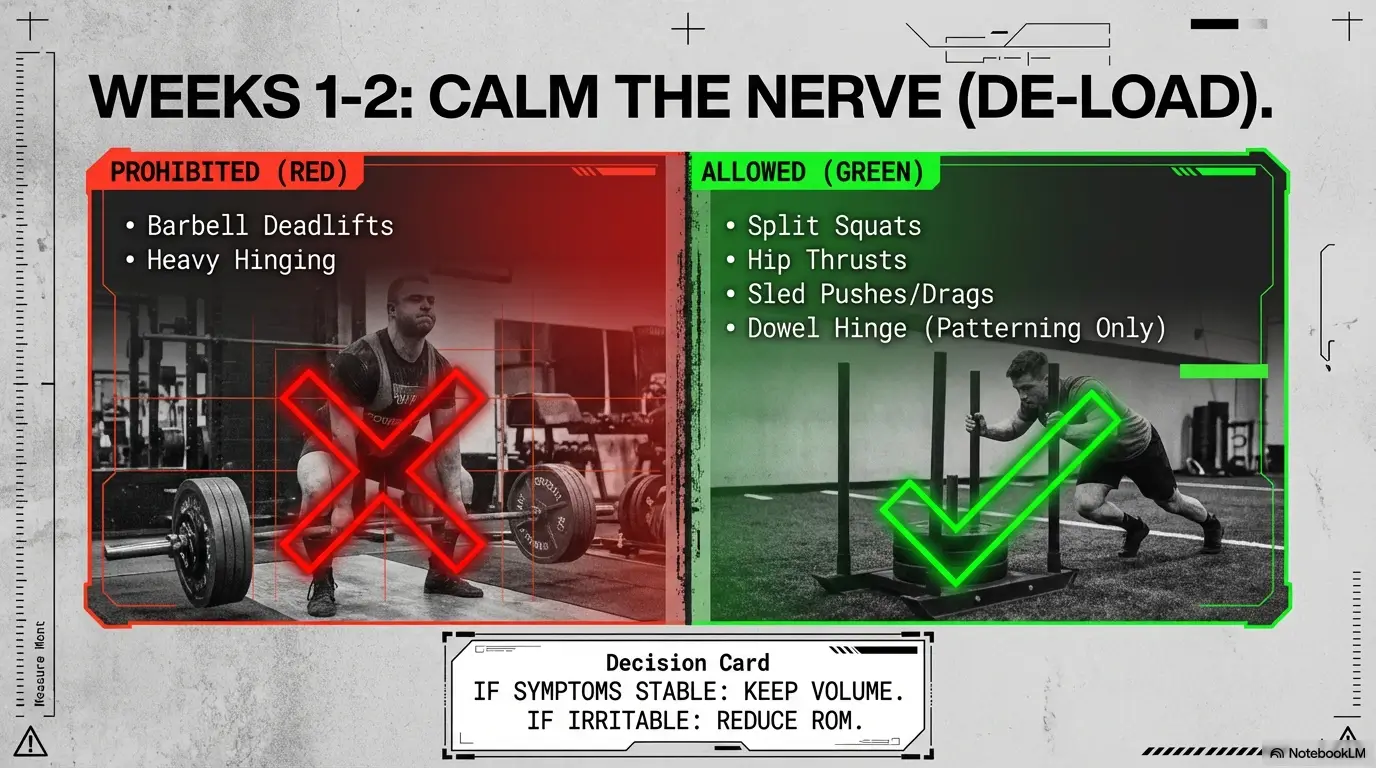
5) Week 1–2 Calm the Nerve: De-Load Without De-Training
Training substitutions: split squat, hip thrust, sled, carries
You are not “doing nothing.” You are re-allocating stress. Use lower-body patterns that keep symptoms quiet: split squats, hip thrusts, sled pushes/drags, and loaded carries. Keep intensity moderate, stop 2–4 reps before breakdown.
Hinge re-entry: dowel hinge → kettlebell RDL from blocks
Start with dowel hinge for patterning, then move to KB RDL from blocks (reduced range). Typical starting zone: 2–3 sessions/week, 2–4 sets, 5–8 reps, RPE 5–6. The barbell can wait.
Volume ceiling: stop while reps still look “too easy”
If set 3 looks like a grind, you started too heavy or went too far. Stop early enough that tomorrow still likes you. For low-irritability core prep before hinge work, many lifters do well with a brief McGill Big 3 in 10 minutes block.
Decision card: Week 1–2
When A: symptoms stable, sleep adequate, no leg spread → keep volume or add tiny load.
When B: next-day irritability up, symptoms peripheralize → reduce ROM and set count.
Time/cost trade-off: one conservative week now often saves 2–4 setback sessions later.
Neutral next step: Pick one hinge variation and keep it unchanged for 2 sessions before deciding.
6) Week 3–4 Rebuild the Pattern: Earn the Hinge, Then Earn the Floor
Elevated pull progression: high blocks → mid-shin blocks
Move from higher blocks to lower blocks only if symptoms remain stable for at least two exposures. This is where lifters get impatient: range and load both call your name. Ignore both at once; pick one variable only.
Tempo and pauses to improve control without chasing load
Try 3-second eccentric with 1-second pause just below knee. This reveals control gaps at lower absolute load. Your ego hates this. Your spine often loves it.
Here’s what no one tells you… slower eccentrics expose the real weak link
Often it is not “weak hamstrings,” but breath/bracing drift after rep 4. In my own training, one breath reset cue did more than a 20-lb jump ever did.
- Lower blocks only after 2 stable exposures
- Use tempo to build control at lower load
- Change one variable per week
Apply in 60 seconds: Circle one variable for this week: ROM or load (not both).
7) Week 5–6 Reintroduce Deadlift Loading: Submaximal Is the Strategy
RPE guardrails (cap effort before symptom drift)
Cap main pulls around RPE 6–7. If your form or symptoms drift, stop the set even if you “could do more.” Recovery-friendly strength is still strength.
Rep ranges that protect form under fatigue
Use 3–5 rep sets for main hinge. Avoid high-rep grinders while symptoms are fresh. Pair with low-risk accessory work and keep total hinge exposures predictable.
Week-to-week load math: small jumps, planned hold weeks
Progression example: +2.5% in week 5, +2.5% in week 6 only if next-day status is stable. If symptoms rise, run a hold week with same load and lower volume. Boring math, excellent outcomes.
Mini calculator (manual)
Inputs: Current tolerable top set load, symptom status (stable or worse), sleep average.
Output: If stable + sleep acceptable → add 2.5%. If not stable → hold load and cut one set.
Neutral next step: Decide tomorrow’s top set now, before the gym music convinces you otherwise.
8) Week 7–8 Return to Full Pulls: Intensity Last, Consistency First
Transition from partial ROM to floor pulls
Reintroduce floor pulls after stable block work and symptom containment. Start with conservative volume: 2–4 work sets, no grindy rep 5 face. Keep setup identical across sets so you can read signal clearly.
Singles vs sets of 3–5 for safer confidence rebuilding
Singles can be useful if they’re truly submaximal and technically crisp. Many lifters do better with controlled triples at moderate effort. Choose the format that keeps form and symptoms calm.
How to test readiness without turning it into a max-out day
Readiness test = one clean top set + next-day response check. Not a surprise PR attempt. The Friday setback pattern usually begins as Monday overconfidence.
Short Story:
A lifter I coached once came back after a nasty leg-radiating flare. Week 1 looked humble: dowel hinges, sled drags, and the emotional pain of using plates that felt like coasters. By week 4, he could pull from low blocks with pristine tempo, but every time he felt good he wanted to “just test” a heavy single. We made a deal: no hero sets unless next-day symptoms had stayed flat for two full weeks.
He grumbled, then complied. Week 6 came and went without flare. Week 8, he pulled from the floor again—lighter than his old numbers, but cleaner than he had moved in years. The real win wasn’t the load. It was that his training diary stopped looking like a crime scene. He learned to trust repeated good weeks over one cinematic session. That shift, more than any accessory, made him durable.
9) Common Mistakes: 7 Ways Lifters Re-Irritate Sciatica
Mistake #1: skipping symptom gating because pain is “only a 3/10”
Low pain with worsening spread is still a warning. Track pattern, not just intensity.
Mistake #2: adding load and range in the same week
This is the most expensive shortcut in comeback training.
Mistake #3: copying someone else’s bar path and stance
Your leverages and symptom profile aren’t theirs.
Mistake #4: no next-day check-in protocol
If you never check tomorrow, you can’t program today.
Mistake #5: chasing PR identity too early
You’re rebuilding capacity, not proving character.
Mistake #6: no deload trigger rules
Define deload before you need it.
Mistake #7: ignoring sleep/stress as flare multipliers
The “same program” can hit differently on five hours of sleep. If nights are rough, tighten your sleep environment with targeted changes like knee pillow vs body pillow selection or mattress tuning via mattress firmness for sciatica.
- One-variable changes only
- Mandatory next-day log
- Deload triggers set in advance
Apply in 60 seconds: Write your deload trigger: “If leg symptoms worsen for 2 sessions, reduce ROM and volume immediately.”
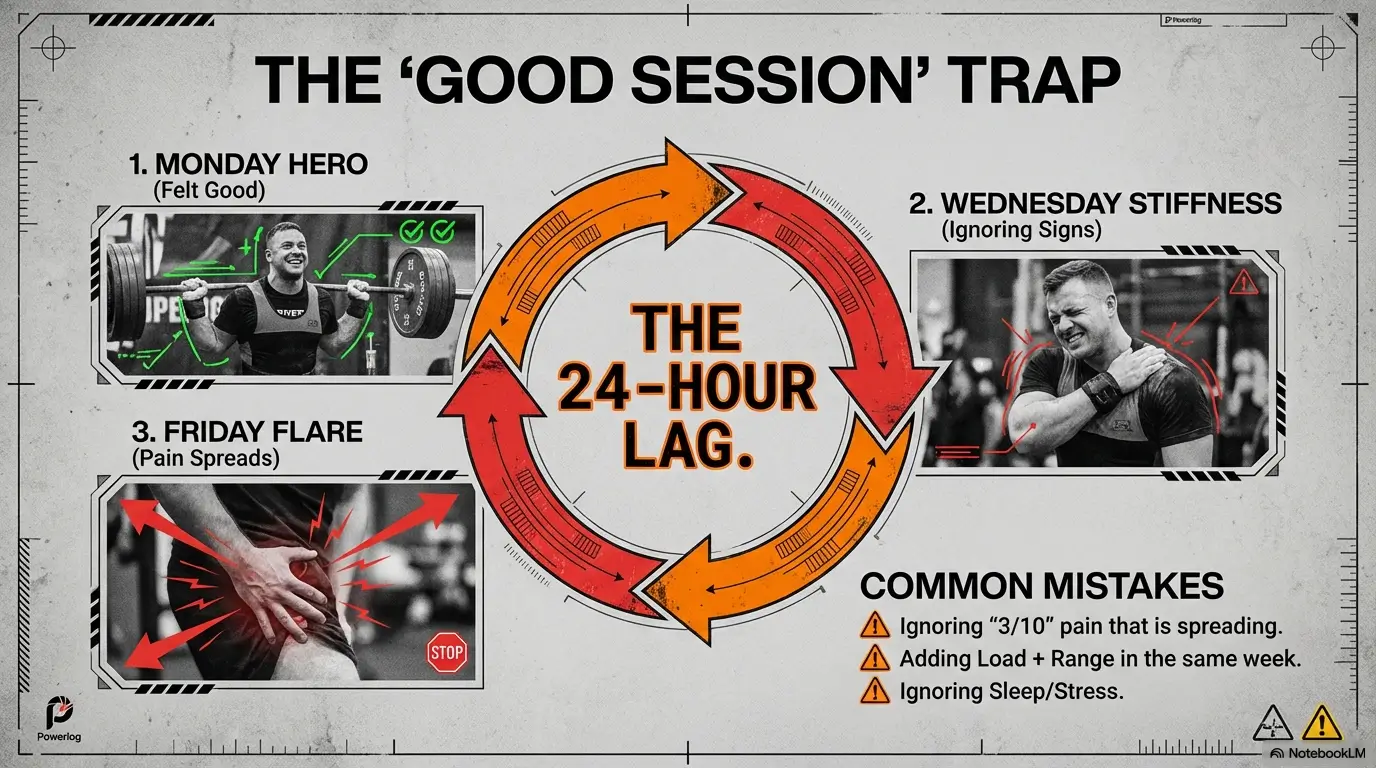
10) Don’t Do This: “Good Session” Traps That Backfire by Friday
The Monday hero lift, Wednesday stiffness, Friday setback pattern
You feel great Monday, add too much, feel “a little tight” Wednesday, then leg pain spreads Friday. If this loop feels familiar, your program needs brakes, not gas.
Why “felt fine in-session” can still mean overload
Sciatica flares often declare themselves after tissue and neural response settle. Session-only feedback is incomplete. Next-day status is part of the set.
The 24-hour rule for deciding progress vs regress
Progress only when next-day symptoms are equal or better. Regress when symptoms spread, recovery takes longer, or function drops. The 24-hour rule protects your future training self from your present training excitement.
Quote-prep list (what to gather before comparing care options)
- 7-day symptom map (location + intensity + next-day response)
- Your current lift modifications (ROM, load, RPE)
- Top 3 movements that worsen and top 3 that calm symptoms
Neutral next step: Bring this list to PCP/PT to reduce trial-and-error weeks.
11) Programming Template: Week-by-Week Return-to-Lift Skeleton
Weekly split (2–3 lower sessions) with hinge dose control
Example split:
- Day A: Hinge primary (controlled), unilateral leg work, core brace
- Day B: Non-hinge lower focus (split squat/hip thrust), carries, walking
- Day C (optional): Light hinge technique + sled + mobility
Example progression table (ROM, load, RPE, symptom checkpoint)
| Week | ROM | Load change | RPE cap | Symptom checkpoint |
|---|---|---|---|---|
| 1–2 | Reduced | 0 to +2.5% | 5–6 | No spread next day |
| 3–4 | Blocks lowering | +2.5% | 6 | Stable 2 exposures |
| 5–6 | Near full | +2.5% or hold | 6–7 | No prolonged flare |
| 7–8 | Full ROM | Micro-progression | ≤7 | Consistent week quality |
Regression options if symptoms peripheralize
Drop one step in ROM, cut one work set, reduce effort cap by 1 RPE point, and keep movement quality high. Progress resumes after two stable sessions.
Show me the nerdy details
Conservative return-to-lift frameworks work because they reduce variance. Variance drives irritability spikes. Fixed setup, small load deltas, and repeated exposures improve signal quality and decision accuracy week to week.
12) Next Step: Do This in the Next 15 Minutes
Build your personal “Green/Yellow/Red” deadlift checklist
Green: local discomfort only, stable next-day response, no spread.
Yellow: mild increase, settles within 24 hours, no neuro change.
Red: spreading leg pain, progressive weakness/numbness, bowel/bladder/saddle symptoms.
Pick tomorrow’s hinge variation and one stop rule
Choose one: high block pull, KB RDL from blocks, or tempo RDL. Write one stop rule: “If symptoms spread below knee, session ends.”
Log baseline + next-day symptoms before adding load
You close the curiosity loop here: the comeback becomes safe when your decisions are anchored to tomorrow’s data, not today’s mood. That’s how heavy lifting returns—quietly, repeatedly, and on purpose. On non-lifting days, gentle cyclical movement can help; use this comparison of recumbent vs upright bike for sciatica to choose a low-aggravation option.
- Symptom-gate every session
- Use micro-load jumps and hold weeks
- Escalate promptly for red flags
Apply in 60 seconds: Set tomorrow’s top set cap and put it in your notes now.
For practical patient-facing PT guidance on lumbar radiculopathy/sciatica and activity modification, review the American Physical Therapy Association’s education resources.
FAQ
1) Can I deadlift with sciatica, or should I stop completely?
Many lifters can continue in modified form if symptoms are stable and non-progressive. Use reduced ROM, submax effort, and strict next-day checks. Stop and escalate if symptoms spread or neurological signs worsen.
2) How long should I wait before returning to deadlifts after a flare?
Use readiness, not arbitrary time: return when daily irritability settles, unloaded hinge is controlled, and next-day response to light loading is stable for repeated sessions.
3) Is trap bar deadlift safer than conventional for sciatica?
It can be more tolerable for some due to mechanics and torso angle, but it is not universally safer. Your symptom response over 24 hours is the deciding metric.
4) Should I avoid heavy singles during sciatica recovery?
Usually yes in early phases. Submax triples/fives are often more controllable. Reintroduce singles only when weekly stability is proven and effort caps are respected.
5) What pain level is acceptable during rehab deadlifts?
Low, non-worsening discomfort may be acceptable. The critical factors are symptom distribution, neurological stability, and next-day recovery—not just one number during the set.
6) How do I know if my symptoms are improving or getting worse?
Improving: less frequent symptoms, less distal spread, better next-day recovery, and better function. Worsening: farther leg spread, increased weakness/numbness, longer flare duration.
7) What are the emergency warning signs I should never ignore?
New bowel/bladder dysfunction, saddle anesthesia, and rapidly progressive neurological deficits require urgent medical evaluation.
8) Is walking or rest better on non-lifting days with sciatica?
For many people, gentle activity is better than prolonged rest, provided symptoms don’t escalate. Dose matters: short, frequent walks often outperform all-or-nothing rest patterns.
9) Should I use a belt during return-to-lift weeks?
A belt can help bracing consistency for some lifters, but it’s not a substitute for dose control or symptom gating. If you use one, keep technique and progression rules unchanged.
10) When should I see a physical therapist instead of self-programming?
See a PT when progress stalls, flare cycles repeat, or you’re uncertain how to regress without deconditioning. Earlier skilled guidance can reduce trial-and-error weeks.
Conclusion: The comeback isn’t won by one brave session. It’s won by eight calm weeks where your plan survives real life—busy mornings, poor sleep nights, and days when discipline is quieter than hype. If you do one thing in the next 15 minutes, create your green/yellow/red checklist and set tomorrow’s hinge cap. That single page can protect months of training momentum.
Last reviewed: 2026-02.