
Pain, routine, and the quiet warning signs
How to Tell If Pain Is Changing Your Routine
Before It Shrinks Your Life
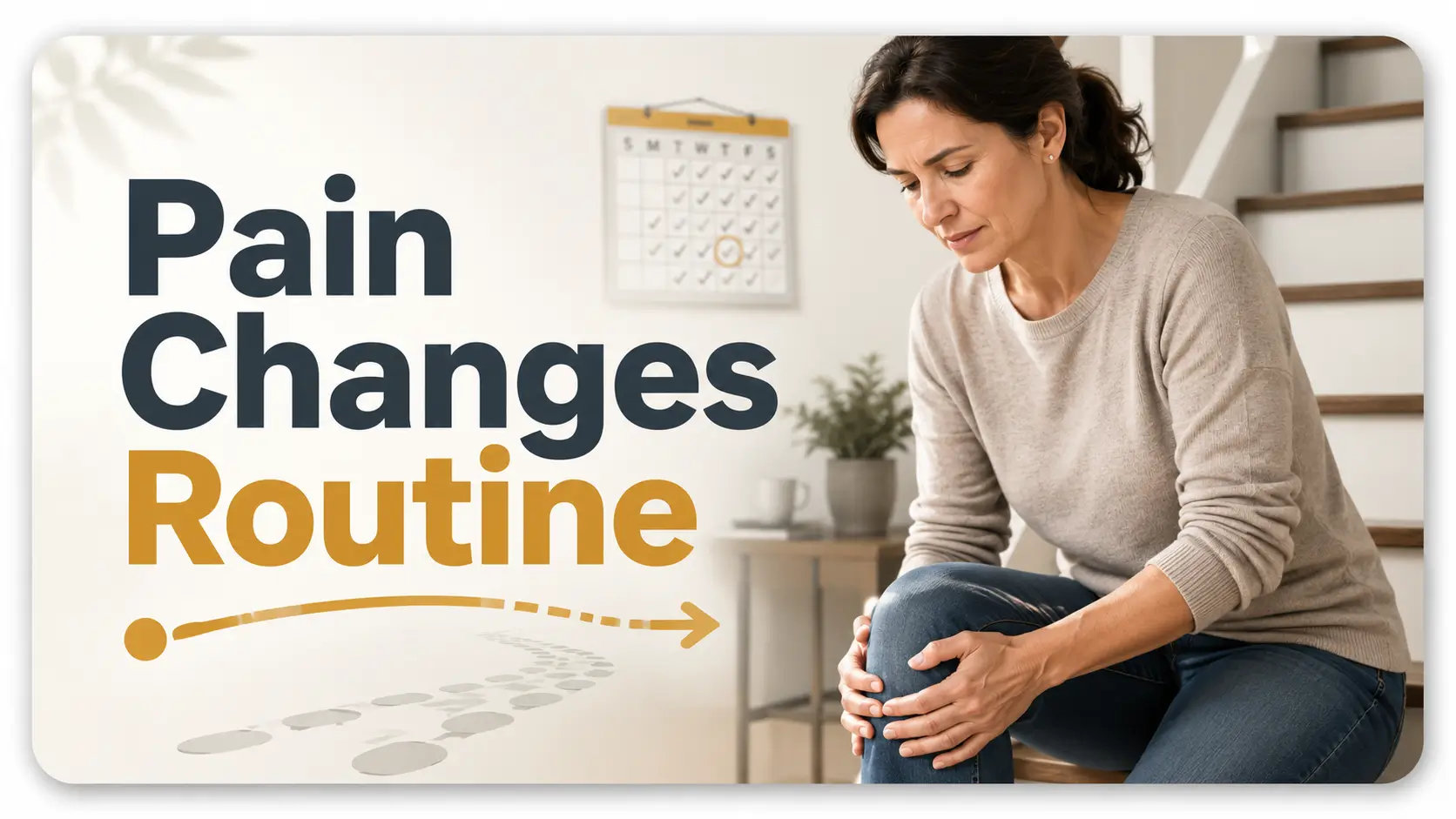
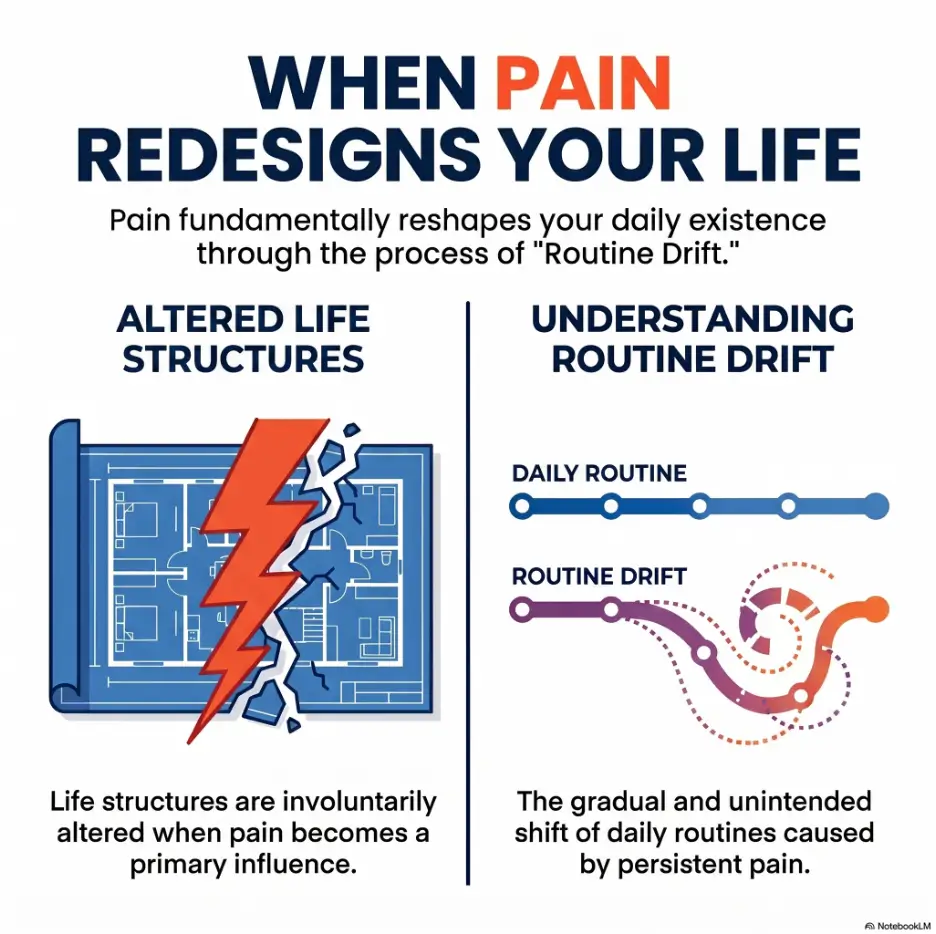
Pain rarely arrives with a clipboard and announces, “I will now reorganize your Tuesdays.” More often, it begins as a small edit: you park closer, skip the stairs, sleep with an extra pillow, cancel one dinner, then another. The change feels practical, almost sensible. That is what makes it easy to miss.
This guide is for adults who are still functioning, still working, still caregiving, still getting through the grocery store, but have started making private deals with their body. The real question is not only “How bad is the pain?” It is “What has pain quietly taken off the calendar?”
You will learn how to spot routine drift, track lost function, notice sleep and medication patterns, compare free self-tracking with paid help or professional care, and prepare a cleaner conversation with a clinician before memory turns fuzzy and every week starts sounding the same.
Spot the drift
Find the small avoidances that show pain is steering your day.
Track what matters
Log function, sleep, medication timing, mood, and recovery time.
Know the next step
Decide when self-care is enough and when medical help is smarter.
The goal is not to panic. It is to catch the pattern while your life is still roomy enough to adjust 🧭
Snapshot
This article is for adults noticing that pain is changing sleep, work, errands, exercise, mood, or social life. It helps you separate ordinary temporary discomfort from a pattern that deserves attention. By the end, you will have a simple 7-day pain pattern log, a routine-change checklist, and a clearer way to talk with a doctor, physical therapist, or other qualified professional.
Table of Contents
Before You Act: Pain Can Be Practical and Still Be Serious
This article is educational. It can help you notice patterns, prepare better questions, and decide when to seek qualified care. It cannot diagnose the cause of pain, rule out serious conditions, or tell you which treatment is right for your body.
Pain that is new, severe, worsening, unexplained, connected to injury, or paired with symptoms such as numbness, weakness, fever, chest pain, shortness of breath, sudden swelling, confusion, trouble walking, or bowel or bladder changes should be evaluated promptly. If symptoms feel urgent, use emergency services rather than waiting for an appointment.
For ongoing pain that changes your routine, a primary care clinician, orthopedist, neurologist, physical therapist, occupational therapist, pharmacist, or pain specialist may be part of the conversation. The right starting point depends on symptoms, insurance access, injury history, age, job demands, and how much function has changed.
Key takeaway
Do not wait until pain becomes unbearable. A clear pattern of lost function is enough reason to ask for guidance, even when the pain number sounds “mild.”
For general warning signs, official health resources can be useful starting points. They should not replace care, but they can help you decide whether a symptom belongs in the “watch and document” category or the “get help now” category.
Pain Changing Your Routine: The Fast Answer
Pain may be changing your routine if you are quietly avoiding stairs, canceling plans, sleeping differently, moving less, relying more on medication, or planning your day around “not making it worse.” The biggest clue is not pain intensity alone. It is the pattern: what you stop doing, delay doing, or dread doing because pain has started steering the wheel.
A pain score can be useful, but it is too small to carry the whole story. A “4 out of 10” that prevents you from walking the dog, sitting through work, lifting laundry, cooking dinner, or sleeping through the night deserves more attention than a “7 out of 10” that passes quickly and leaves no footprint.
The better question is: what has pain made smaller?
Think of your routine as a house with lights on in every room. Pain does not always knock down a wall. Sometimes it simply turns off one lamp at a time.
You may still be working, parenting, exercising, and keeping appointments. But if each activity now requires more bargaining, more recovery, more medication, or more fear, pain is no longer just a sensation. It is becoming a planner.
The Routine Shrinkage Framework
1. Notice
What now feels harder?
2. Compare
How was this three months ago?
3. Track
What changed this week?
4. Ask
Does this need care?
5. Adjust
Choose safer next steps.
The First Clue: Your Day Has New Pain Rules
Pain rules are the private instructions you start following without writing them down. “Take the elevator.” “Do not sit on that side of the couch.” “Avoid the heavy door.” “Only buy groceries if the cart return is close.”
At first, these rules feel harmless. Everyone adapts. The trouble begins when your adaptations multiply and you stop seeing them as data.
You plan errands around parking, stairs, or seating
Maybe you choose the pharmacy with closer parking, even though the prices are higher. Maybe you avoid a favorite café because the chairs are unforgiving little wooden opinions. Maybe a two-stop errand now feels like a campaign.
That does not mean you are weak. It means your body is using logistics to protect itself. Logistics can be smart in the short term, but they become important clues when they keep expanding.
You avoid certain shoes, chairs, bags, or routes
A practical swap can help. Better shoes, a lighter bag, a higher chair, or a shorter route may reduce strain. But when your whole day becomes a puzzle of “safe” objects and “bad” objects, it is time to write the pattern down.
For a desk worker, that might look like avoiding the office chair after lunch. For a caregiver, it might mean carrying laundry in tiny loads. For a parent, it might mean not sitting on the floor because getting up feels like a negotiation with gravity.
You choose convenience over normal preference
You order delivery because cooking means standing. You decline a concert because the seats are unknown. You stop going to the bigger grocery store because the aisles feel like a marathon with fluorescent lighting.
Convenience is not the enemy. But when convenience becomes the only way to finish a day, pain has begun to edit your choices.
Quick self-check
Name three things you now choose because they are easier on your pain, not because you actually prefer them. If that list forms quickly, your routine is already giving you evidence.
The Routine Drift Test: What Have You Quietly Stopped Doing?
Routine drift is the slow fading of normal activities. It is not always dramatic. It can look like being busy, tired, practical, older, stressed, or “just not in the mood.”
The test is simple: compare your current week with your normal life three months ago. Do not compare yourself with an athlete, influencer, neighbor, or someone who treats pain as a competitive sport. Compare you with you.
The hobby you “just haven’t felt like doing”
Pain often reaches hobbies before it reaches basic survival tasks. You still work, pay bills, and feed people. But the guitar stays in the case. The garden gets weedy. The evening walk becomes a memory wearing sneakers.
That matters because hobbies reveal quality of life. They are often the first soft things to disappear when pain starts demanding a budget.
The walk that became shorter, then optional, then gone
Many people do not stop moving all at once. They shave the edge off. A 30-minute walk becomes 20. Then 10. Then “maybe tomorrow.”
Shortening an activity can be a smart temporary modification. But if the trend keeps moving in one direction, the pattern deserves attention. This is especially true if pain changes your strength, balance, walking tolerance, or confidence outside the house.
The social plan you skip because recovery feels too expensive
Pain charges interest. A dinner out may cost two days of stiffness. A family gathering may require medication, careful seating, and a recovery plan. A movie may be less about the film and more about whether you can sit that long.
When social life becomes a cost-benefit spreadsheet, pain is no longer private. It is affecting connection, mood, and identity.
Short Story: The Saturday That Got Smaller
Marcus used to run Saturday errands in one easy loop: hardware store, grocery store, coffee, then the park with his daughter. When his hip started aching, he did not call it a problem. He called it “being efficient.”
First, he skipped the hardware store. Then he ordered groceries for pickup. Then he sat in the car while his daughter played for ten minutes instead of walking the trail with her.
Nothing looked dramatic from the outside. He was still showing up. But his Saturday had lost half its rooms.
The turning point came when he wrote one sentence before a medical visit: “Pain has changed my routine by making me avoid walking after errands.” That sentence gave the appointment a target. It was not just hip pain anymore. It was a life pattern.
Pain Math: When Small Changes Start Adding Up
Pain math is the arithmetic of ordinary life. One extra rest break seems minor. Ten extra rest breaks a week can reshape your schedule. One avoided staircase is reasonable. Avoiding every staircase changes your world.
This is where many people underreport their pain. They say, “It is not that bad,” because they can still finish the task. But the task now takes longer, costs more energy, or requires recovery.
More rest breaks than before
Rest breaks are not failure. They can be wise. The question is whether the number, length, and necessity of rest breaks have changed.
If you now sit down halfway through cooking, pause during a shower, rest after carrying a basket, or need ten quiet minutes after driving, that belongs in your pain pattern log. It is functional information.
More time needed to get ready
Pain can slow the small choreography of morning: socks, shoes, shower, hair, belt, stairs, car door. These little tasks are so ordinary that people rarely mention them at appointments.
But for clinicians, the phrase “It takes me 25 minutes longer to get ready because bending hurts” is more useful than “My pain is annoying.” Time is a clean signal.
More recovery after ordinary tasks
Recovery time is one of the best clues that pain is changing your routine. Ask yourself: what happens after the task?
- Do you need to lie down after grocery shopping?
- Do you avoid cooking the day after cleaning?
- Do you skip exercise after a long commute?
- Do you need pain relief before bed after a normal workday?
If the after-effect is bigger than the task itself, the task may be exceeding your current capacity.
Less tolerance for standing, sitting, lifting, bending, or driving
Function often changes by position. Some people can walk but cannot sit. Others can sit but cannot stand in line. Some can lift once, but not repeatedly. A remote worker may tolerate typing for 20 minutes before neck or shoulder pain takes over the room like a bad radio station.
Track the position, duration, and trigger. “Sitting longer than 30 minutes increases leg pain” gives a care professional a much sharper starting point than “My back hurts sometimes.”
| Routine change | What it may reveal | What to write down |
|---|---|---|
| Shorter walks | Reduced tolerance, fear of flare, weakness, stiffness, or pain with impact | Distance, time, where pain starts, what helps |
| Avoiding stairs | Knee, hip, back, balance, or strength limitation | Upstairs or downstairs, railing use, pain location |
| Needing more rest breaks | Lower stamina or higher pain cost | Number of breaks and what activity caused them |
| Changing sleep position | Night pain, joint irritation, nerve symptoms, or pressure sensitivity | Position, wake-ups, pillows used, morning pain |
| Planning around medication | Relief timing has become part of the schedule | Medication, dose timing, activity, relief duration |
Key takeaway
Pain math is not about being dramatic. It is about counting the small changes before they become your new normal.
Do Not Ignore the Workaround Spiral
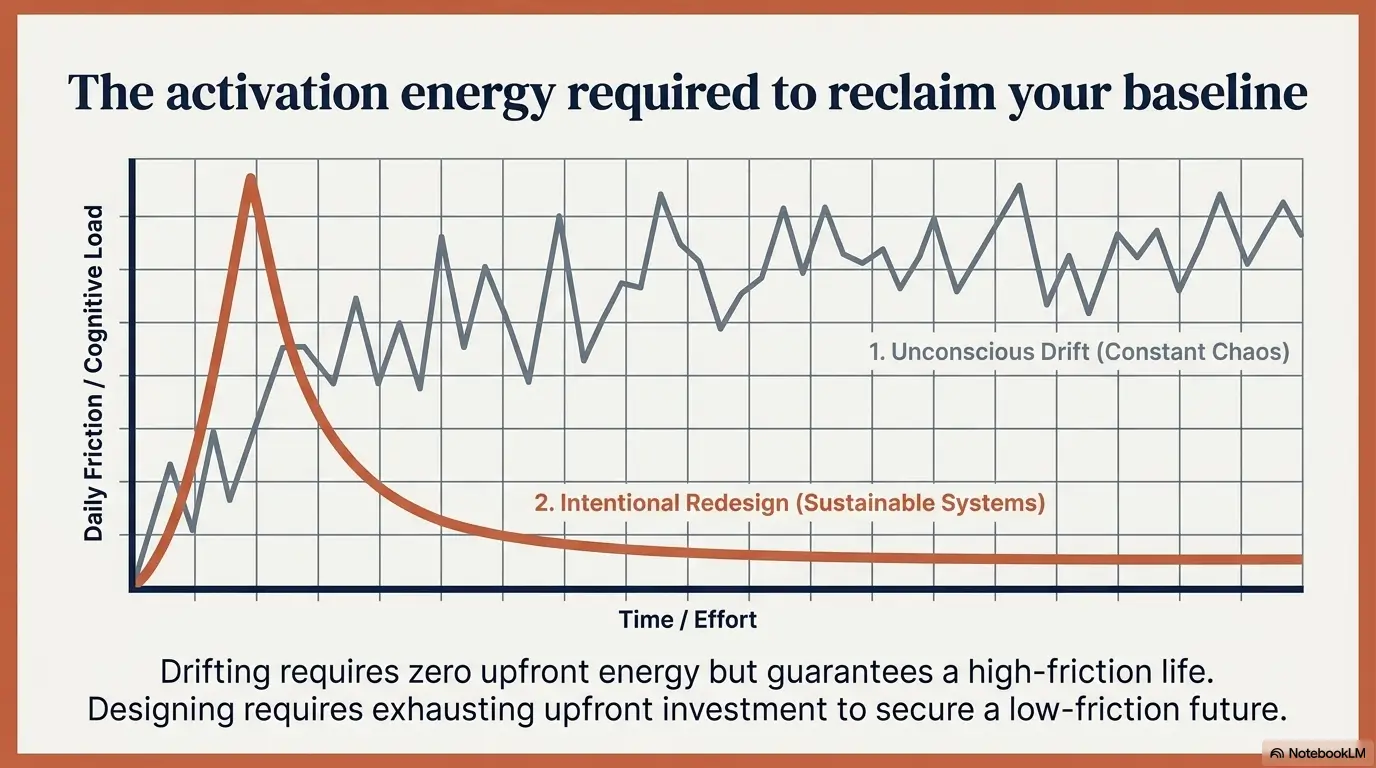
A workaround is an adjustment that helps you get through the day. A workaround spiral happens when those adjustments keep stacking up without a plan, like chairs piled against a door you never open.
Some workarounds are excellent. A supportive chair, lighter bags, voice dictation, a grabber tool, a shower chair after surgery, or a temporary brace can protect function. The problem is not adaptation. The problem is adaptation without review.
Mistake: treating every workaround as a solution
If a workaround helps you heal, pace yourself, or prevent strain while you seek care, it can be useful. If it only helps you avoid asking why function keeps shrinking, it may be delaying help.
For example, using a cushion for a week after a mild flare may be sensible. Buying three cushions, avoiding every chair, and canceling travel because sitting hurts may mean you need a clearer assessment.
Mistake: assuming “I can still function” means “I am fine”
Many adults are professional-grade tolerators. They can run a household, answer emails, care for others, and still say, “It is manageable.”
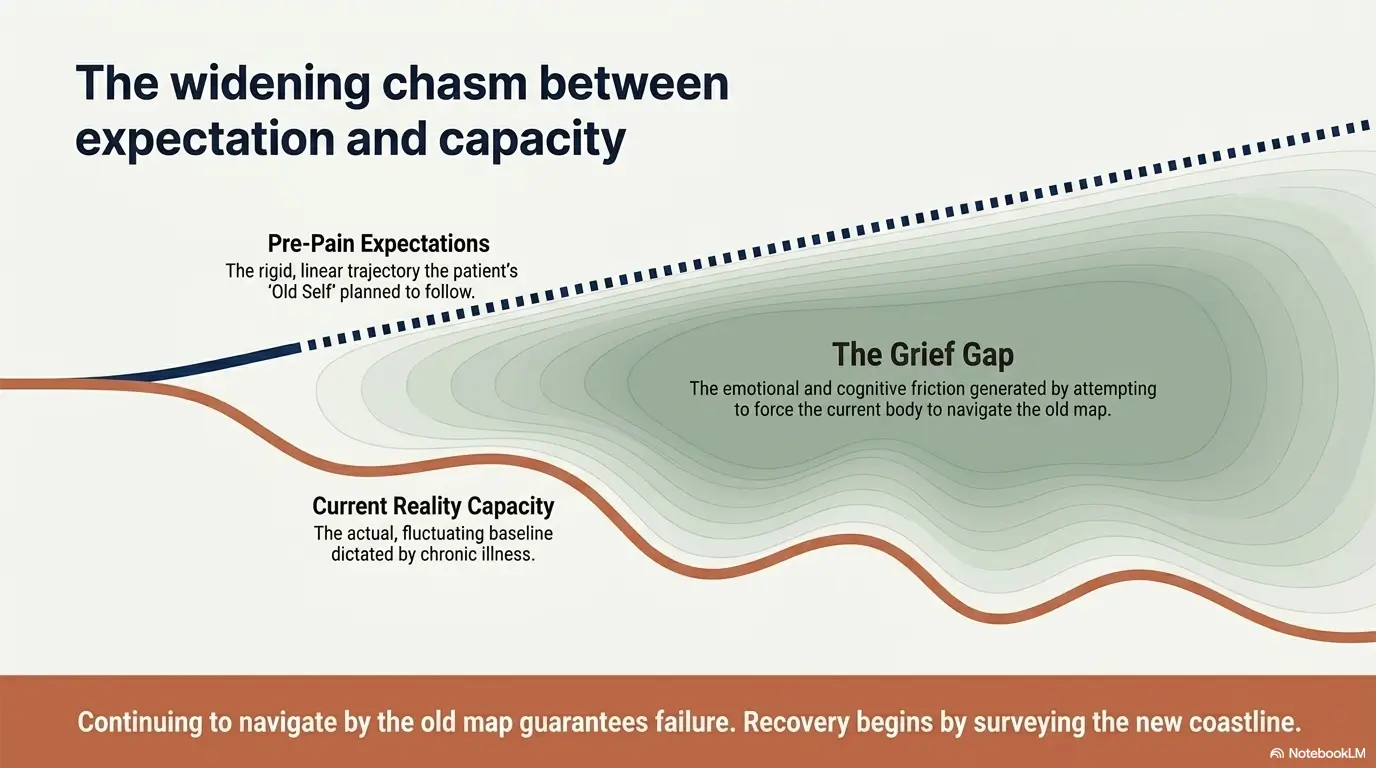
But functioning is not the same as thriving. It may simply mean you have built enough detours to get through the day. Detours are useful during roadwork. They are less useful when no one is fixing the road.
Mistake: letting pain redesign your home, desk, and schedule without noticing
If you have rearranged furniture, moved supplies to waist height, changed your desk, stopped using certain rooms, or built a whole bedtime system around one painful area, pause and document it.
Home and desk changes can be smart. They can also show how much your life has already been modified. If you are recovering from surgery or dealing with orthopedic pain, related guides such as how to recognize a recovery plateau at home and walker path safety can help you think in practical, room-by-room terms.
Better question: is the workaround helping you heal, or helping you avoid care?
This question is gentle but sharp. A helpful workaround should have a purpose, a review point, and a next step.
- Purpose: What problem is this workaround solving?
- Review point: When will I check whether I still need it?
- Next step: What will I do if I need more of these workarounds next week?
| Workaround | Helpful when… | Concerning when… |
|---|---|---|
| Taking shorter walks | You are pacing a temporary flare and gradually rebuilding | The walk keeps getting shorter each week |
| Using a brace or support | A clinician recommended it, or it helps a short-term strain | You cannot do routine tasks without it and have no plan |
| Changing desk setup | It reduces strain and supports better posture breaks | You keep buying items but function keeps declining |
| Skipping chores | You are recovering from injury or surgery | You avoid basic tasks because pain feels unpredictable |
| Timing activities around medication | You are following a care plan | You cannot leave the house unless relief has already started |
Sleep, Mood, and Medication Creep Are Not Side Notes
Pain does not stay politely in one room. It wanders into sleep, patience, focus, appetite, planning, relationships, and the tiny emotional weather inside ordinary decisions.
That is why a routine-change assessment should include more than the sore body part. You are not just tracking pain. You are tracking the ripple.
Sleep is the smoke alarm most people mute
Night pain can show up as trouble falling asleep, waking when you roll, sleeping in strange positions, or feeling stiff and foggy in the morning. Poor sleep can also make pain feel louder the next day, creating a loop that feels unfair before breakfast.
Do not only write “bad sleep.” Write what happened. “Woke at 2:10 a.m. when turning onto right side” is useful. “Needed two pillows under knees” is useful. “Slept in recliner three nights this week” is very useful.
If night pain is a major issue, you may find it helpful to read how to explain night pain to a doctor before your visit.
Mood and focus are part of the pattern
Irritability after errands, brain fog after poor sleep, or anxiety before once-simple activities can all be part of the pain story. Pain makes the brain spend energy on monitoring, predicting, protecting, and bargaining.
For busy parents and caregivers, this often appears as a shorter fuse. For remote workers, it may show up as scattered focus. For active people, it may feel like grief in a tracksuit: not exactly sadness, but the ache of losing easy movement.
Medication creep can hide in a responsible-looking routine
Medication creep does not always mean misuse. It can mean your relief pattern has become the skeleton of your day. You may time errands around an over-the-counter pain reliever, avoid exercise unless relief is “on board,” or become anxious when you forget to bring medication.
Track medication carefully and follow label directions or your prescriber’s instructions. If you are using more frequent relief than before, mixing medicines, feeling confused about timing, or taking medication to keep up with normal tasks, talk with a clinician or pharmacist. For medication tracking concerns, how to monitor medication confusion may help organize the conversation.
Key takeaway
Sleep disruption, mood changes, and medication timing are not “extra details.” They help show whether pain is becoming a daily operating system.
Show me the nerdy details
Pain is not only a signal from tissue. The nervous system, sleep quality, stress level, movement habits, inflammation, fear, prior injury, medications, and daily workload can all influence how pain is experienced and how much it changes function. That does not mean pain is “all in your head.” It means the pain system is connected to the whole person.
This is why clinicians often ask about timing, triggers, numbness, weakness, sleep, mood, work demands, exercise, and what improves or worsens symptoms. A clean function log gives them pattern data, not just a pain rating.
Movement Changes: The Body Starts Whispering in Substitutions
Before pain changes what you do, it often changes how you do it. You limp. You brace. You guard. You turn your whole body instead of twisting. You use one hand more than the other. You make a tiny theatrical production out of getting out of a chair.
These substitutions are not moral failures. They are protective strategies. But they can shift load elsewhere, create new discomfort, or hide the original problem until the whole system feels cranky.
You limp, brace, guard, or move stiffly
A temporary limp after a minor strain may settle. A persistent limp, worsening limp, or limp paired with weakness, numbness, swelling, fever, injury, or inability to bear weight deserves medical attention.
Write down when the movement change appears. Morning only? After stairs? After sitting? During the first five steps? After a mile? The timing may help your provider decide what to examine.
You use one side more than the other
You may carry bags only on the left, push up from chairs with one arm, shift weight away from one hip, or avoid stepping down with one leg. Over time, the “good” side can become overworked.
For someone with shoulder pain, this may show up as using the other arm for cabinets, laundry, and car doors. For someone with knee pain, it may show up as taking stairs one step at a time. The body is a committee; when one member stops doing its share, the rest begin muttering.
You avoid reaching, twisting, squatting, or lifting
Pay close attention to movements you now avoid without thinking. These are often more revealing than the movements that still hurt.
- Do you avoid low cabinets?
- Do you leave dropped items on the floor until later?
- Do you ask someone else to carry groceries?
- Do you twist less when backing out of a parking space?
- Do you avoid reaching overhead?
If avoidance is protecting a fresh injury, it may be appropriate. If avoidance is spreading through your routine, it is time to document and ask what is safe.
The hidden cost of “just moving differently”
Moving differently can help you get through the day, but it can also change balance, confidence, strength, and endurance. That is one reason physical therapy or occupational therapy may be useful when pain affects mobility, work tasks, self-care, or household routines.
A physical therapist may assess movement, strength, range of motion, gait, and functional tasks. An occupational therapist may help with daily activities such as bathing, dressing, kitchen tasks, or work modifications. Ask what kind of provider fits your problem rather than assuming one path fits every pain story.
When to Seek Help for Pain That Changes Daily Life
The decision to seek help should not depend only on whether you can “stand it.” A better standard is whether pain is lasting, spreading, worsening, returning often, disrupting sleep, changing movement, or reducing what you can do.
When in doubt, it is reasonable to ask a qualified professional what level of care makes sense. Early care may be simpler than care after months of compensation, fear, and lost capacity.
Seek urgent care for red-flag symptoms
Urgent or emergency evaluation may be needed for symptoms such as chest pain, shortness of breath, sudden weakness, loss of bowel or bladder control, severe injury, fever with significant pain, sudden swelling, confusion, fainting, severe unexplained pain, or new numbness with weakness.
This list is not complete. If your instincts say “something is very wrong,” do not treat a blog article as a gatekeeper. Get medical help.
Book a medical visit when pain lasts, spreads, worsens, or changes function
A non-emergency medical visit is worth considering when pain keeps returning, lasts beyond a short self-care window, spreads to new areas, changes your ability to work or sleep, or creates a pattern of avoidance.
Bring examples. “I avoid stairs” is good. “I have avoided stairs at work for three weeks and now use the elevator even for one floor” is better.
If you are preparing for an orthopedic appointment, this orthopedic appointment checklist can help you arrive with sharper notes.
Ask about physical therapy if movement, strength, or mobility is affected
If pain changes how you walk, lift, sit, reach, drive, climb stairs, work, or exercise, ask whether a physical therapy evaluation is appropriate. You can also ask your clinician whether occupational therapy, imaging, medication review, specialist referral, or home modifications should be considered.
The best care conversation is not “Fix me by Friday.” It is “Here is what pain is changing. What should we check, what is safe to keep doing, and what would tell us to escalate?”
Bring a short routine-change log instead of relying on memory
Memory gets slippery in appointments. Pain also has a way of behaving politely in the exam room after acting like a raccoon in the pantry all week.
Bring a one-page log with triggers, activities avoided, sleep disruption, medication timing, and what improves or worsens symptoms. If you want a deeper prep format, see how to describe pain to a doctor and how to build a pain timeline before an orthopedic visit.
Key takeaway
A good appointment note does not need perfect medical language. It needs clear examples of what pain has changed.
Free Tracking, Paid Tools, and Professional Help: What Is Worth It?
You do not need an expensive system to notice whether pain is changing your routine. A notebook, notes app, calendar, or printable checklist can be enough for many people.
Still, some paid tools or professional services may be worth considering when pain is complex, long-lasting, tied to work demands, or hard to explain. The goal is not to buy gadgets. The goal is to reduce confusion and avoid wasting money on random solutions.
Free is enough when the pattern is simple and improving
A free approach may be enough when pain is mild, clearly linked to a temporary activity, improving, not paired with concerning symptoms, and not shrinking your routine week after week.
Use a simple log for seven days. Track what hurts, what changed, sleep, medication, and recovery time. If the pattern improves and function returns, keep pacing wisely. If the pattern worsens, bring the log to a professional.
Paid tools may help when you need structure, reminders, or reports
Some people benefit from symptom-tracking apps, wearable sleep or activity data, ergonomic tools, braces, cushions, home safety equipment, or paid appointment-prep templates. These can be useful if they help you make better decisions.
Before buying, ask: Will this help me track, move safely, sleep better, reduce strain, or communicate with care providers? Or is it just a shiny object with good lighting and a suspicious number of five-star reviews?
Professional help is worth considering when function keeps shrinking
If pain is changing work, mobility, sleep, self-care, driving, caregiving, or social life, professional evaluation may save time. It may also prevent you from spending money on items that do not match the cause of the problem.
Ask about cost before scheduling when possible. Depending on your location and insurance, out-of-pocket costs may vary widely for primary care, urgent care, imaging, physical therapy, pain clinics, specialist visits, or equipment. Confirm network status, referral rules, copays, coinsurance, deductibles, and whether prior authorization is needed.
| Option | Best for | Budget angle | Watch out for |
|---|---|---|---|
| Free notes app or paper log | Early pattern tracking, simple symptoms, appointment prep | Lowest cost | Easy to forget unless you set a daily reminder |
| Printable checklist | People who want a one-page summary | Low cost or free | May miss trends if not updated daily |
| Symptom-tracking app | People who like reminders, charts, or exportable notes | Free to subscription-based | Privacy settings and subscription terms |
| Wearable activity or sleep tracker | People comparing sleep, steps, and recovery patterns | Mid-range to premium | Data can be useful but not diagnostic |
| Physical therapy evaluation | Movement limits, strength changes, gait issues, recurring pain | Insurance or self-pay varies | Confirm visit cost, plan of care, and home exercise expectations |
| Medical specialist visit | Persistent, worsening, unexplained, or complex symptoms | Often higher cost | Referral, network, imaging, and follow-up costs |
Questions to ask before paying for a tool, service, or provider
- What problem will this solve that my current approach does not?
- Is this for tracking, comfort, safety, diagnosis, rehab, or convenience?
- Does a qualified professional recommend it for my situation?
- Can I return it if it does not fit or help?
- Will it make me more active and safer, or just more avoidant?
- What are the total costs, including follow-ups, supplies, subscriptions, or replacement parts?
- Will this information be useful at my next appointment?
Key takeaway
The best pain tool is not the fanciest one. It is the one that helps you notice patterns, avoid risky guesses, and have a better care conversation.
The 7-Day Pain Pattern Log
A seven-day log is long enough to reveal patterns and short enough that it does not become a second job. The point is not to document every twinge like a courtroom stenographer. The point is to capture the moments when pain changes behavior.
Use plain language. A clinician does not need poetry, although a little honest description never hurts. “Pain felt sharp when stepping off curb” is better than “bad.” “Avoided laundry because bending triggered back pain yesterday” is excellent.
Track what hurts, when it happens, and what changed
Each day, write the painful area, timing, trigger, and effect on your routine. Include what helped and what did not. If pain changes through the day, note the pattern.
Example: “Right knee ache after 15 minutes standing in kitchen. Sat twice while cooking. Used stairs one step at a time. Ice helped for 20 minutes.”
Record activities you avoided or modified
Avoidance is often the missing piece. People remember what they did. They forget what they skipped.
- Activities skipped
- Activities shortened
- Activities done differently
- Activities delayed until medication or rest
- Activities that caused unusual recovery time
If flares are a major issue, a focused tracker like this pain flare trigger log can help you organize causes, timing, and recovery patterns.
Note sleep disruption, medication use, mood changes, and recovery time
These details help show the size of the ripple. Write how many times you woke up, whether pain affected your position, whether medication changed your schedule, and whether your patience, focus, or mood shifted after routine tasks.
You do not need to be perfect. Three honest lines per day can do more than a beautiful tracker abandoned after Monday.
The key question: what did pain make smaller this week?
At the end of seven days, review the log and complete one sentence:
One-sentence care conversation starter
“Pain has changed my routine by making me __________________, especially when __________________, and it takes __________________ to recover.”
That sentence can become the doorway into a better appointment. It gives the provider a function problem, not just a pain complaint.
| Day | Pain trigger | Routine change | Sleep or mood effect | What helped |
|---|---|---|---|---|
| Monday | Standing to cook | Sat twice, skipped cleanup | Irritable after dinner | Rest, heat, shorter standing blocks |
| Tuesday | Driving 35 minutes | Avoided second errand | Woke once at night | Lumbar support, walking break |
| Wednesday | Stairs at work | Used elevator all day | Worried about next week | Railing, slower pace |
| Thursday | Carrying groceries | Made two trips, asked for help | Tired, low focus | Lighter bags |
| Friday | Sitting through meeting | Stood twice, lost focus | Pain louder at bedtime | Movement breaks |
FAQ
How do I know if pain is affecting my daily routine?
Pain is affecting your routine when it changes what you do, how long you do it, how you move, how you sleep, or what you avoid. Look for practical changes: shorter walks, canceled plans, more rest breaks, medication timing, changed seating, skipped chores, or anxiety before normal tasks.
Is it normal to change activities because of pain?
Temporary changes can be normal and useful, especially after a strain, flare, illness, or procedure. The concern grows when changes keep expanding, do not improve, or begin shrinking work, sleep, mobility, self-care, or social life.
When should I stop pushing through pain?
Stop pushing and seek guidance if pain is severe, worsening, linked to injury, paired with numbness or weakness, causing unsafe movement, disrupting sleep, or forcing repeated avoidance. Pushing through every flare can make it harder to tell what is helping and what is harming.
Can mild pain still be a serious problem?
Yes. Mild pain can matter if it persists, spreads, changes function, affects sleep, or comes with concerning symptoms. A low pain score with major routine changes deserves attention.
What should I track before seeing a doctor?
Track pain location, timing, triggers, activities avoided, sleep disruption, medication use, movement changes, mood effects, and recovery time. Bring examples of what you can no longer do normally.
How long should I wait before getting pain checked?
Do not wait if symptoms are urgent or concerning. For non-urgent pain, consider getting checked when pain lasts beyond a short self-care period, worsens, keeps returning, disrupts sleep, or changes daily function. If you are unsure, ask a qualified professional.
Why does pain feel worse when I am tired or stressed?
Poor sleep and stress can make the nervous system more sensitive and reduce your coping capacity. That does not make the pain imaginary. It means recovery, pacing, sleep, and emotional load all belong in the same conversation.
Should I rest or keep moving when something hurts?
It depends on the cause, severity, and symptoms. Complete rest without a plan can sometimes increase stiffness or fear, while pushing too hard can worsen flares. Ask what movement is safe for your situation, especially if pain changes strength, balance, walking, work, or sleep.
Do One 15-Minute Pain Audit Today
You do not need to solve the whole pain puzzle today. Start with one ordinary activity: walking to the mailbox, climbing stairs, showering, cooking, driving, typing, getting dressed, or sleeping through the night.
Compare it with three months ago. Is it slower, shorter, avoided, modified, more exhausting, more medicated, or followed by a longer recovery? Write one sentence. That sentence is the small lantern.
- Pick one routine activity you did this week.
- Write how it felt three months ago.
- Write how it feels now.
- List one thing you changed because of pain.
- Decide whether to watch, track for seven days, or contact a qualified professional.
If you only do one thing, write this:
Your starting sentence
“Pain has changed my routine by __________________.”
That is enough to begin. Not with panic. Not with denial. With evidence.
Last reviewed: 2026-07