

Family Recovery Guide
How to Coordinate Sibling Help After Joint Replacement
Without Family Chaos
A joint replacement recovery does not usually fall apart because nobody cares. It falls apart because everyone cares in foggy, overlapping, text-message-shaped ways. One sibling brings soup. Another forgets the pharmacy. A third says, “Tell me what you need,” then disappears into a work meeting at the exact moment the ride home from physical therapy becomes urgent.
The better plan is not louder love. It is calmer architecture. After hip or knee replacement, the family needs a simple system for rides, meals, medication reminders, home safety, therapy appointments, wound questions, overnight coverage, and the quiet emotional labor that often lands on the sibling standing closest to the front door.
This guide turns sibling help after joint replacement into a practical recovery map. You will learn how to assign roles, build a first-week coverage grid, reduce caregiver resentment, protect the patient’s dignity, and know when a concern belongs with the medical team instead of the family group chat.
Less guessing
Turn vague offers into dated, assigned tasks that siblings can actually keep.
Safer recovery
Put fall prevention, medication routines, rides, and warning signs where everyone can see them.
Fewer family sparks
Share the visible and invisible work before one sibling becomes the unpaid recovery department.
One good plan can make the first week feel less like a hallway full of alarms and more like a house with the lights already on. 🕯️
Snapshot
This article is for adult siblings coordinating help for a parent, spouse, or older relative after hip or knee replacement. It solves the “who is doing what, when, and how safely?” problem. By the end, you will be able to build a one-week recovery grid, assign sibling roles, set group-chat rules, spot escalation moments, and reduce resentment before it hardens.
Table of Contents
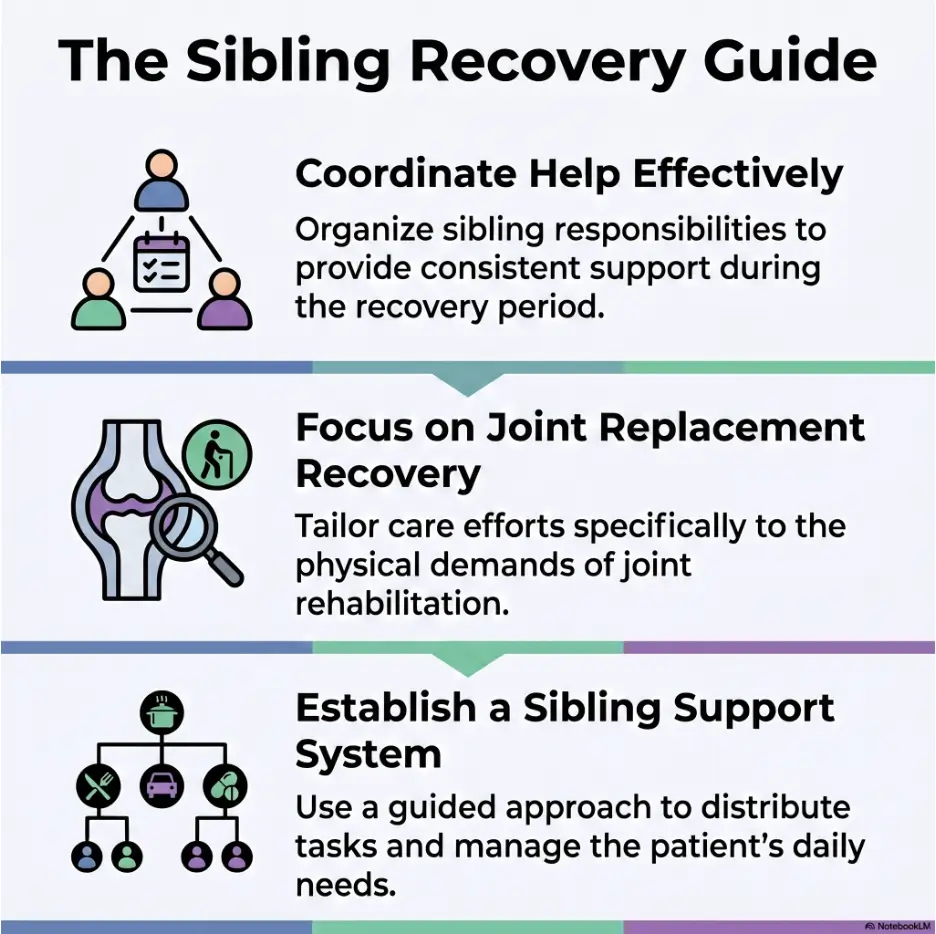
Safety First: What Siblings Should Not Decide by Group Chat
This guide is for caregiver coordination, not medical advice. A family can divide rides, meals, laundry, pharmacy pickup, and overnight check-ins. A family should not rewrite the surgeon’s discharge instructions like a committee editing a casserole recipe.
After joint replacement, the patient’s surgeon, discharge nurse, physical therapist, pharmacist, or primary care clinician should guide medication use, blood thinner timing, wound care, showering, walking limits, driving restrictions, equipment use, and activity progression. That boundary protects the patient and, frankly, protects the family from becoming a tiny medical parliament with no license and too many opinions.
The safest sibling plan separates logistics from clinical decisions. Logistics answer questions like: Who is driving to physical therapy? Who is staying overnight Tuesday? Who is checking that groceries arrived? Clinical questions sound different: Is this swelling normal? Should the pain pill be delayed? Can the dressing come off? Those questions belong to the care team.
Key takeaway
The family can manage the recovery system, but the medical team manages the recovery rules. If a sibling is unsure whether a question is clinical, treat it as clinical and call the right professional.
Create one medical lane
Choose one sibling or caregiver to keep the official medical information organized. This person does not become the doctor. They become the librarian of the discharge papers, portal messages, medication list, therapy schedule, and contact numbers.
That one-lane system prevents the classic family muddle: one sibling hears “ice several times a day,” another hears “walk every hour,” and a third remembers something about compression stockings but cannot find the paper. By day three, everyone is confident and everyone is slightly wrong.
Separate “annoying” from “urgent”
Recovery is uncomfortable. That does not mean every discomfort is dangerous. But some symptoms deserve immediate attention, especially chest pain, breathing trouble, fainting, signs of stroke, worsening calf pain, serious wound drainage, fever, sudden confusion, or a fall.
Write the care team’s exact “call us if” instructions into the shared plan. Do not rely on memory. Memory after hospital discharge is a sock drawer in a thunderstorm.
Use official instructions first, then family judgment
Family judgment is useful for practical choices: whether Tuesday dinner should be soup or a protein-heavy salad, whether the walker path is clear enough, or whether Dad is too tired for a long visit. It is not useful for changing prescribed medication timing or deciding that a new symptom is “probably nothing” because someone’s neighbor had knee surgery in 2018.
Keep discharge instructions in a folder, on the kitchen counter, and in shared digital form. Add the surgeon’s office number, after-hours number, pharmacy number, and preferred urgent-care or emergency plan.
The First 72 Hours: Where Sibling Plans Usually Break
The first three days after discharge have a strange texture. Everyone is relieved that surgery is over, but the home suddenly feels full of obstacles: chair height, bathroom distance, medication timing, ice packs, swelling, appetite, constipation, sleep, and the soft panic of “Are we doing this right?”
This is where sibling coordination matters most. The plan cannot be “we will all help.” That sounds generous, but it has no handles. A good plan names the task, the time, the owner, the backup person, and the handoff note.
Assign the recovery captain before discharge day
The recovery captain is the person who keeps the plan coherent. They track discharge instructions, appointment dates, medication questions, pharmacy issues, and the list of people who have promised help. This role can rotate weekly, but during the first 72 hours, one person needs the clipboard, even if the clipboard is just a shared note on a phone.
The recovery captain should attend discharge teaching when possible, or join by phone. They should ask practical questions: What should we watch for? Who do we call after hours? What equipment is required? What movement limits matter most? When is the first follow-up? When does physical therapy start? What should not be done?
Give every sibling one lane, not vague goodwill
Vague goodwill is lovely at Thanksgiving and useless at 7:10 a.m. when the patient needs help getting ready for a therapy appointment. Give each sibling a lane: rides, meals, overnight check-ins, medication reminders, home setup, laundry, pet care, appointment notes, grocery delivery, or insurance calls.
One sibling may be best with logistics. Another may be calm with the patient. Another may be allergic to hospitals but excellent with paperwork. Use actual strengths, not birth order mythology.
Use a 72-hour checklist that is boring on purpose
A good checklist is not glamorous. It should feel a little plain, like a hotel hallway. That is the point. The less dramatic the list, the less the family has to improvise while tired.
- Confirm ride home from the hospital or surgery center.
- Pick up prescriptions before the patient is exhausted at home.
- Set up a safe resting area with water, phone, charger, tissues, trash bag, and medication schedule nearby.
- Confirm who is present for the first evening and first overnight period.
- Confirm the first physical therapy appointment or home therapy visit.
- Prepare easy meals that do not require standing at the stove.
- Check bathroom safety items before the first shower attempt.
- Post contact numbers in one visible place.
Short Story: The Monday Pharmacy Lesson
Maria thought her brothers had the week covered. One had promised meals. One had promised rides. She had promised to “check in.” Their mother came home after knee replacement on a gray Monday, tired, brave, and trying not to ask for too much.
At 5:40 p.m., Maria discovered the pain prescription had not been picked up. The ride brother thought the meal brother had done it. The meal brother thought the hospital sent everything electronically and magically.
Nothing terrible happened. A pharmacy run was made. Dinner became toast, yogurt, and a very sincere apology.
The next morning, Maria made a four-column grid: need, sibling, time, backup. The house changed. Not because anyone loved their mother more, but because love finally had a calendar.
Key takeaway
The first 72 hours are not the time to test family telepathy. Assign the pharmacy pickup, first meal, first night, and first therapy ride before discharge.
Build the Shared Calendar Like a Medication Bottle Label
A shared calendar after joint replacement should be specific enough that a sleepy sibling can understand it before coffee. The standard is not “technically listed somewhere.” The standard is “visible, timed, assigned, and hard to misunderstand.”
Use whatever tool the family will actually use: Google Calendar, Apple Calendar, a shared spreadsheet, a whiteboard, a printed grid, or a notebook on the kitchen counter. The best tool is not the fanciest one. It is the one people will update when the patient is tired, the phone is buzzing, and the laundry smells faintly heroic.
Put every task in writing
Joint replacement recovery contains more moving parts than siblings expect. The obvious tasks are rides, meals, and doctor appointments. The less obvious tasks include prescription refills, dressing supplies, ice pack rotation, bowel routine reminders if recommended, laundry, trash, pet care, mail, portal messages, and making sure the patient’s phone is charged.
Written tasks reduce emotional guessing. They also make it easier to include remote siblings, spouses, adult grandchildren, neighbors, and paid helpers without creating a separate explanation each time.
Add arrival and handoff times
“Monday afternoon” is not a care plan. “Monday 1:00 to 4:00, lunch plus pharmacy pickup, handoff note by 4:15” is a plan. Time windows prevent the tiny frictions that become big resentments.
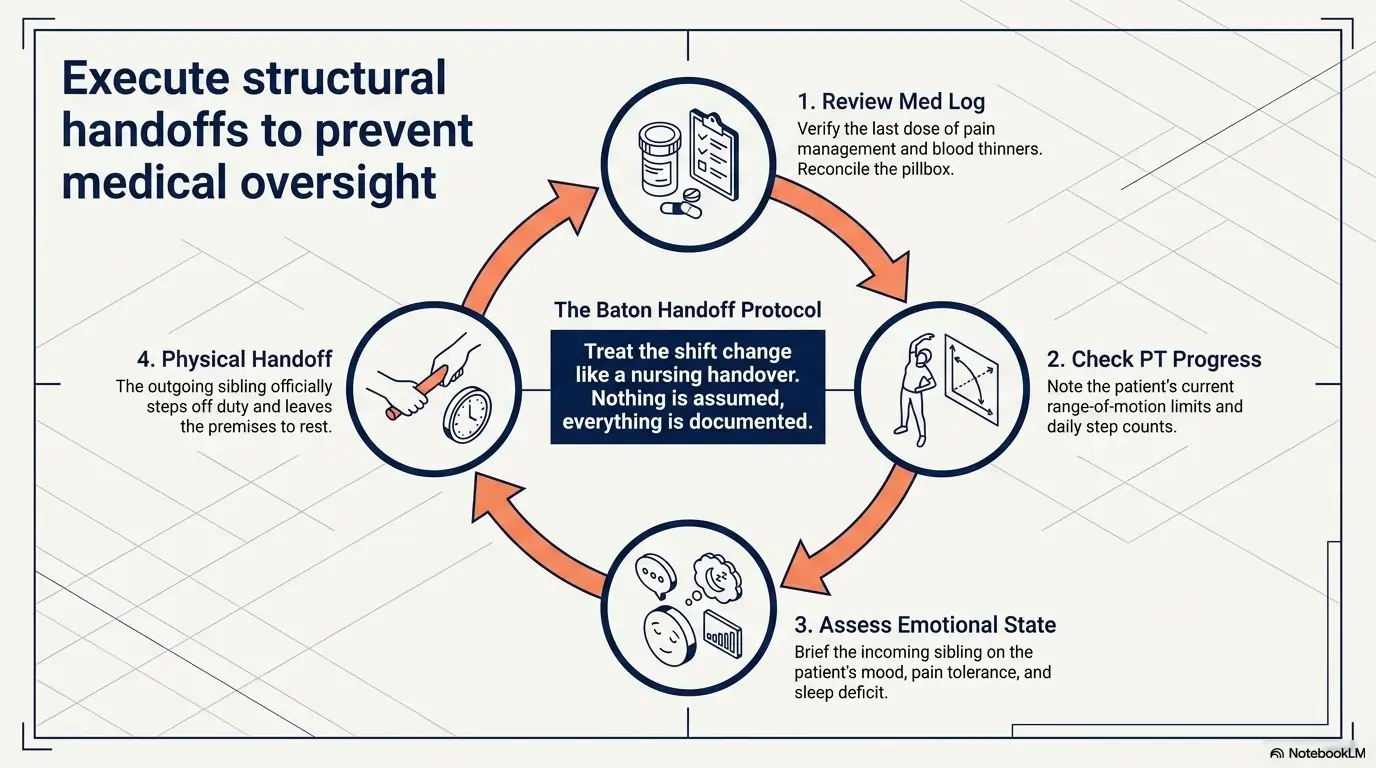
Handoff notes should be short. Think pilot cockpit, not memoir. A useful note might say: “Lunch eaten, PT exercises done, pain reported as 4 out of 10 before nap, walker path clear, next ride is Wednesday at 9:30.”
Use one notes field for daily changes
The family chat is a poor filing cabinet. Important details sink under thumbs-up reactions, jokes, and three different people asking where the pharmacy is. Use one notes field for daily changes.
Track practical observations, not diagnoses. Examples include appetite, sleep, mobility progress, new questions for the surgeon, therapy appointment changes, constipation concerns, incision questions, and whether the patient seems unusually confused or weak.
Shared calendar field template
- Date and time: Tuesday, 8:00 a.m. to noon
- Patient need: Breakfast, medication reminder, PT ride
- Assigned person: Jordan
- Backup person: Priya by phone, Lee for urgent ride
- Handoff note: Add one short update before leaving
- Clinical question: Add to call list, do not debate in chat
For families managing pain questions, it may help to keep a separate symptom log. A guide like parent pain check questions can make conversations with the patient more specific without turning every check-in into an interrogation.
Show me the nerdy details
A recovery calendar works because it reduces cognitive load. In a stressful household, people forget tasks not because they are careless, but because the brain is juggling pain, worry, work schedules, unclear authority, and social tension. A written system externalizes memory. It also reduces “diffusion of responsibility,” the social pattern where everyone assumes someone else handled the task. The more specific the task, the less likely it is to evaporate.
The best recovery systems use three design rules: one source of truth, one owner per task, and one handoff note per shift. That trio creates accountability without turning the family into a corporate operations meeting with bad snacks.
Home Safety Comes Before Homemade Soup
Food matters. Company matters. A fresh blanket matters. But before anyone debates lasagna versus chicken soup, the house needs to stop behaving like an obstacle course.
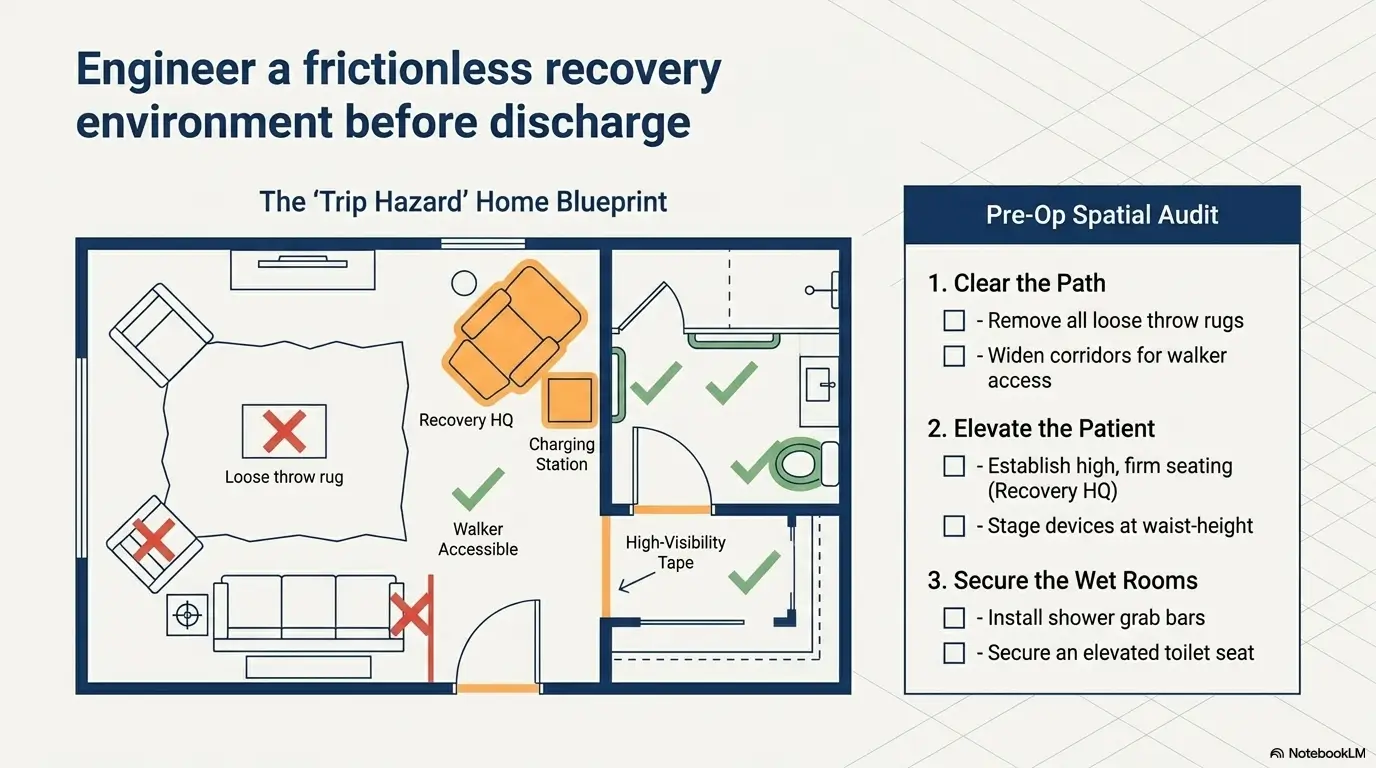
After hip or knee replacement, fall prevention is a family task. One loose rug, dim hallway, low chair, slippery bathroom, or cord across the walking path can undo weeks of careful planning. The patient may be medicated, tired, stiff, or nervous. The house must become simpler than usual.
Remove fall traps before the patient returns
Walk the home from the patient’s point of view. Start at the door. Continue to the main chair, bed, bathroom, kitchen, and therapy area. Look for throw rugs, cords, pet toys, low clutter, uneven thresholds, tight corners, unstable furniture, poor lighting, and slippery floors.
Do not wait for the patient to “be careful.” Recovery safety should not depend on perfect attention from someone who just had surgery. The space should forgive fatigue.
Create a “no hero moves” zone
A no hero moves zone means the patient should not need to climb, bend deeply, twist awkwardly, reach high, carry hot food while using a walker, or balance on one leg to retrieve socks. Put daily items between waist and shoulder height when possible.
Place water, phone charger, medication schedule, tissues, trash bag, snacks, reading glasses, TV remote, hearing aids, and a small notebook within easy reach. If the patient uses a walker, think carefully about how meals and drinks will move from kitchen to chair. For a practical household angle, see this guide on how to carry a plate with a walker.
Bathroom safety needs privacy, not awkward silence
The bathroom is where dignity and danger often meet. People may need help with shower setup, toilet height, towels, clean clothing, or standing safely. They may also hate needing that help.
Set boundaries ahead of time. Ask what help feels acceptable. Some patients may want a same-gender caregiver for bathing support. Some may prefer a paid aide. Some may only need a sibling nearby, outside the door, with a phone in hand and no commentary.
Home safety sweep checklist
- Remove loose rugs or secure them only if the care team says they are safe.
- Clear cords, baskets, shoes, pet toys, and low stools from walking paths.
- Add night lights from bed to bathroom.
- Place frequently used items at reachable height.
- Check that chairs are stable and not too low.
- Keep walker, cane, or crutches exactly where the patient expects them.
- Set up bathroom safety equipment before the first shower.
- Make a simple plan for pets during walking and transfers.
Home setup is not a one-time event. Recheck it after the first full day at home. The family will learn where the patient actually walks, sits, reaches, and hesitates. Recovery reveals the house one small inconvenience at a time.
Divide the Invisible Labor Before It Swallows One Sibling
Every family knows the visible tasks: drive to therapy, bring dinner, fold laundry. The invisible tasks are quieter. They hum behind the walls. They include remembering the next medication refill, noticing the patient has not eaten much, interpreting discharge paperwork, calling insurance, buying more gauze, calming anxiety, and answering the same question kindly for the fourth time.
Invisible labor becomes resentment when nobody names it. The sibling who lives nearby often absorbs it by default. They become the scheduler, worrier, shopper, nurse-adjacent translator, and emotional weather station. Then the rest of the family says, “You should have asked.” That sentence is small, shiny, and not nearly as helpful as people think.
Track the work people forget to count
Make invisible tasks visible by listing them alongside physical tasks. If a sibling spends 40 minutes on the phone sorting out a prescription issue, that counts. If someone updates the family calendar, that counts. If someone sits with the patient during a nervous evening, that counts too.
Care work is not only lifting, driving, and cooking. Sometimes it is listening to fear without trying to fix it in one grand speech.
Rotate the mental load weekly
If recovery lasts several weeks, rotate the recovery captain role. One sibling can coordinate week one. Another can coordinate week two. A remote sibling can manage the calendar, refill reminders, grocery orders, insurance calls, or family updates.
Rotating the mental load prevents the nearby sibling from becoming the permanent headquarters. It also helps everyone understand how much work is hiding behind a “simple” recovery.
Nearby does not mean employee
The sibling closest to the patient’s house may be the obvious person for last-minute help, but proximity is not a contract. They may have a job, children, health limits, financial stress, or a nervous system that is already cooking at high heat.
Build the plan around confirmed capacity, not guilt. Ask each sibling for specific blocks of time and specific task categories. If someone cannot be physically present, ask what they can own from a distance.
Key takeaway
Fair does not always mean equal hours. Fair means the family names the work, assigns it clearly, and does not let one person carry the whole invisible backpack.
| Invisible task | Who can own it | How to make it visible |
|---|---|---|
| Prescription refill tracking | Remote sibling or recovery captain | Add refill dates to shared calendar |
| Insurance or billing calls | Detail-oriented sibling | Post call summary in shared note |
| Meal coordination | Sibling with flexible phone time | Use a meal schedule with dietary notes |
| Therapy appointment reminders | Any reliable sibling | Add reminders 24 hours and 2 hours before |
| Family updates | One designated communicator | Send one daily summary, not scattered updates |
Common Mistakes That Turn Recovery Into Resentment
Family conflict after joint replacement rarely begins with a dramatic betrayal. It usually begins with fuzziness. Someone assumes. Someone forgets. Someone feels used. Someone feels criticized. Someone says, “I was only trying to help,” which can either heal the room or set off a small domestic weather system.
The following mistakes are common because they are human. The fix is not perfection. The fix is structure gentle enough that real people can follow it.
Mistake 1: Saying “just text me if you need anything”
This sounds kind, but it shifts the planning burden onto the recovering person or the already-exhausted caregiver. Many patients will not ask. They do not want to be a burden, even while they are clearly, medically, temporarily in need of help.
Replace “text me if you need anything” with a specific offer: “I can bring dinner Tuesday and stay from 5 to 8,” or “I can handle pharmacy pickup every Friday this month.” Specific help has bones.
Mistake 2: Letting one sibling control all information
One person can organize information, but no one should hoard it. Everyone helping needs the same basic facts: restrictions, appointments, medication schedule, emergency contacts, equipment instructions, and what symptoms require a call.
When one sibling controls information, other siblings either become helpless or suspicious. Neither is useful near a walker.
Mistake 3: Treating pain control like a family debate
Pain control after joint replacement can involve prescription medication, over-the-counter medication, icing, elevation, therapy timing, bowel routines, sleep disruption, and anxiety. Families can observe and record. They should not freelance.
If the patient’s pain is not controlled, if medication side effects seem concerning, or if timing feels confusing, call the care team or pharmacist. Do not let a sibling with a search engine become the household anesthesiologist.
For better conversations before a call, the family may use a simple symptom description method, such as the approach in how to describe pain to a doctor.
Mistake 4: Forgetting the night shift
Daytime help gets attention because it is visible: appointments, meals, errands. Night can be harder. Pain may feel louder. Bathroom trips may feel riskier. The patient may worry more when the house is quiet.
Plan evening and overnight support based on discharge instructions, mobility, bathroom distance, medication timing, and the patient’s confidence. A smart nightstand setup can reduce unnecessary movement. This knee replacement nightstand setup guide offers a useful way to think about the small items that prevent midnight scavenger hunts.
Mistake checklist: replace fog with facts
- Replace vague offers with assigned shifts.
- Replace family medical opinions with care-team questions.
- Replace scattered texts with one shared note.
- Replace “nearby sibling handles it” with rotating task ownership.
- Replace weekend assumptions with written weekend coverage.
The Sibling Group Chat Needs Rules, Not More Messages
A sibling group chat can be a lifeline or a confetti cannon. Used well, it gives quick updates and keeps everyone aligned. Used poorly, it becomes a courtroom, diary, weather report, and pharmacy rumor mill all at once.
The rule is simple: the chat should support the care plan, not replace it. The calendar is where tasks live. The shared note is where important records live. The chat is for short updates, questions, and urgent coordination.
Pin the essentials
Pin or save the items that people will need repeatedly: surgeon’s number, after-hours line, pharmacy, medication list location, PT schedule, home address, alarm code, key location, preferred hospital, and the recovery captain’s number.
If the chat app does not make pinning easy, put the essentials in a shared note and paste the link at the top of the calendar. Redundancy is not elegant, but neither is searching 148 messages for the pharmacy name while someone is waiting in a car.
Use updates, not essays
A useful update is brief and factual. “PT done, lunch eaten, incision dressing dry, patient resting, next medication reminder at 6, trash taken out.” This gives the next person what they need.
A less useful update is a long emotional spiral with no action point. Feelings matter, of course. But the family chat during recovery should not become the only place people process stress. That is how a practical tool becomes a thundercloud with notifications.
Stop diagnosing by emoji
Photos of swelling, wound concerns, fever reports, breathing issues, calf pain, chest pain, confusion, or falls should not be voted on with thumbs-up, shocked faces, or “my coworker said.” Use the surgeon’s instructions, call the care team, or seek urgent help when symptoms match the warning list.
A family chat can document what happened. It should not decide whether a possible complication is real.
The Sibling Recovery Flow
1
Assign
Give each task one owner and one backup.
2
Calendar
Put rides, meals, therapy, and shifts in one shared place.
3
Handoff
Leave short updates so the next helper starts informed.
4
Escalate
Send clinical concerns to the care team, not the chat.
The Remote Sibling Playbook: Help Without Being in the Kitchen
Distance changes the job description. It does not erase responsibility. A remote sibling may not be able to help with shower setup or physical therapy rides, but they can still carry real weight.
In fact, remote siblings can be excellent at tasks that nearby siblings struggle to do while physically present: admin calls, appointment confirmations, grocery orders, bill tracking, meal scheduling, equipment research, and daily family updates.
Own the admin lane
The admin lane is perfect for a sibling who lives three states away but has a phone, patience, and a tolerable relationship with hold music. They can confirm appointments, call the pharmacy, track bills, organize insurance paperwork, arrange grocery delivery, and keep the shared calendar updated.
This is not lesser help. It is the scaffolding that lets the person in the kitchen breathe.
Pay for friction reducers when time is limited
If a remote sibling cannot give time, they may be able to reduce friction with money. That could mean grocery delivery, prepared meals, a cleaning visit, rideshare credit, temporary pet care, a shower chair, a grabber tool, or a properly placed night light.
This should be done respectfully. Do not buy equipment that conflicts with discharge instructions. Do not turn purchases into a power move. Ask what would actually help, then make the help easy to accept.
Record discharge instructions with permission
If the patient agrees and the facility allows it, one sibling can record or take detailed notes during discharge teaching. This helps everyone work from the same script later.
At minimum, ask for printed instructions and the best phone number for questions. The family should not be reconstructing wound care guidance from memory while standing next to a bathroom sink.
Key takeaway
A remote sibling can still be a high-value caregiver. The best distance-friendly tasks remove phone calls, errands, paperwork, and decision clutter from the people physically in the home.
Protect the Patient’s Dignity While Sharing the Work
Joint replacement can make a capable adult feel suddenly managed. People who paid bills, raised children, ran meetings, hosted holidays, repaired sinks, drove across states, or made every family decision for decades may now need help getting a sock, a towel, or a ride.
The goal is not only to keep the patient safe. It is to keep the patient included in their own life. A good sibling plan supports autonomy instead of turning recovery into a family construction site.
Ask what help feels acceptable
Some patients welcome meal prep but dislike medication reminders. Some want company at physical therapy but privacy in the bathroom. Some appreciate a daily call but feel smothered by a parade of visitors.
Ask directly: “What kind of help feels comfortable? What feels embarrassing? Who do you want here for personal care? When do you want quiet?” These questions are not decorative. They prevent the family from helping in ways that feel like being handled.
Do not talk over the patient
When siblings are worried, they may begin speaking about the patient while the patient is in the room. “She needs this.” “He won’t do that.” “Mom is being stubborn.” Even when the concern is valid, the effect can be shrinking.
Use the patient’s name. Ask them first when possible. Let them answer questions they can answer. Recovery support should not quietly remove adulthood from the room.
Small autonomy matters
Small choices make recovery feel less like management. Let the patient choose breakfast, music, clothing, which chair feels best, whether they want a short visit or quiet, and when they want to do approved exercises within the care plan.
These little choices are not trivial. They are handrails for identity.
| Instead of saying | Try saying | Why it works |
|---|---|---|
| “You need to walk now.” | “The plan says a short walk today. Would you rather do it before lunch or after?” | It keeps the instruction while offering choice. |
| “You’re being difficult.” | “This feels frustrating. What part is bothering you most?” | It lowers defensiveness. |
| “We decided you need help bathing.” | “What bathroom support feels safest and least uncomfortable?” | It respects privacy. |
| “Don’t touch anything.” | “Let’s put the things you use most where you can reach them safely.” | It supports independence. |
Build a Two-Week Coverage Grid That Survives Real Life
The first two weeks after joint replacement often need the most structured family help. The exact amount depends on the procedure, discharge instructions, home layout, patient age, other medical conditions, mobility, pain control, and whether the patient lives alone.
Do not assume week two is automatically easy. Sometimes the hospital adrenaline wears off, pain routines change, therapy becomes more demanding, and the family’s initial enthusiasm thins out like cheap paper towels. A two-week grid catches the drop-off before it becomes a crisis.
Week 1: Safety, pain routines, rides, meals, and basic movement
Week one is usually the hands-on week. The patient may need help with transportation, meal setup, medication reminders, icing, safe walking areas, bathing logistics, laundry, trash, and getting settled between activity and rest.
The family should check that therapy appointments are scheduled, follow-up appointments are known, prescriptions are available, and the patient knows how to contact the care team. If the patient lives alone, the family should ask the discharge team what level of supervision is recommended.
Week 2: Fewer surprises, more consistency
Week two may involve fewer urgent tasks, but consistency still matters. Siblings may shift from constant presence to scheduled check-ins, therapy rides, meal support, laundry, grocery delivery, and watching for setbacks.
This is also a good time to reassess. Is the patient moving better? Eating enough? Sleeping at all? Keeping appointments? Feeling anxious? Asking fewer questions or more? A simple weekly family review can catch gaps early.
The hidden gap: weekends
Weekends are where good recovery plans go to misplace their keys. Siblings assume someone else is free. Clinics may have different hours. Pharmacies may close early. Therapy schedules may pause. Family helpers may have sports, errands, church, work, travel, or their own exhaustion.
Build Saturday and Sunday coverage into the grid. Include meals, check-ins, bathroom safety, medication reminders, pet needs, laundry, trash, and a plan for urgent concerns.
Two-week coverage grid starter
| Day | Main need | Assigned sibling | Backup |
|---|---|---|---|
| Day 1 | Ride home, prescriptions, dinner, first night | Name | Name |
| Day 2 | Breakfast, walking path, medication reminders | Name | Name |
| Day 3 | PT ride or home therapy, laundry, meal prep | Name | Name |
| Weekend | Check-ins, meals, pharmacy backup, overnight plan | Name | Name |
| Week 2 | Therapy rides, groceries, reassessment, follow-up prep | Name | Name |
If the patient lives alone or the family cannot cover the basics, ask the discharge team about home health, outpatient therapy logistics, short-term rehab options, paid caregiver support, community services, or equipment recommendations. A coverage gap is not a moral failure. It is a planning problem asking to be named.
When to Seek Help or Stop Waiting
Most recovery questions can wait for a call to the surgeon’s office during normal hours. Some cannot. The family plan should include a clear escalation rule so siblings do not waste time debating whether a concern is “bad enough.”
Use the discharge instructions first. Different patients receive different directions based on the surgery, medical history, medications, and recovery plan. When symptoms match the warning list from the surgeon or discharge papers, follow those instructions promptly.
Call the surgeon or care team for concerning recovery changes
Call the surgeon, discharge nurse line, or appropriate clinician for concerns such as pain that is not relieved as expected, bleeding that soaks a dressing, worsening swelling, incision redness, unusual drainage, fever, new calf pain, medication confusion, a fall, or a sudden change in function.
Do not wait for the family group chat to reach consensus. A medical question does not become safer because six people typed “hmm.”
Treat chest pain or breathing trouble as urgent
Chest pain, shortness of breath, fainting, signs of stroke, sudden severe confusion, coughing blood, or severe worsening symptoms should be treated as urgent. Follow discharge instructions and seek emergency care when appropriate.
If a sibling is physically present, they should not drive the patient around in circles trying to decide which facility feels less dramatic. The plan should already include the preferred emergency path.
Burnout is also a warning sign
Caregiver burnout can become a safety problem. If the sibling on duty is exhausted, resentful, distracted, or physically unable to help with transfers, bathroom support, medication reminders, meals, or overnight safety, the family needs more help.
Ask the discharge team, primary care office, local aging services, home health agencies, or trusted community organizations about options. Sometimes the safest plan includes paid help, even for a short stretch.
Key takeaway
When a symptom sounds urgent, do not hold a family vote. Use the discharge instructions, call the care team, or seek emergency help based on the situation.
If siblings are unsure whether a parent needs more help after surgery, a practical checklist can reduce the fog. This guide to signs a parent needs help after surgery may help families notice functional gaps before they become emergencies.
FAQ
How long should siblings help after joint replacement?
Most families should plan structured help for at least the first one to two weeks, then adjust based on the surgeon’s instructions, mobility, pain control, therapy schedule, home layout, and whether the patient lives alone. Some patients need less help quickly. Others need support longer, especially with rides, meals, laundry, and follow-up appointments.
What should siblings do before the patient comes home?
Clear walking paths, remove loose rugs and cords, set up bathroom safety items, confirm prescriptions, arrange the ride home, stock easy meals, place essentials within reach, and write down emergency contacts. The goal is to make the home calm before the patient arrives tired.
Who should manage medication reminders?
One person should maintain the master medication schedule, but siblings can share reminder shifts. Medication changes, skipped doses, blood thinner questions, side effects, or confusion should be confirmed with the care team or pharmacist.
How do we split care fairly when one sibling lives far away?
Remote siblings can own phone-based and digital tasks: scheduling, insurance calls, bill tracking, grocery delivery, meal coordination, pharmacy follow-up, family updates, and paid support. Fairness means sharing responsibility, not forcing every sibling into the same task type.
What if one sibling refuses to help?
Move from emotion to specifics. Offer limited tasks with dates, such as one meal delivery or one pharmacy call. If they still refuse, build the plan around confirmed help rather than hoped-for help. Safety should not depend on a reluctant promise.
Should siblings stay overnight after joint replacement?
It depends on mobility, bathroom safety, medication timing, fall risk, the patient’s confidence, home setup, and discharge instructions. Ask the surgical team before discharge if overnight coverage is recommended, especially if the patient lives alone.
How do we avoid family fights during recovery?
Use one shared calendar, one recovery captain, written task assignments, brief handoff updates, and a rule that medical disagreements go to the care team. Resentment shrinks when work is visible and promises have dates.
What is the best next step after reading this?
Hold a 20-minute sibling planning call and assign the first seven days of rides, meals, medication reminders, therapy support, overnight coverage, and emergency contacts before surgery day or discharge.
Make the First Week Visible in 15 Minutes
The calmest next step is not a perfect family plan. It is a visible first-week grid. Take 15 minutes and create four columns: date, patient need, assigned sibling, backup person. Fill in the first seven days. Do this before discharge if possible, not after the first crisis knocks on the door wearing muddy shoes.
Start with the non-negotiables: ride home, first night, medication reminder system, meals, bathroom safety, therapy appointments, follow-up visits, prescription pickup, and weekend coverage. Then add the human pieces: quiet time, preferred visitors, who the patient trusts for personal care, and who will send family updates.
Joint replacement recovery is not only a medical event. It is a family logistics event, a dignity event, a communication event, and sometimes a sibling truth serum. With a clear plan, the work becomes less personal and more practical. Nobody has to be the hero. Nobody has to be the martyr. The family just needs a map, a few honest assignments, and enough humility to call the care team when the question belongs there.
Your 15-minute action
- Write the next seven dates down the left side of a page.
- Add the patient’s daily needs: rides, meals, medication reminders, therapy, bathing support, and overnight check-ins.
- Assign one sibling to each task.
- Add one backup person for each high-risk task.
- Put the surgeon, pharmacy, and emergency plan at the top.
Last reviewed: 2026-06