
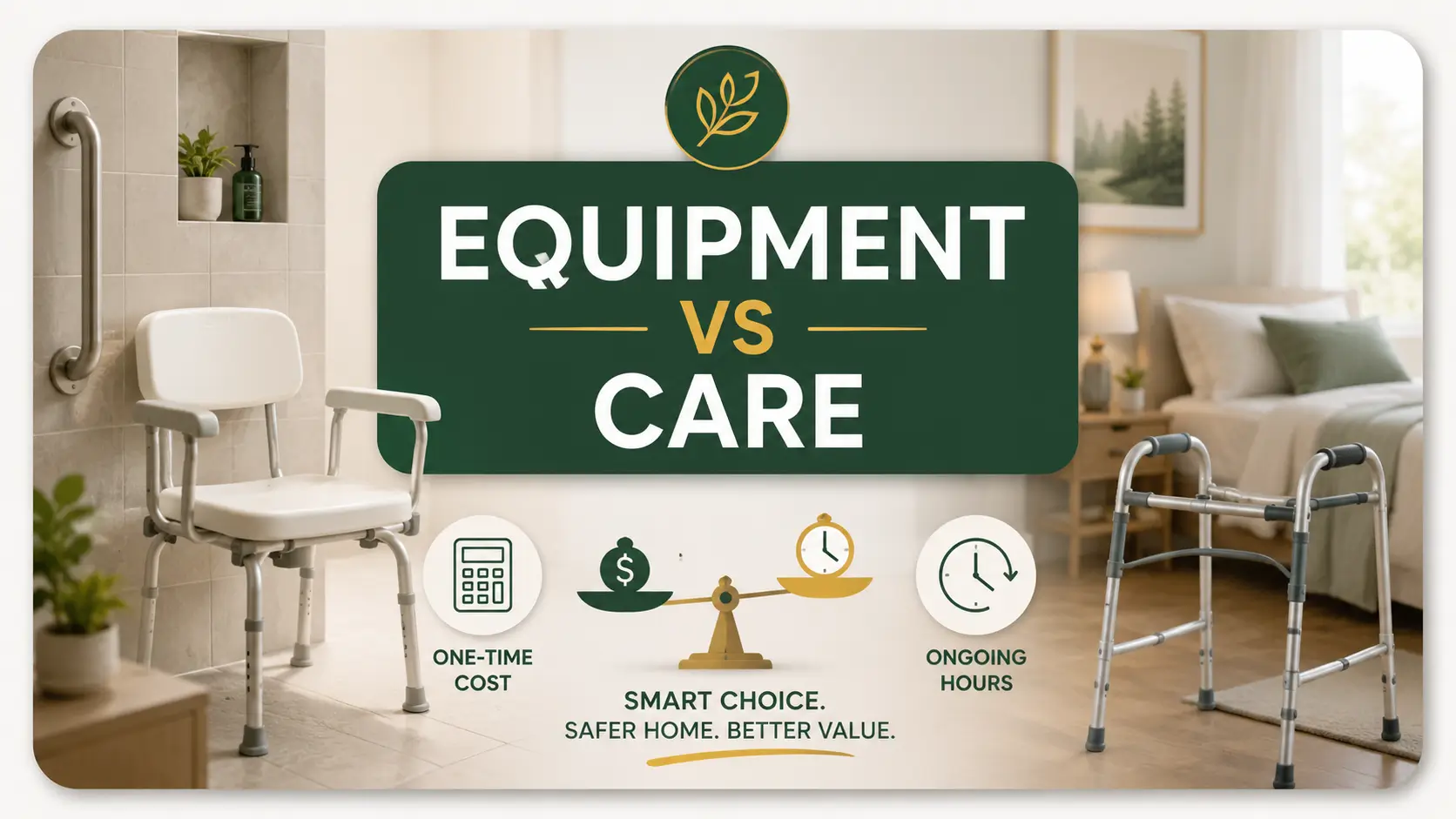
Caregiver cost clarity
When Home Equipment Is Cheaper
Than Extra Caregiver Hours
Extra caregiver hours can feel like the safest answer when an older parent starts needing help with showers, transfers, medication reminders, stairs, or late-night check-ins. Sometimes they are. But sometimes the family is paying again and again for the same design problem: a slippery bathroom, a too-low chair, a dark hallway, a bed that turns every morning into a wrestling match with gravity.
The practical question is not, “Can we replace care with equipment?” That is too blunt, like using a snow shovel to stir tea. The better question is, “Which repeated tasks could equipment make safer, easier, and less dependent on paid help without increasing risk?” That is where the money begins to make sense.
This guide walks through the break-even math, the safety gates, the highest-return equipment categories, and the mistakes that quietly turn an affordable fix into expensive clutter. Use it as a calm decision tool before buying anything with chrome legs, blinking lights, or a product page that promises instant independence.
Run the math
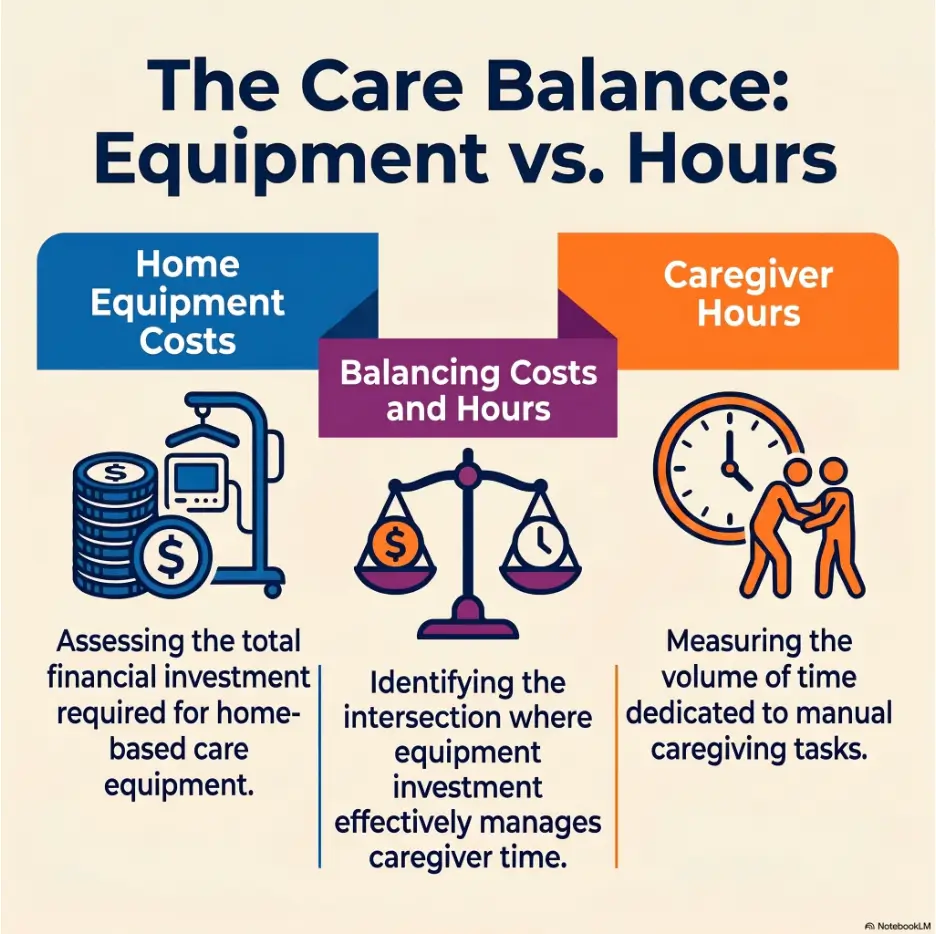
Compare one-time equipment costs against recurring caregiver hours.
Check the risk
Spot situations where paid care should not be reduced yet.
Choose one fix
Start with the highest-repeat, lowest-risk task first.
Best starting point: audit tasks for seven days before shopping. The receipt should follow the routine, not the other way around. 🧾
Snapshot
This article is for adult children, family caregivers, aging-in-place planners, and older adults comparing home equipment costs with private-pay caregiver hours. You will learn how to identify repeat tasks, calculate break-even timing, screen for safety concerns, compare equipment options, and decide when a professional assessment is worth the money.
Table of Contents
Before You Cut Caregiver Hours, Read This Safety Gate
Home equipment should reduce risk, not simply reduce a bill. That difference matters. A grab bar that helps someone step out of the shower with confidence is useful. A gadget that leaves a confused person alone with a new set of instructions is not a care plan; it is a tiny gamble wearing plastic housing.
This article can help you compare costs, identify repeated tasks, and ask better questions before buying equipment. It cannot tell you whether a specific older adult can safely transfer, bathe, manage medication, or live alone without direct supervision. For medical, mobility, cognitive, insurance, or tax decisions, confirm the plan with the appropriate professional.
Key takeaway
Do not reduce caregiver hours after a fall, hospital discharge, medication change, dizziness episode, new confusion, or worsening pain until safety is reassessed. The cheapest hour is not the one you cancel. It is the one you no longer need because the routine became genuinely safer.
Ask Before Changing Transfer Support
Transfers are deceptively serious. Getting out of bed, standing from a chair, stepping into a shower, moving from toilet to walker, or using a stair lift all require balance, strength, judgment, timing, and a home setup that cooperates.
If the older adult currently needs hands-on help for transfers, talk with a physical therapist, occupational therapist, nurse, physician, or care manager before cutting hours. A professional can check whether the issue is strength, pain, fear, poor furniture height, unsafe flooring, medication side effects, or a device that does not fit the person.
Treat New Falls as a Red Flag
A fall is not only an event. It is a clue. It may point to poor lighting, low blood pressure, footwear, rugs, medication changes, vision issues, muscle weakness, pain, or rushing to the bathroom at night.
Before replacing caregiver check-ins with equipment, document what happened. What time was it? Was the person dizzy? Were they using the walker? Was the path clear? Was pain worse that day? A small timeline can help a clinician or therapist spot the pattern faster.
Do Not Make Equipment the Last Caregiver
Equipment supports independence best when the person can use it consistently. That includes remembering it exists, using it in the correct order, and asking for help when the plan does not work.
When judgment, memory, or medical stability is changing, equipment can still help, but it may need to sit inside a larger plan that includes family oversight, professional support, emergency response, and clear routines.
Why One Device Can Beat Recurring Caregiver Hours
Private-pay caregiver hours can add up quickly because many daily tasks are short but repeated. A caregiver might spend only 20 minutes helping with a shower setup, 10 minutes with medication prompting, or 15 minutes helping someone rise from a chair. But when those moments repeat across weeks, the monthly bill grows legs.
Home equipment becomes financially interesting when it safely reduces a repeated need. The word “safely” carries the whole suitcase. The goal is not to replace people with objects. The goal is to stop paying for a human workaround when a stable environmental fix would do the job better.
The Break-Even Math Most Families Miss
Families often compare the price tag of equipment with one caregiver visit. That makes equipment look expensive. A better comparison is equipment cost versus the next three to six months of repeated caregiver hours for the same task.
For example, a bathroom safety setup may feel expensive on purchase day. But if it reduces three short caregiver visits per week, the payback may arrive faster than expected. The calculation gets even stronger when the device also reduces unpaid family lifting, emergency texting, and caregiver burnout.
Example: $800 Equipment vs. $1,200 Monthly Help
Imagine a parent needs help getting safely settled for showers three times a week. The family pays for short caregiver visits, but minimum visit rules mean each visit costs more than the actual task time. A properly fitted shower chair, handheld shower head, non-slip surface, and professionally installed grab bars might reduce the hands-on part of the routine.
If the total setup costs $800 and it safely reduces $1,200 in monthly caregiver visits, the equipment could pay for itself in less than a month. But if the parent is unsteady, forgets the sequence, or needs help washing, then the equipment may support the caregiver rather than replace the visit.
Key takeaway
Equipment is most likely to save money when it targets a repeated, predictable, low-skill task. It is least likely to save money when the real need is supervision, judgment, complex medical support, or physical assistance that changes day to day.
The Caregiver-Hour Trap: Paying People to Solve Design Problems
Some caregiving costs are really home design costs in disguise. The bathroom is slippery. The bed is too high. The hallway is dim. The favorite chair is too low. The walker catches on a rug. The pill bottles are hard to open. The stairs have become a daily negotiation with fear.
When the same problem repeats, ask whether the person needs more hours or whether the home needs fewer obstacles. A home that quietly resists the body can make a capable person look more dependent than they truly are.
Repeated Help Often Signals a Layout Issue
If a caregiver is repeatedly helping with the same narrow task, write down where that task happens. The location often exposes the real problem. A person may not need help walking across the whole house. They may need better lighting between the bed and bathroom. They may not need help standing everywhere. They may need one chair raised two inches.
This is why a task audit beats a shopping list. The audit catches the friction point. Shopping too early only fills the house with hopeful objects.
Doors, Tubs, Stairs, and Beds Quietly Raise Costs
Four zones commonly turn into caregiver-hour magnets: bathrooms, bedrooms, stairs, and entryways. They combine movement, timing, awkward angles, and fall risk. They also tend to be used when people are tired, in pain, rushing, or alone.
A tub wall can create a paid-care need. So can a bed that is too soft, a toilet that is too low, or a stairway without good rail support. These are not glamorous problems. They are humble little tollbooths. Every day, the family pays again.
Short Story: The Towel Bar That Lied
Elaine’s son thought his mother needed more help with bathing. She had started waiting for the caregiver before showering, even on days when she felt steady enough to do most of the routine herself.
During a home visit, the occupational therapist watched Elaine walk into the bathroom. Elaine reached for the towel bar by habit. It wobbled. She laughed it off, the way people do when the body has already learned to be afraid.
The fix was not heroic. A properly installed grab bar, a shower chair that fit the tub, a handheld shower head, and a clearer towel location changed the routine. The caregiver still helped on harder days, but not every shower required a paid visit.
The lesson was quiet but expensive: sometimes the problem is not the person. Sometimes the house has been asking them to trust the wrong thing.
Who Should Consider Equipment Savings, and Who Should Not
The best candidates for equipment savings usually have stable needs, repeatable routines, and enough cognition to follow a routine safely. They may need help because one specific task has become physically awkward, not because the whole day requires supervision.
The riskiest candidates are those whose needs change quickly, who fall frequently, who forget instructions, or who need someone present for judgment and emergency response. For them, equipment may still be helpful, but it should not be used as a quiet excuse to remove support.
Good Fit: Stable Needs and Repeatable Tasks
Equipment may be worth pricing when the task is predictable. Think of a senior who can walk safely once standing, but struggles to rise from a low chair. Or a parent who remembers medications but needs a clearer reminder system. Or a spouse who can shower independently once the bathroom is set up correctly.
These are not risk-free situations, but they are easier to test. You can observe the task, add equipment, keep caregiver hours during a trial period, and see whether the person uses the setup safely without prompting.
Not For: High-Risk Medical or Memory Situations
Be cautious if the older adult has advanced dementia, wandering, frequent falls, unstable blood pressure, poor emergency response, missed medications, complex wound care, severe pain, unsafe transfers, or recent hospitalization. In these cases, caregiver hours may be providing more than task completion. They may be providing observation, judgment, and fast response.
That kind of care is harder to replace. A sensor can report motion. It cannot notice that Dad looks gray, is short of breath, and is pretending nothing is wrong because he hates fuss.
| Situation | Equipment savings potential | Safer next step |
|---|---|---|
| Needs help standing from one low chair | Often good | Measure chair height, test lift-assist options, review walking safety once standing. |
| Recent fall or near-fall | Unclear until assessed | Pause hour reduction and review fall causes with a clinician or therapist. |
| Forgets walker, stove, medication, or emergency plan | Limited as a replacement | Use equipment as support, not as a substitute for supervision. |
| Needs repeated help with bathing setup only | Often worth testing | Start with bathroom measurements, grab bars, seating, lighting, and a supervised trial. |
The Break-Even Formula for Home Equipment
The break-even formula is simple enough for a kitchen table, a pencil, and one mildly suspicious sibling. You are comparing the total equipment cost against the caregiver hours it may safely reduce each month.
Use conservative numbers. If the equipment might reduce four hours per week, test the math at two or three hours. Savings that only work under perfect conditions are not savings. They are fiction with a receipt.
Step 1: Price the Repeated Task
Choose one task, not the whole caregiving plan. “Morning routine” is too broad. “Help standing from recliner before breakfast” is better. “Shower setup and safe exit” is better. “Medication prompt at 8 p.m.” is better.
Estimate how many caregiver hours each week are spent on that task. If the caregiver visit includes several tasks, split the visit into rough chunks. The goal is not accountant-level purity. The goal is to stop making decisions in fog.
Step 2: Calculate Monthly Avoided Hours
Multiply weekly hours by 4.3 to estimate monthly hours. Then multiply that number by the local caregiver hourly rate. If your agency has a minimum shift length, include it. Minimums can make short repeated tasks surprisingly expensive.
For example, if a task uses 3 caregiver hours per week, that is about 12.9 hours per month. At $30 per hour, the monthly task cost is about $387. If equipment plus installation costs $1,200 and safely removes that need, break-even is a little over three months.
Step 3: Divide Equipment Cost by Monthly Savings
The basic formula is:
Total equipment cost ÷ monthly caregiver savings = break-even months
Total equipment cost should include the device, delivery, installation, home modifications, batteries, subscription fees, training time, maintenance, and any professional assessment needed to choose it safely.
Show me the nerdy details
How to make the break-even math more realistic
Use three scenarios: conservative, expected, and optimistic. In the conservative case, assume the equipment reduces only half the caregiver hours you hope it will. In the expected case, use your best estimate after a supervised trial. In the optimistic case, use the full planned reduction.
Then add a safety buffer. If the older adult has pain flare-ups, fatigue, variable balance, or inconsistent device use, assume some caregiver support remains. It is better to undercount savings than to build a budget on a perfect Tuesday morning.
Finally, add a review date. Equipment decisions should be checked after 30 days, 90 days, and any major health change. A setup that works in June may need adjusting after surgery, a medication change, or a new fall.
| Example cost | Monthly caregiver hours reduced | Hourly rate | Monthly savings | Break-even |
|---|---|---|---|---|
| $300 | 5 hours | $30 | $150 | 2 months |
| $1,200 | 12 hours | $30 | $360 | About 3.3 months |
| $3,000 | 20 hours | $30 | $600 | 5 months |
The Highest-ROI Equipment Zones at Home
Not all equipment has the same financial or safety value. The highest return usually comes from areas where tasks happen often, risk is high, and small physical changes can reduce hands-on help.
Start with repeated daily bottlenecks. Bathroom safety, transfers, medication prompts, lighting, walker paths, and bed mobility often deserve attention before more complex purchases.
Bathroom Equipment Usually Pays Attention First
Bathrooms are small rooms with big consequences. Water, tile, urgency, privacy, and awkward movement form an unkind little orchestra. A safer bathroom setup can reduce both paid caregiver hours and family anxiety.
Consider professionally installed grab bars, a shower chair that fits the person and bathroom, a handheld shower head, non-slip surfaces, raised toilet seats, toilet safety frames, better lighting, and a clear walker path. A towel bar is not a grab bar. It may look sturdy, but it is usually a decorative liar.
For related setup ideas, you may also find this guide on how to start a shower safety conversation useful, especially if the older adult feels embarrassed or defensive about bathroom changes.
Mobility Equipment Can Reduce Paid Transfers
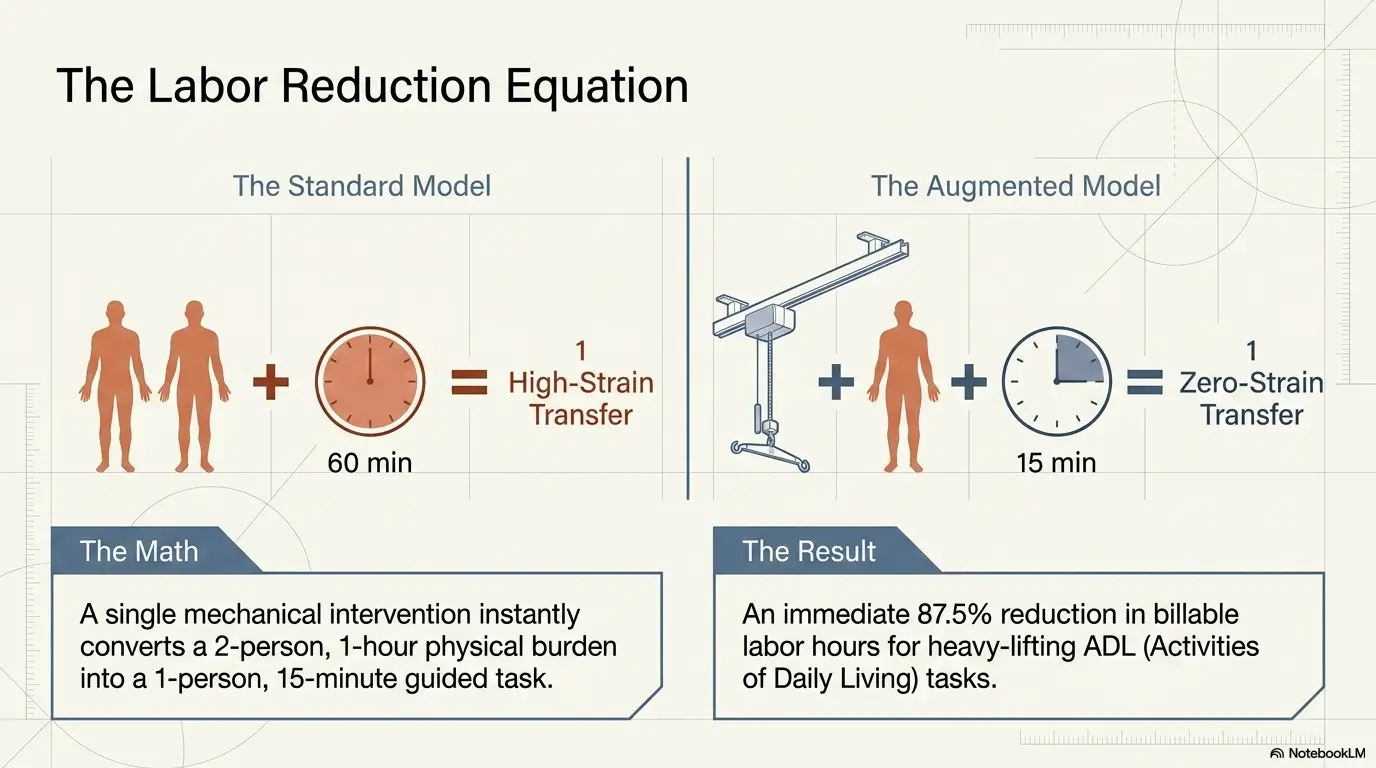
Lift chairs, bed assist devices, transfer poles, walkers, rollators, ramps, and stair lifts can reduce caregiver dependence in the right situation. The key is matching the equipment to the bottleneck.
A lift chair may help someone stand, but it does not make walking safe. A bed rail may help repositioning, but improper use can create entrapment or fall hazards. A transfer pole can be excellent in one home and wrong in another if the ceiling, flooring, strength, or technique does not fit.
If walker clearance is part of the problem, review the home path before buying more equipment. This walker path safety checklist can help families spot furniture, rugs, cords, and tight turns that quietly increase caregiver dependence.
Good / Better / Best Setup Table
| Setup level | Best for | What to compare before buying |
|---|---|---|
| Good | Simple, low-risk repeat tasks | Fit, stability, ease of cleaning, return policy, and whether the person will use it daily. |
| Better | Moderate mobility limits and repeated caregiver visits | Professional measurement, installation, training, and whether caregiver hours can be reduced after a trial. |
| Best | Higher-cost home access problems | Contractor qualifications, service plan, warranty, maintenance, future health changes, and whether moving or room relocation is a better alternative. |
Decision flow
From repeated task to safer savings
1. Audit
Track the exact task for seven days.
2. Price
Estimate monthly caregiver cost for that task.
3. Screen
Check falls, cognition, pain, and transfers.
4. Trial
Test equipment while support remains.
5. Review
Reduce hours only after real use proves safe.
Monitoring Tech: When Alerts Can Reduce Check-In Visits
Monitoring technology can help when the family is paying for extra check-ins mainly because everyone is worried about what might happen between visits. Fall detection devices, motion sensors, medication reminder systems, smart dispensers, and emergency response tools can reduce some anxiety-driven visits.
But alerts are not care by themselves. An alert is only useful if someone receives it, understands it, and can respond quickly. A quiet phone in a handbag across town is not an emergency plan.
Fall Detection Can Reduce Anxiety-Driven Visits
Fall detection tools may help families avoid extra check-ins when the main concern is, “What if something happens and no one knows?” They can be especially useful for older adults who live alone, have a clear response plan, and are willing to wear or use the device consistently.
Compare battery life, comfort, water resistance, monthly fees, false alerts, cancellation rules, caregiver notification options, and whether the system connects to emergency services or only notifies family.
Medication Reminders Help Only With the Right Problem
A reminder system can help when the issue is mild forgetfulness or routine drift. It is not enough when the person cannot understand medication changes, doubles doses, skips important prescriptions, or becomes confused by similar-looking pills.
If medication confusion is part of the picture, consider documenting patterns before changing support. This medication confusion monitoring guide can help families collect clearer notes for a doctor, pharmacist, or caregiver agency.
Cameras Are Not Automatically Care
Cameras can support safety in narrow situations, but they raise privacy, consent, dignity, and family trust questions. Use them carefully. A person should not feel that aging at home means living inside a customer-service training video.
When monitoring is appropriate, keep it focused. Entryway alerts, stove sensors, medication access logs, or fall alerts may be less intrusive than constant video. The least invasive tool that solves the real safety problem is usually the better choice.
The Hidden Costs That Can Ruin the Savings
The purchase price is only the front door. Many home equipment decisions have costs hiding in the hallway: installation, maintenance, subscriptions, training, replacement parts, batteries, repairs, delivery, home changes, and professional assessments.
These costs do not always make equipment a bad choice. They simply need to be included in the math. A realistic budget is less exciting than a sale price, but it keeps families from being ambushed by the fine print goblin.
Installation Can Cost More Than the Device
Mounted equipment should often be installed by someone who knows what they are doing. Grab bars, ramps, stair lifts, transfer poles, and some bathroom changes may require proper anchoring, measurement, permits, landlord approval, or contractor judgment.
Before buying, ask what installation requires. Does the wall have proper blocking? Is the floor level? Will the device block a walker route? Can it be removed later? Will it damage tile, walls, or rental property?
Maintenance and Subscriptions Eat the Margin
Monitoring systems may have monthly fees. Lift equipment may need service. Batteries need replacing. Shower equipment needs cleaning. Cushions compress. Wheels wear. Devices that are hard to maintain often stop being used, then quietly become expensive furniture.
Ask how the device will be cleaned, charged, serviced, and checked. If the answer is “someone will remember,” assign the someone. Hope is not a maintenance schedule.
Training Time Is Part of the Budget
A device that requires perfect technique at 2 a.m. is not a safety plan. It is a wish wearing metal joints. The person needs to use the equipment correctly when tired, rushed, sore, embarrassed, or half-awake.
Plan a supervised training period. Watch the person use the device at the actual time and place where the task happens. Morning transfers and nighttime bathroom trips are different creatures.
Buyer checklist before you pay
- Does it fit the person’s height, weight, strength, grip, vision, and habits?
- Does it fit the room, doorway, tub, toilet, bed, stairway, or walker path?
- Who installs it, and what qualifications or experience do they have?
- What maintenance, cleaning, batteries, service calls, or subscriptions are required?
- Can the person use it safely during fatigue, pain, urgency, or nighttime waking?
- What is the return policy if it does not work in the real home?
- Will it reduce caregiver hours, support caregiver work, or simply add another object?
Insurance, Medicare, and Tax Angles Worth Checking
Coverage and tax treatment can change the cost comparison, but families should verify details before assuming reimbursement. Medicare, private insurance, long-term care insurance, Medicaid programs, veterans benefits, local aging agencies, and tax rules may treat equipment differently.
Keep receipts, prescriptions, medical necessity notes, supplier information, installation invoices, and photos of home modifications. Documentation is dull until you need it. Then it becomes the lantern.
Medicare May Cover Some Durable Medical Equipment
Medicare Part B may cover certain medically necessary durable medical equipment when rules are met, including supplier requirements. Coverage is not the same as “anything useful at home.” Some comfort, convenience, and home modification items may not qualify.
Before buying, check whether the item qualifies, whether a prescription or clinician order is needed, whether the supplier participates, and what out-of-pocket cost may remain.
Private Insurance and Long-Term Care Rules Vary
Private health insurance may help with some medical equipment, but home modifications are often limited, excluded, or handled through special programs. Long-term care insurance can also change the math because some policies reimburse caregiver hours under certain conditions.
If a policy reimburses caregiver hours but not equipment, replacing hours too quickly may reduce reimbursable expenses. That does not mean equipment is wrong. It means the break-even math should include policy rules, waiting periods, benefit limits, and documentation requirements.
Tax Deductions May Apply in Narrow Cases
Some medically necessary home improvements or special equipment may be relevant to medical expense deductions, but the rules are specific. Families should review official guidance and speak with a qualified tax professional before relying on a deduction.
Do not let a possible tax deduction justify an unsafe purchase. Tax treatment should be a supporting detail, not the steering wheel.
Run a 7-Day Caregiver-Hour Audit
The fastest way to avoid wasting money is to track tasks before buying tools. For seven days, record what help is needed, when it happens, how long it takes, who provides it, and whether equipment could reduce the need safely.
Track tasks, not feelings. “Mom needs more help” is understandable, but too blurry. “Mom needs 12 minutes of help getting out of the recliner after dinner because the seat is low and her knees hurt” is actionable.
What to Track for One Week
- Task name, such as shower setup, toilet transfer, medication prompt, stairs, meal setup, or bedtime routine.
- Time of day and whether fatigue, pain, urgency, or low lighting is involved.
- How many minutes the caregiver or family member spends on the task.
- Whether the person needed hands-on help, verbal prompting, supervision, or only setup.
- What equipment or home change might reduce the need.
- Any safety concern, including dizziness, confusion, rushing, pain, tripping, or near-falls.
Circle the Repeat Offenders
At the end of the week, look for tasks that happen daily or several times per week. These usually have the strongest cost-saving potential. A one-time inconvenience is annoying. A repeated micro-task becomes a monthly invoice.
Common repeat offenders include bathing setup, toileting help, transfers, medication prompts, meal setup, walker path clearing, nighttime checks, and stair use. Choose one task first. Solving three things at once can make it harder to know what actually worked.
Questions to Ask Before Reducing Hours
Caregiver-hour reduction checklist
- Has the person used the equipment safely more than once, at the real time of day?
- Has a family member, caregiver, therapist, or clinician observed the task?
- Is there a backup plan for bad pain days, fatigue, illness, or confusion?
- Does the equipment reduce risk, or does it only reduce the number of people present?
- Can someone review the change after 30 days?
- Is the older adult comfortable with the change, not merely agreeing to avoid being a burden?
For broader home safety ideas, official fall prevention and aging-in-place resources can help families check hazards room by room.
FAQ
Is Home Equipment Usually Cheaper Than Hiring More Caregiver Hours?
It can be cheaper when equipment safely replaces repeated short tasks, such as shower setup, toilet transfers, medication reminders, or basic fall-prevention support. It is not automatically cheaper if the person still needs supervision, judgment, emergency response, or hands-on help.
What Home Equipment Gives the Fastest Payback?
Bathroom safety equipment, lift-assist seating, medication reminder systems, bed mobility aids, lighting improvements, and simple walker-path fixes often have faster payback because they target repeated daily tasks. The fastest payback still depends on safe use and actual caregiver hours reduced.
Can a Stair Lift Replace Caregiver Help?
Sometimes, but only if the person can transfer safely on and off the stair lift, operate it consistently, and remain safe at both ends of the stairs. Stair lifts also involve installation, maintenance, and home fit questions, so they deserve careful review before purchase.
Should I Buy Equipment Before Hiring a Caregiver?
Not always. If the older adult’s needs are unclear, a short period of caregiver support or an occupational therapy assessment may reveal which equipment actually matters. Buying before observing the routine can lead to costly clutter.
What Equipment Helps Reduce Fall Risk at Home?
Common options include grab bars, improved lighting, non-slip flooring, shower chairs, raised toilet seats, bed assist devices, properly fitted mobility aids, clear walker paths, and emergency alert systems. The right choice depends on the person’s mobility, cognition, home layout, and fall history.
Is Monitoring Technology Enough for an Older Adult Living Alone?
Monitoring can help with alerts and reassurance, but it does not replace emergency response, companionship, judgment, medication management, or hands-on assistance when those are needed. The response plan matters as much as the device.
How Do I Know If It Is Unsafe to Reduce Caregiver Hours?
Be cautious if there are recent falls, confusion, missed medications, unsafe transfers, wandering, poor emergency response, worsening symptoms, dizziness, or recent hospitalization. In those cases, keep support in place until the plan is reviewed.
What Is the Safest Way to Test Equipment Savings?
Keep caregiver hours in place during a trial period. Observe whether the person uses the equipment correctly, document what changes, and reduce hours only after the setup works safely and repeatedly.
Your 15-Minute Next Step: Pick One Repeat Task
Do not start by shopping. Start with one repeated task. Choose the one that happens often, feels low-risk enough to study, and creates the most caregiver-hour friction. Maybe it is the shower. Maybe it is standing from the recliner. Maybe it is the 8 p.m. medication prompt that has turned the whole family group chat into a tiny pharmacy bell tower.
For the next 15 minutes, write down the task, the time it usually happens, how many minutes of help it takes, what makes it risky, and what equipment might reduce the need. Then decide who should review it: a family member, caregiver, occupational therapist, physical therapist, physician, nurse, pharmacist, insurance representative, or tax professional.
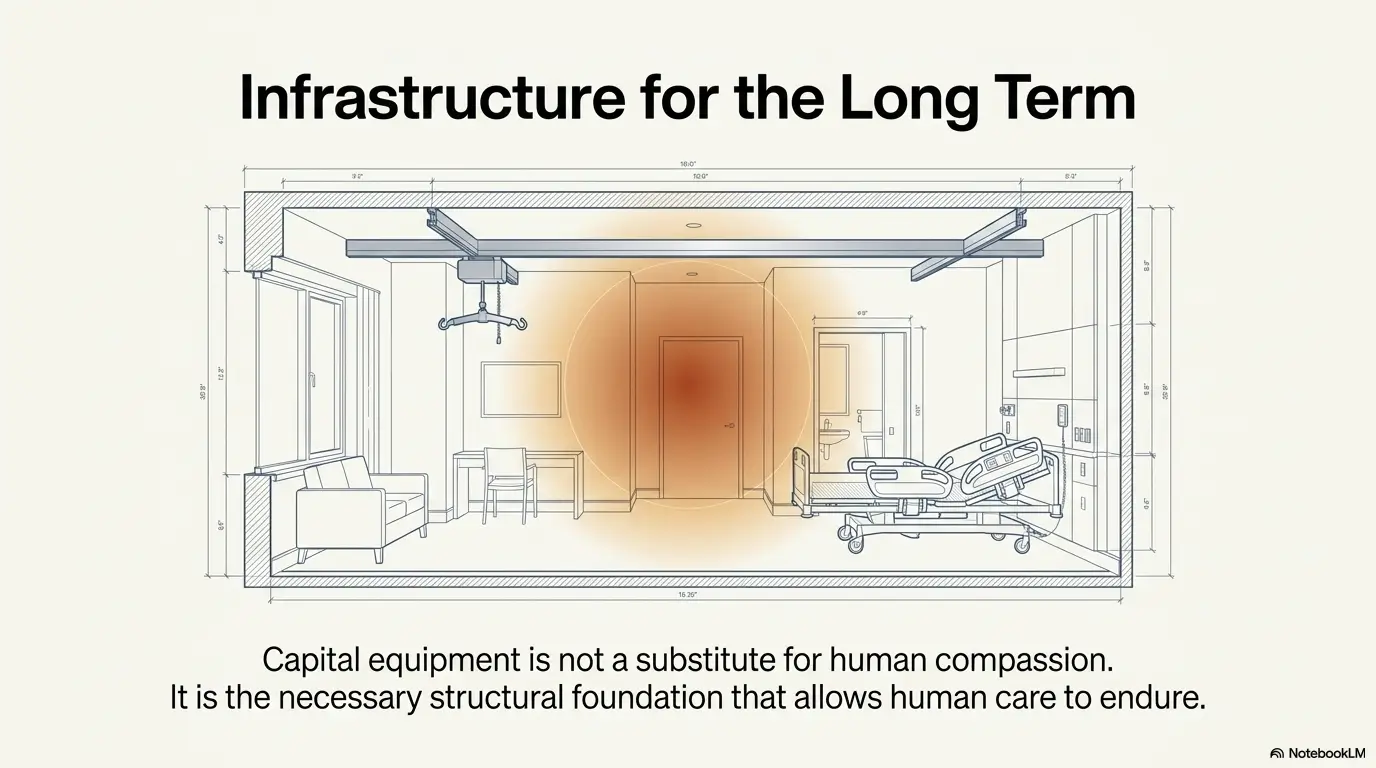
The best home equipment decision is not the flashiest purchase. It is the quiet fix that makes a real routine safer, simpler, and less expensive without making the older adult lonelier or less protected. That is the kind of savings that can actually sleep at night.
Last reviewed: 2026-07