

Strengthening Your Case Through Precise Documentation
Most workplace injury files do not fall apart because the injury was minor. They fall apart because the documentation is. A missing work restriction, an unexplained care gap, or one vague orthopedic note can quietly weaken an otherwise legitimate claim long before settlement talks begin.
That is the real friction behind orthopedic pain management settlement documentation after workplace injury. The pain is already hard enough. Then the record has to explain not only what hurt, but what changed, what treatment was tried, how work was affected, and why the timeline still makes sense months later.
Keep guessing, and a credible case can start to look inconsistent on paper.
This post helps you turn scattered treatment records, imaging reports, pain notes, modified duty paperwork, and medical gaps into a cleaner, more persuasive documentation system. The goal is not drama. It is clarity, continuity, and a file that holds together under review.
The method here is practical and grounded: build the timeline first, connect function to treatment, and explain the gaps before someone else does it badly.
Because yes, the details matter. Especially the boring ones. And those boring details often carry the most weight.
So before you gather one more PDF or scroll one more portal… Start with the paper trail that actually moves the story forward.
Fast Answer: Orthopedic pain management settlement documentation after workplace injury works best when it shows five things clearly: what happened, what body part was affected, what treatment was tried, how function changed at work and at home, and whether the record stayed consistent over time. In most claims, a dated, boring, well-organized file beats a dramatic but messy one.
Safety note: This article is for general informational purposes aimed at US readers. It does not tell you what settlement you deserve, and it does not replace state-specific workers’ compensation rules, medical advice, or legal advice. If your case involves severe symptoms, retaliation concerns, denial of care, surveillance disputes, or pressure to settle quickly, get case-specific advice from a licensed clinician or attorney.
Table of Contents
Workplace Injury Documentation Starts Here, Not at Settlement
Why the first medical note often shapes the whole paper trail
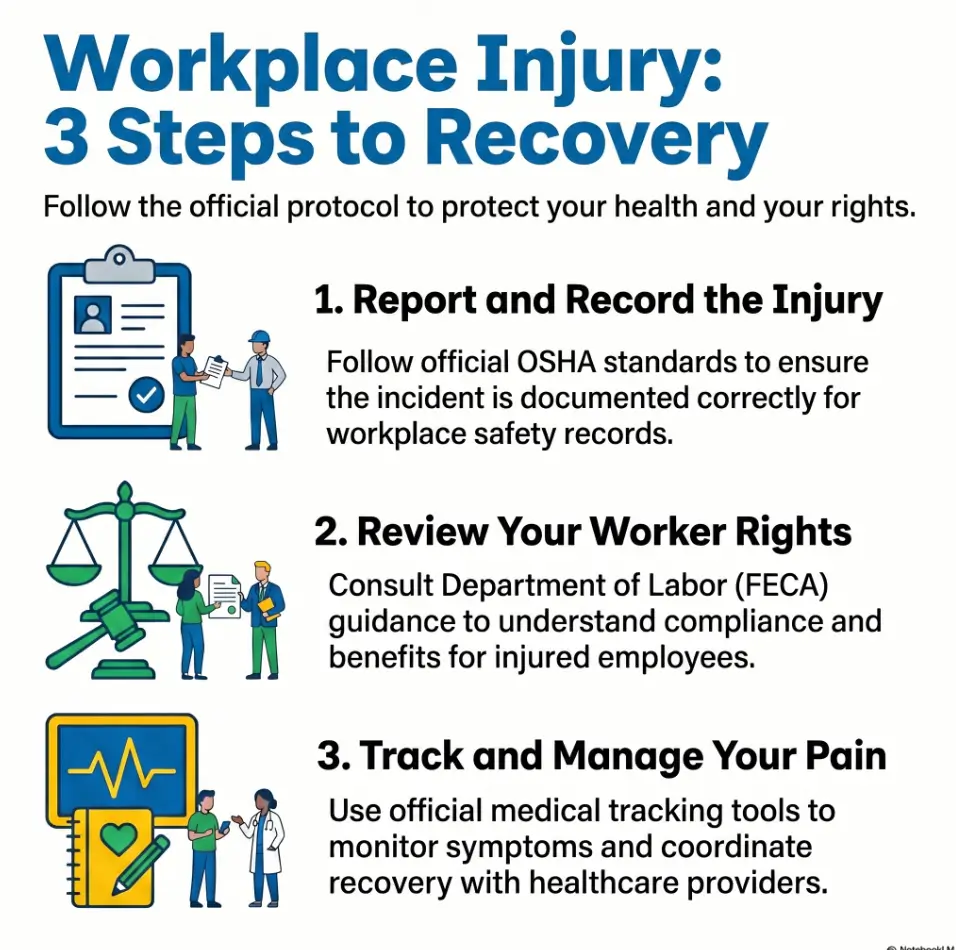
The first note after a workplace injury often becomes the seed crystal for everything that follows. If the note says “low back pain after lifting box at work,” later records may keep echoing that language. If it says only “back pain,” the file may spend months trying to recover details that should have been captured on day one. That is not drama. That is paperwork gravity.
I have seen readers treat settlement documentation like a final exam packet, something to assemble at the end. In reality, the record starts when the injury is reported, when symptoms are first described, and when work restrictions are first issued or ignored. OSHA also separates its own injury recordkeeping system from workers’ compensation systems, which is a useful reminder that not every form serves the same purpose.
What “orthopedic pain management” documentation usually includes in practice
In real life, this usually means a mix of urgent care notes, orthopedic evaluations, physical therapy progress reports, imaging summaries, pain management visits, medication history, injection records, work status slips, and communications about modified duty. If surgery enters the picture, add pre-op clearance, operative reports, discharge instructions, and follow-up notes.
The point is not to collect every molecule of paper. The point is to preserve the chain of meaning. A good file shows how diagnosis, treatment, and function moved together over time. A weak file looks like a drawer opened in a windstorm.
Why a vague start can haunt a later claim review
Reviewers notice when mechanism of injury changes, body parts appear late, or early records do not mention symptoms that become central later. That does not automatically destroy a claim, but it creates friction. And friction is expensive. Sometimes it costs time. Sometimes credibility. Sometimes both, which is the administrative version of stepping on a rake twice.
- Save the first injury report and first medical note
- Keep every work status slip in date order
- Write down body part, mechanism, and first symptoms immediately
Apply in 60 seconds: Open one folder today and label it with the injury date plus body part, such as “2026-02-14 right shoulder injury.”
Who This Is For, and Who It Is Not For
Best for workers managing back, neck, joint, shoulder, knee, or post-surgical pain after a job-related injury
This article is for people dealing with the ordinary but exhausting reality of orthopedic injury paperwork: back strains that do not feel “minor” three months later, shoulder injuries that complicate every reach and lift, knee injuries that turn stairs into negotiations, and post-surgical recovery that looks straightforward on paper but not in the kitchen at 7 a.m.
Also useful for family members helping organize records and timelines
Family members often become accidental claims librarians. They print portals, track appointments, and ask the one question nobody else asks: “Why does this note say full duty when yesterday’s note said no lifting?” If that is you, you are not overreacting. You are doing file hygiene, and file hygiene saves people later.
Not for emergency symptoms, disputed trauma requiring immediate legal action, or readers who need state-specific case advice right now
If you have severe neurological symptoms, new bowel or bladder changes, worsening weakness, major medication reactions, or an acute dispute that needs immediate state-specific legal strategy, this article is not enough. Use it as a framework, not as a substitute for urgent help.
Eligibility Checklist
Yes: You are trying to organize orthopedic treatment, work restrictions, and day-to-day function into one credible record.
Yes: Your injury happened at work or is being handled as work-related.
Yes: You need a cleaner timeline for claim review, attorney intake, or settlement preparation.
No: You are looking for a settlement estimate based only on diagnosis.
No: You need emergency medical instructions or state-specific legal strategy tonight.
Next step: If you checked the three yes items, build a dated timeline before you collect anything else.
The Paper Trail That Carries Weight in a Settlement File
Treatment notes, imaging reports, work restrictions, and medication history
The most useful records usually fall into four buckets. First, treatment notes that explain symptoms, exam findings, diagnosis, and plan. Second, imaging reports that may support or narrow the discussion, but rarely tell the whole functional story alone. Third, work restriction notes showing what you could or could not do, and when. Fourth, medication history, including changes, side effects, and why certain options were stopped or avoided.
Functional evidence: missed shifts, modified duties, sleep disruption, driving limits, and home limitations
This is the part many people under-collect. Reviewers may understand “lumbar radicular pain,” but they also understand “could not drive more than 20 minutes,” “needed help with laundry,” or “missed three shifts after injection flare.” Function is where pain stops being abstract. It becomes legible.
Federal workers’ compensation guidance from the Department of Labor emphasizes that medical documentation must support inability to work for claimed periods, and written work restrictions matter because return-to-work decisions are judged against those restrictions.
Billing, referrals, and authorization records that quietly matter more than people expect
These documents can feel like paper confetti, but they answer practical questions that come up later. Was care recommended but delayed? Was an MRI ordered but denied for a time? Did physical therapy stop because visits ran out, or because the patient vanished? Those are different stories. Your file should not force someone else to guess which one is true. If imaging access was delayed or appealed, it may help to compare that record against how MRI referral decisions in orthopedic pain cases usually unfold.
Once, after a long week, I spent 40 minutes hunting for one missing referral date and found it tucked between two identical billing PDFs. It felt like a tiny bureaucratic ghost. That missing date changed the meaning of the whole care gap.
Timeline First, Then Everything Else
Build the record around dates, not around emotion
People naturally organize painful experiences around what felt worst. Claims files do better when organized around dates. Injury date. First report date. First treatment date. Imaging date. Restriction changes. Procedure dates. Return-to-work attempts. Setbacks. Last specialist follow-up. Date order gives your story a spine.
Connect injury event, symptom progression, treatment changes, and work status in one sequence
Your master timeline should let a stranger see, at a glance, how symptoms changed and what the medical response was. A good entry is not just “March 8, pain worse.” It is “March 8, right shoulder pain worsened after modified-duty stocking task; ortho visit on March 10 restricted overhead work; PT continued twice weekly.”
Here’s what no one tells you about “missing weeks” in the file
Missing weeks become narrative opportunities for the other side. They may suggest recovery, noncompliance, unrelated causes, or simple confusion. Sometimes the truth is more ordinary: waiting on authorization, no transportation, clinic scheduling delays, or thinking symptoms would calm down. Ordinary reasons still need dates. When those delays involve denied imaging or conservative-care requirements, readers often benefit from seeing how failed conservative care is documented before an MRI.
Mini Calculator: How many “exposed” days are in your timeline?
Count 1) days from injury to first treatment, 2) days between major follow-ups, and 3) days between last restriction note and return-to-work paperwork.
Output: Any gap over a week deserves a plain-language explanation in your timeline. Not because the number is magic, but because silence invites interpretation.
Show me the nerdy details
A timeline works because it reduces narrative drift. In documentation review, sequence matters more than emotional intensity. It helps reviewers test three things quickly: temporal consistency, treatment continuity, and whether functional limitations match the medical record. If those three line up, the file becomes easier to trust.
Pain Notes That Help, Not Hurt
What to document about pain level, location, triggers, and daily impact
A useful pain note is concrete. It says where the pain sits, what it feels like, what triggers it, how long it lasts, and what daily tasks it interferes with. It might note that sitting beyond 30 minutes increases leg numbness, or that reaching overhead causes sharp anterior shoulder pain and disrupted sleep. That is usable.
Why “it still hurts” is weaker than function-based detail
“It still hurts” is human and true, but it does not carry much information. Function-based detail does. A pain journal becomes stronger when it links symptoms to tasks, timing, and response to treatment. MedlinePlus notes that keeping a pain diary can help track pain, when medicine is taken, and how much it helps. For readers trying to make those notes more practical, a guide on orthopedic pain management basics can help frame symptoms around function instead of vague intensity.
Let’s be honest: vague pain diaries can backfire if they read like performance instead of observation
A diary should sound plain, not theatrical. Think weather report, not courtroom monologue. Record patterns. Avoid self-diagnosis. Do not write “my disc is definitely getting worse” unless a clinician has said that. Write “shooting pain increased after 15 minutes of driving and eased somewhat with rest.” Credibility likes restraint.
Years ago, while helping someone sort medical notes, the best journal entry in the whole stack was also the dullest: “Woke at 3:20 a.m. from shoulder pain, could not lie on right side, took medication, slept again around 4:15.” It was boring in the most persuasive way possible.
- Track location, trigger, duration, and function
- Note medication use and whether it actually helped
- Avoid guessing at medical conclusions
Apply in 60 seconds: Write one sample entry using this template: date, symptom, trigger, effect on task, what you tried, what changed.
Medical Gaps Can Shrink Credibility Fast
How delayed care, skipped follow-ups, or self-ending treatment may be interpreted
Delayed care may be read as mild symptoms. Skipped follow-ups may be read as improvement. Self-ending treatment may be read as recovery or noncooperation. Those interpretations are not always fair, but they are common because a file cannot hear your reasons unless you put them on the page.
When a gap has a real explanation, and how to document it carefully
Many gaps have real causes: transportation trouble, denied authorization, clinic delays, caregiving burdens, medication side effects, cost concerns, or a failed return-to-work attempt that absorbed all available energy. Document the reason plainly and attach supporting records when possible, such as denial letters, portal messages, or scheduling logs. If cost barriers shaped the gap, readers may also want to compare what orthopedic pain management looks like under a high-deductible plan.
Why inconsistency between visits can become a bigger problem than severity itself
Inconsistency is often more damaging than a serious diagnosis. If one visit says severe lifting intolerance and the next says no restrictions without explanation, the file starts to wobble. NIOSH has noted that the longer a worker remains away from work, the lower the chances of returning to work, which is one reason restriction notes and follow-up timing matter so much.
Decision Card: Care gap or documented delay?
When A: You missed care because the clinic or insurer delayed approval. Keep portal screenshots, referral notes, and denial letters.
When B: You stopped going because you felt overwhelmed, busy, or unsure. Write a short dated explanation and resume care if medically appropriate.
Time/cost trade-off: Ten minutes spent explaining a gap now can save hours of confusion later.
Neutral action: Add one sentence beside every gap on your timeline explaining why it happened.
Don’t Hand Over a Messy File
Common ways records become bloated, duplicated, or hard to trust
Claims files often become swollen with duplicate portal downloads, blurry phone photos, incomplete notes, and PDFs named things like “document(27)-final-final.” That is not a moral failure. It is what happens when pain meets bureaucracy. But the cleanup matters.
Why a stack of PDFs is not the same as a coherent claim narrative
Quantity is not clarity. A settlement reviewer does not need 14 copies of the same MRI report. They need to know when the MRI occurred, what it said in broad terms, what changed after it, and whether work restrictions matched the clinical picture. A clean chronology beats digital sediment every time. This becomes even more important when imaging findings and symptoms do not line up neatly, which is why pieces on MRI and pain mismatch can be useful supporting reads.
The difference between “all records” and “usable records”
“All records” means nothing missing. “Usable records” means organized, labeled, and sequenced. Ideally, you have both. I like a four-folder structure: medical visits, imaging and procedures, work status and employer forms, and receipts or authorization documents. It is not glamorous. Neither is flossing, yet here we are.
What to gather before comparing help from a clinician or attorney
- Injury date and first report date
- List of all treating providers and facilities
- Latest diagnosis list and current medications
- Most recent work restrictions
- Dates of missed work, modified duty, and procedures
Neutral action: Put these five items on one page before any intake call or document review.
Common Mistakes That Quietly Weaken Settlement Documentation
Mixing personal pain notes with unsupported medical conclusions
Your personal notes should describe experience, not diagnose yourself. Once a diary turns into a mini medical textbook written under stress, it becomes less persuasive. You are not required to sound clinical. You are required to sound accurate.
Ignoring work restriction updates after orthopedic visits
Restriction notes are sometimes treated like small paper extras. They are not. They bridge medicine and employment. OSHA’s recordkeeping guidance also recognizes that when a licensed health care professional recommends job restriction, the case may qualify as a restricted work case. Readers dealing with workplace documentation crossovers may also find it helpful to understand how workers’ comp-approved pain management is typically documented.
Leaving out prior treatment context and letting the other side define it first
Preexisting issues do not automatically erase a work injury. But if the record is silent, others may frame that silence for you. The safer move is to note prior treatment honestly, then show what changed after the workplace event. New symptoms, increased intensity, new restrictions, or new imaging findings can all matter in context.
Assuming imaging alone proves functional loss
Imaging can be important, but function drives many real-world decisions. Plenty of people have striking scans and modest limits. Others have modest scans and major limitations. Settlement documentation becomes stronger when imaging, exam findings, treatment response, and functional consequences travel together in the same narrative lane.
- Separate symptom notes from diagnosis claims
- Save every updated restriction note
- Explain preexisting history before someone else does it badly
Apply in 60 seconds: Review your last three medical records and highlight every change in work status or diagnosis language.
The Employer-Clinic-Insurance Triangle Gets Complicated
Where documentation often changes tone between doctor, employer, and claims reviewer
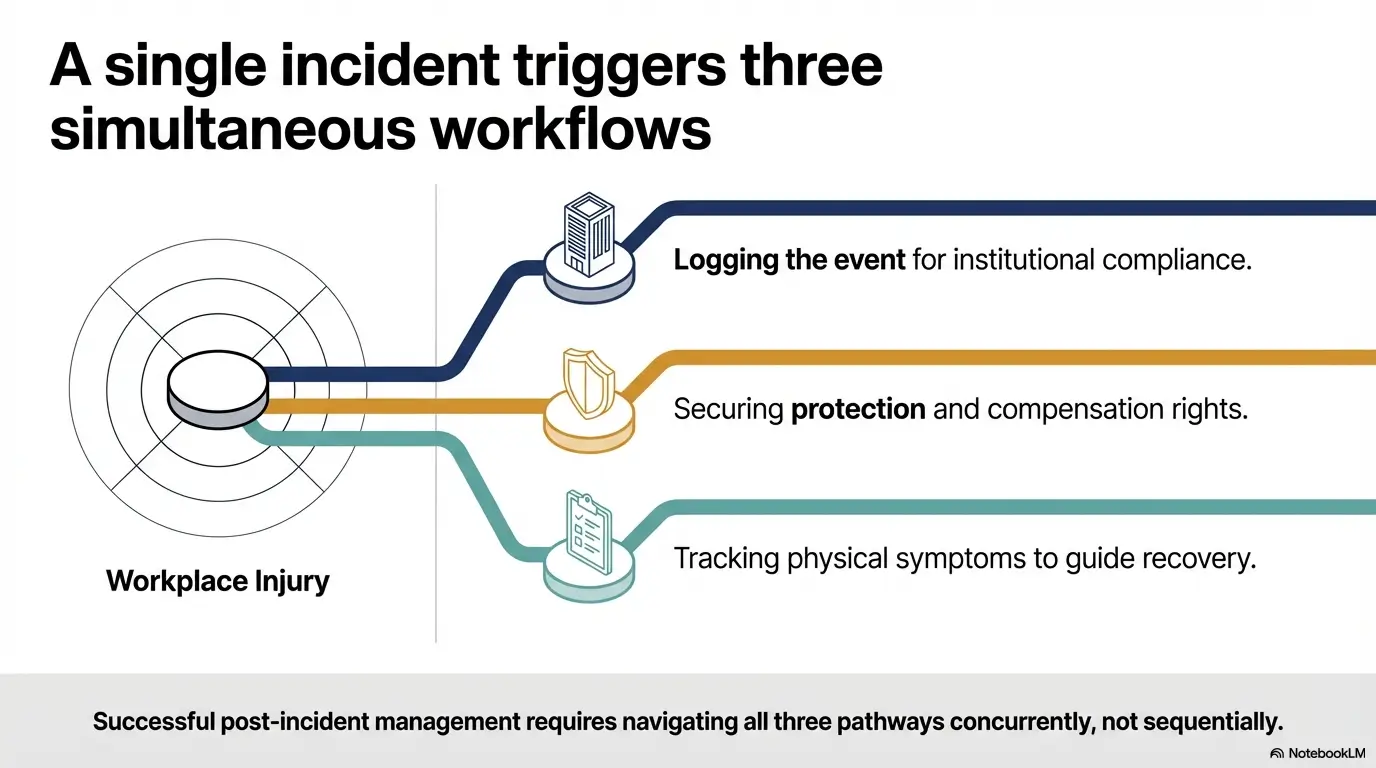
Medical records often describe symptoms and treatment. Employer forms focus on duty status and attendance. Insurance or claims communications focus on authorization, causation, and documentation sufficiency. Same injury, different dialects. Problems arise when those dialects stop matching.
Why return-to-work paperwork deserves its own section in the file
Return-to-work forms deserve a dedicated folder because they often decide how the injury lives inside employment reality. The Department of Labor’s OWCP guidance for federal claims emphasizes written offers and written restrictions because suitability and compliance questions are evaluated against the paper record. If the issue starts drifting from workers’ comp into workplace accommodation language, it may help to review examples of ADA accommodation letters for back pain or doctor note wording for ADA accommodations.
Small wording differences that can create large interpretation problems
“No overhead lifting” is not the same as “avoid repetitive overhead lifting.” “Can return with restrictions” is not the same as “full duty tolerated.” These differences are tiny on the page and huge in practice. When wording changes, your timeline should note it.
OSHA also states that employees have the right to report work-related injuries and illnesses free from retaliation. That matters because documentation can get distorted when workers feel pressure not to report accurately or promptly.
Short Story: The note that changed everything
One worker had a shoulder injury that seemed simple on paper. The clinic note said he could return with restrictions. The employer form summarized it as “light duty okay.” For three weeks he was still doing overhead stocking because everyone read “light duty” differently. Pain flared, sleep worsened, and the file started looking inconsistent. When the records were finally organized, the key document was not the MRI.
It was a plain one-page restriction note buried between two visit summaries. It specified no overhead work, limited lifting, and frequent position changes. Once that note was pulled forward and matched to the work timeline, the record made sense again. Nothing miraculous happened. No dramatic speech. Just one lost page restored to its proper place, like finding the missing hinge on a crooked door.
Documentation for Surgery, Injections, and Long-Term Pain Care
Pre-op and post-op records that show medical necessity and recovery path
If surgery occurs, your file should show why it was recommended, what conservative care came first, what the procedure addressed, and how recovery progressed. Operative reports matter, but so do pre-op restrictions, discharge instructions, and follow-up visits documenting wound healing, function, pain control, therapy, and return-to-work planning. If readers are trying to organize recovery records after a procedure, a piece on choosing rehab after surgery may fit naturally beside this section.
Injection series, physical therapy, and medication monitoring as settlement evidence
Injections and therapy can strengthen the record because they show treatment intensity, response, and duration. A file becomes more persuasive when it shows whether relief was temporary, partial, or absent, and what happened next. Medication records matter too, especially if changes were made because of side effects, limited benefit, or safety concerns. For readers comparing nonsurgical options before or after a procedure, it can help to see how pain management before cortisone injection is usually framed.
When chronic pain management records need extra context to remain persuasive
Long-term pain care may be interpreted unfairly if it looks static. Add context. Did the patient plateau? Did pain remain because work tasks aggravated recovery? Did medication help sleep but not lifting tolerance? Chronic pain records are more persuasive when they are tied to function, not just repeated pain scores.
Coverage Tier Map for Documentation Quality
Tier 1: Basic injury report only
Tier 2: Medical visits plus diagnosis
Tier 3: Adds work restrictions and missed work dates
Tier 4: Adds therapy, procedures, medication changes, and functional notes
Tier 5: Everything above, organized into one dated master timeline with explanations for every gap
Neutral action: Aim to move your file up one tier this week, not five tiers in one exhausted weekend.
Don’t Overstate, Don’t Understate
Why exaggeration damages trust
Exaggeration creates brittleness. A brittle file snaps under comparison. If every day is recorded as the worst day, records showing small improvement will seem contradictory even when they are not. Accuracy is sturdier than intensity.
Why minimization also hurts when records later need to explain loss
Many people understate symptoms because they want to seem cooperative, tough, or grateful to be back at work. Then months later, the file contains polite understatement where it needed usable facts. Do not perform wellness for paperwork. Document reality.
The strongest tone is plain, dated, and boring in the best possible way
A strong record sounds like someone who slept poorly, showed up anyway, and wrote down what actually happened. That voice carries farther than anger or polished drama. The best documentation often reads like a kitchen table ledger: quiet, steady, stubbornly clear.
Infographic: What a Strong Documentation File Contains
Injury date, mechanism, first report, first symptoms
Visits, diagnosis, imaging, therapy, procedures, medications
Restrictions, modified duty, missed shifts, return attempts
Sleep, driving, stairs, housework, childcare, daily tolerance
Delays, denials, transportation issues, scheduling problems
When to Seek Help
Severe pain, neurological symptoms, worsening mobility, or medication complications need medical review promptly
There is a point where documentation stops being the main job and medical safety becomes the main job. Severe weakness, numbness progression, loss of function, infection concerns after surgery, medication side effects, or worsening pain that feels qualitatively different deserve prompt review.
Claim denial, retaliation concerns, surveillance disputes, or pressure to settle may justify legal guidance
If the dispute has moved beyond organizing records and into conflict over causation, denial, retaliation, or settlement pressure, get case-specific advice. OSHA notes employees have a right to report work-related injuries and illnesses without retaliation, and federal workers’ compensation guidance emphasizes that medical support for claimed disability periods must be in the file. When the friction specifically involves access to specialty review, a resource on what to do after a denied second opinion for orthopedic pain may also be relevant.
Multi-state work issues, independent contractor status, or preexisting-condition disputes usually need case-specific advice
These are the kinds of facts that turn a general article into a poor substitute for actual counsel. Use this guide to prepare your file, not to guess your legal answer from the internet at midnight while eating crackers over a scanner.
FAQ
What documents matter most for an orthopedic injury settlement?
The most important documents usually include the first injury report, first medical note, diagnosis and treatment records, imaging summaries, work restriction notes, physical therapy reports, procedure records, medication history, and a dated record of missed work or modified duty. Function-based notes often matter more than people expect.
Do pain management records help prove ongoing limitations?
They can, especially when they show treatment response, medication changes, procedure history, and daily functional limits. Pain records are stronger when they explain what activities are limited and why, not when they repeat pain scores alone.
Can missed appointments hurt a workplace injury claim?
Yes, they can create questions. But a missed appointment is not automatically fatal. The key is whether the reason for the gap can be documented clearly, such as denial delays, scheduling problems, transportation issues, or adverse medication effects.
Should I include a personal pain journal in my documentation set?
Usually yes, if it is plain, dated, and observational. Keep it focused on symptoms, triggers, timing, medication use, and effects on work or daily life. Avoid unsupported medical conclusions or dramatic language that makes the diary sound less reliable.
How do work restrictions affect settlement discussions?
Restrictions help connect medicine to lost function and work capacity. They show what tasks were limited, when those limits started, whether they changed, and whether modified duty matched the medical record.
Do MRI or X-ray results matter more than treatment notes?
Not usually by themselves. Imaging may support part of the picture, but treatment notes, exam findings, and functional limitations often carry more day-to-day weight because they show how the condition actually affected work and life.
What if my pain got worse after I returned to work?
Document the timeline carefully. Note what work tasks aggravated symptoms, when the worsening began, whether restrictions were updated, and whether a clinician re-evaluated your condition. That sequence matters.
How far back should I organize records after a workplace injury?
Start with the date of injury and move forward. If there is relevant prior treatment, include enough earlier context to show baseline and what changed after the work event. Do not hide prior history. Frame it accurately.
Next Step: Build a One-Page Master Timeline Before You Gather More Records
List injury date, first report, first treatment, diagnosis changes, restrictions, procedures, and missed work
If you do only one thing after reading this, make it a one-page master timeline. Not a huge binder. Not a heroic spreadsheet with 19 tabs. One page. Put the injury event at the top, then move forward in date order. Include every major medical step and every work status change.
Mark any gaps, conflicting notes, and missing reports before they become blind spots
Circle gaps. Mark contradictory language. Note missing records before someone else notices them first. This single page becomes the map for your entire file. Once you have it, gathering records stops feeling like rummaging through attic dust and starts feeling like assembly.
Use the timeline to organize every later section of the article and every reader takeaway
That is the loop we opened at the start: settlement documentation is not mainly about collecting more. It is about arranging what exists so the truth can be seen without tripping over clutter. A clear file is kinder to everyone involved, including you.
- Dates first
- Function beside treatment
- Every gap gets a plain explanation
Apply in 60 seconds: Create seven rows right now: injury, report, first treatment, imaging, restrictions, procedures, missed work.
Last reviewed: 2026-04-06.