
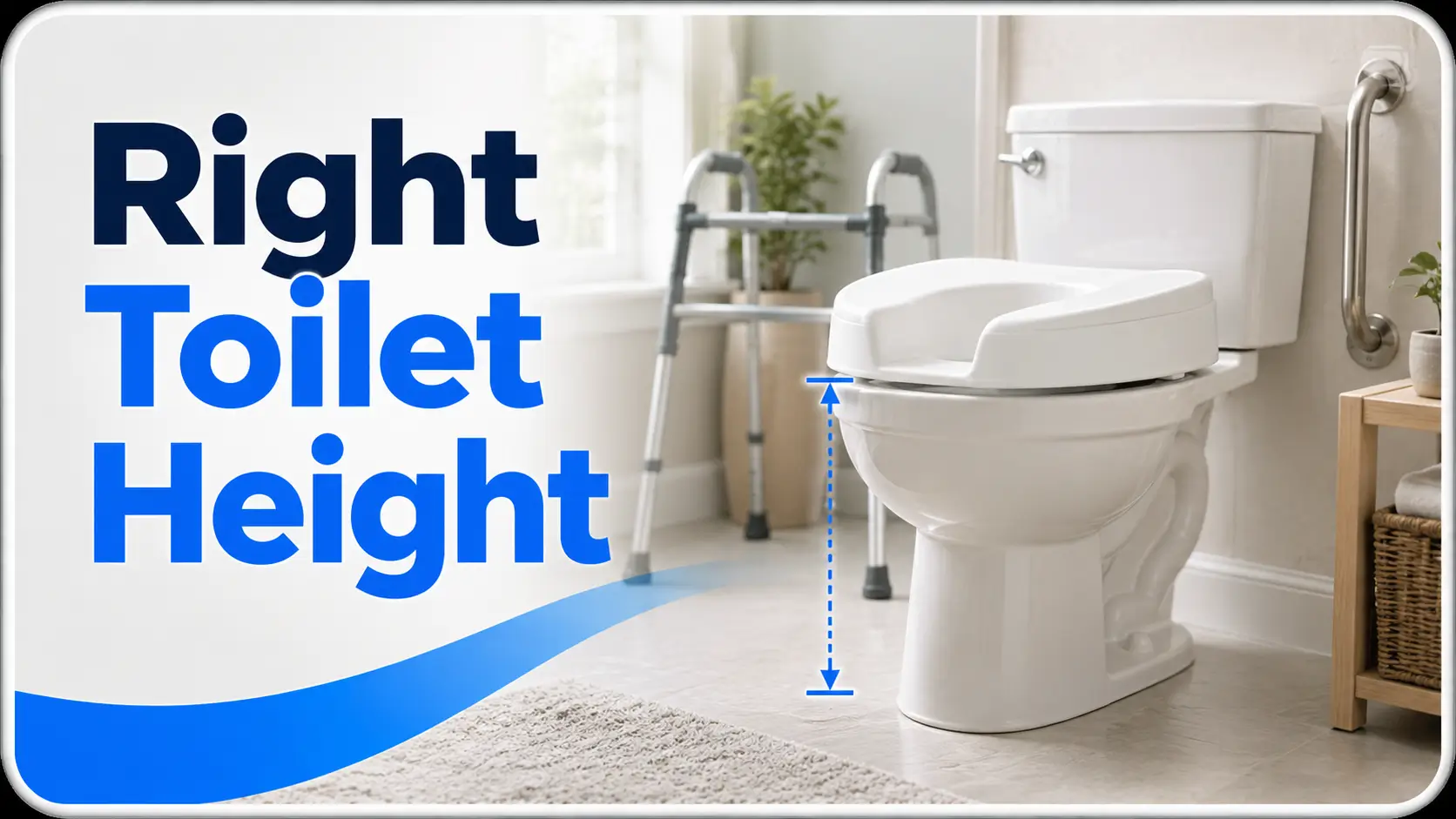
Precision Recovery: Finding the Right Toilet Seat Height After Hip Surgery
A bathroom can look perfectly ordinary until hip surgery turns one low toilet into the most stressful seat in the house. For caregivers and patients, choosing a toilet seat riser isn’t about buying the tallest model—it’s about making one private, repeated movement safer: sit, pause, stand.
Guessing can cost more than a return trip to the medical supply store. A riser that is too low may strain hip precautions; one that is too high can leave feet dangling and balance compromised.
This guide helps you compare height variations, measure your current setup, and choose between a raised seat, safety frame, or commode.
Because recovery doesn’t happen in a product photo. It happens at 2:17 a.m., in slippers, with a walker waiting in exactly the wrong spot.
Table of Contents
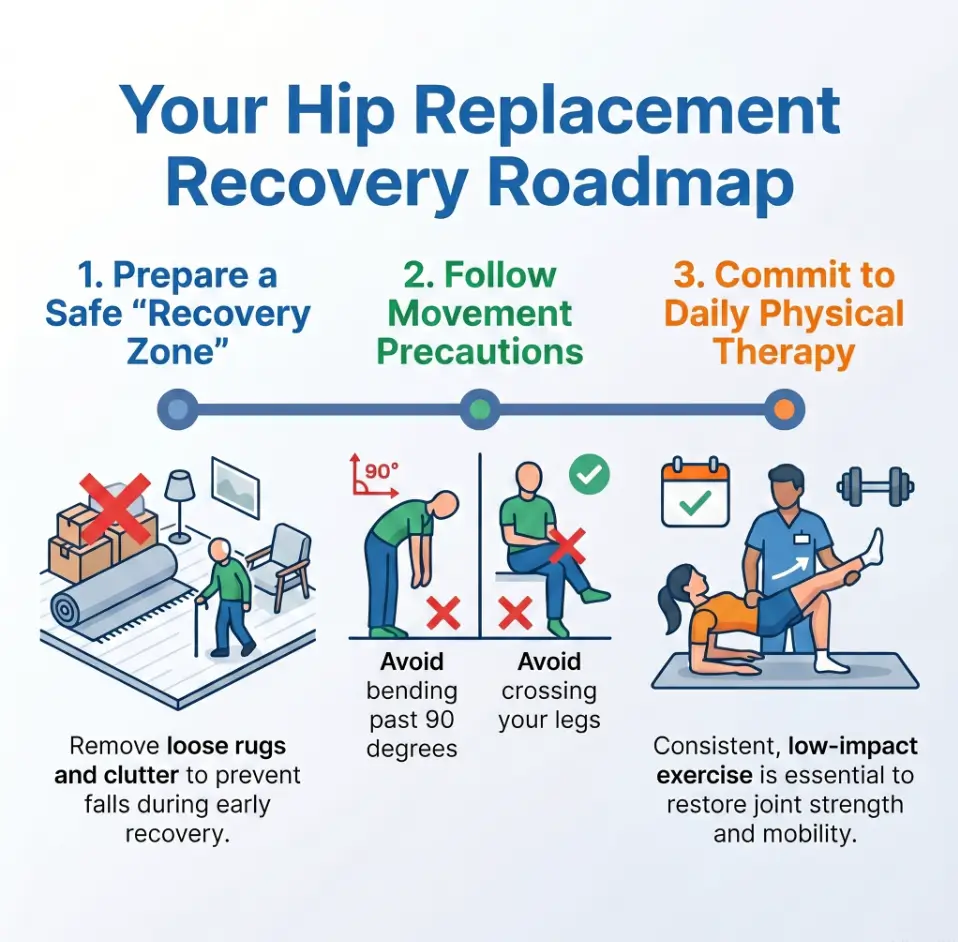
Safety First: Use This as Planning Help, Not Medical Advice
Toilet seat riser height after hip surgery is a safety planning topic. It is not a substitute for the discharge instructions from the surgeon, physical therapist, or occupational therapist.
Hip precautions vary. A patient recovering from a posterior total hip replacement may receive different restrictions than someone with an anterior approach. A revision surgery, fracture repair, leg-length difference, dizziness, nerve weakness, or wound concern can change the safest bathroom setup. Bodies do not read product labels, which is rude but medically important.
Major orthopedic and patient-care resources, including the American Academy of Orthopaedic Surgeons, MedlinePlus, and Mayo Clinic, commonly advise preparing the bathroom with supportive equipment such as a raised toilet seat, grab bars, shower chair, or commode when appropriate. MedlinePlus also describes the common goal clearly: use an elevated toilet seat when needed so the knees stay lower than the hips while toileting.
- Follow the discharge packet first.
- Ask the OT or PT about height before buying.
- Recheck the setup after the first practice transfer.
Apply in 60 seconds: Take a photo of the toilet area and send it with your height measurements to the care team.
The “Right Height” Is Not a Number, It Is a Transfer
The most useful question is not, “Should I buy a 2-inch, 4-inch, or 6-inch toilet riser?” It is, “Can this person sit and stand without unsafe bending, twisting, wobbling, or pulling?”
A riser works only inside a transfer. That transfer includes the patient’s leg length, toilet shape, floor space, walker position, arm strength, pain level, medication fog, and whether the bathroom door opens like a normal door or a tiny wooden riddle. For a broader look at recovery-room gear decisions, compare this with orthopedic home care equipment planning before you buy the first sturdy-looking object with a medical label.
Why 2 inches, 4 inches, and 6 inches can all be wrong in different bathrooms
A 2-inch riser may be enough for a tall comfort-height toilet. A 4-inch riser may be reasonable on an older, lower toilet. A 6-inch riser may help one person avoid deep hip flexion but leave another person’s feet floating.
That is why height should be tested against body position, not chosen from a shelf like cereal. I once watched a caregiver proudly install the tallest riser available, only to realize the patient could not get both heels down. The device was technically “higher.” The transfer was worse. The bathroom had become a bar stool with consequences.
The safe-height test: hips, knees, feet, and arm support
Use four checkpoints:
- Hips: The patient should not feel forced into a deep bend.
- Knees: Knees are usually safer slightly lower than hips when hip precautions apply.
- Feet: Both feet should rest flat or nearly flat on the floor.
- Hands: Hands should reach stable arm support, grab bars, or a toilet safety frame.
What “knees lower than hips” really looks like after hip replacement
Picture a calm, slightly elevated dining chair. The pelvis is not sinking backward. The knees are not climbing toward the chest. The feet are not searching for the floor. The person can pause before standing without looking like they are negotiating with gravity’s legal department.
That is the general idea. The actual setup still belongs to the care team’s instructions.
Toilet Riser Fit Triangle
Avoid a deep folded position, especially if hip precautions apply.
Knees are commonly kept lower than hips when instructed after replacement.
Both feet should feel grounded, not dangling or reaching.
Use stable arms, frames, or properly installed grab bars.
Too Low: The Quiet Problem That Shows Up When You Stand
A toilet that is too low may feel manageable on the way down. The trouble often appears during the stand-up phase, when the patient must lean forward, push through the legs, and rise against pain, weakness, and fear.
That is the sneaky part. Sitting is a descent. Standing is a negotiation.
Low seats can pull the hip past a safer bend angle
After some hip surgeries, especially when precautions are given, patients are told to avoid bending the hip beyond a certain point, often described as avoiding more than 90 degrees. NHS patient guidance and several orthopedic programs teach similar movement precautions for many hip replacement recoveries.
A low toilet can push the thigh closer to the torso. Add a small bathroom, a robe, urgency, and one misplaced walker, and the body may fold more than intended. No one plans to break precautions. They usually get surprised by a low seat at the worst possible time. If the problem is also part of a larger pain pattern, this guide to hip pain management for seniors can help readers frame symptoms and support needs more carefully.
Why soft confidence disappears during the stand-up phase
The stand-up phase asks for leg strength, balance, coordination, and enough confidence to shift weight forward. Pain medication can blur that confidence. So can fatigue.
Here is the test I like: if the person must rock three times before standing, the seat may be too low or support may be inadequate. The body is trying to create momentum because the setup is not giving enough help.
The “one hand on the sink” warning sign
If the patient reaches for the sink, towel bar, windowsill, toilet paper holder, or door knob to pull up, that is not a quirky habit. It is a safety message.
Bathroom fixtures are not all transfer supports. Towel bars are especially suspicious little actors. They look useful, then betray you under load.
| Check | Yes / No | Next step |
|---|---|---|
| Knees rise higher than hips | Yes means concern | Ask OT/PT about a higher seat or commode |
| Patient rocks to stand | Yes means support gap | Consider arms, frame, or grab bars |
| Patient grabs sink or towel bar | Yes means unsafe habit | Install proper transfer support |
Neutral action: Write down every “yes” before buying equipment so the care team can guide the safest option.
Too High: The Overcorrection Nobody Warns You About
Too high is the bathroom problem that wears a safety costume. It says, “Look at me, I prevent bending.” Then the patient sits down and their feet hover like confused punctuation marks.
A riser can be too tall. That matters because standing safely requires contact with the floor.
Dangling feet can turn a bathroom into a balance puzzle
Feet are not decorative. They are part of the transfer system. If both feet cannot press into the floor, the patient may slide forward, twist, or rely too heavily on the arms.
For someone recovering from hip surgery, that can create a wobbly sit, a shaky stand, or a frightening pause halfway up. A toilet is a terrible place for suspense.
Why a taller riser may feel safer but transfer worse
A taller riser reduces the depth of the sit. That can help hip angle. But it may also reduce stability if the patient is shorter, if the toilet is already comfort height, or if the riser has a thick molded seat.
This is why “highest available” is not a plan. It is a guess wearing a receipt.
Let’s be honest: tall does not always mean stable
Look for signs the riser is too high:
- The patient’s heels lift off the floor.
- The patient feels perched instead of seated.
- The patient slides forward to reach the floor.
- The patient must pull hard with both arms to stand.
- The walker cannot be positioned close enough.
- Check heel contact.
- Watch for sliding or perching.
- Test the stand-up motion with supervision.
Apply in 60 seconds: Sit on a firm chair at the planned height and check whether both feet stay flat.
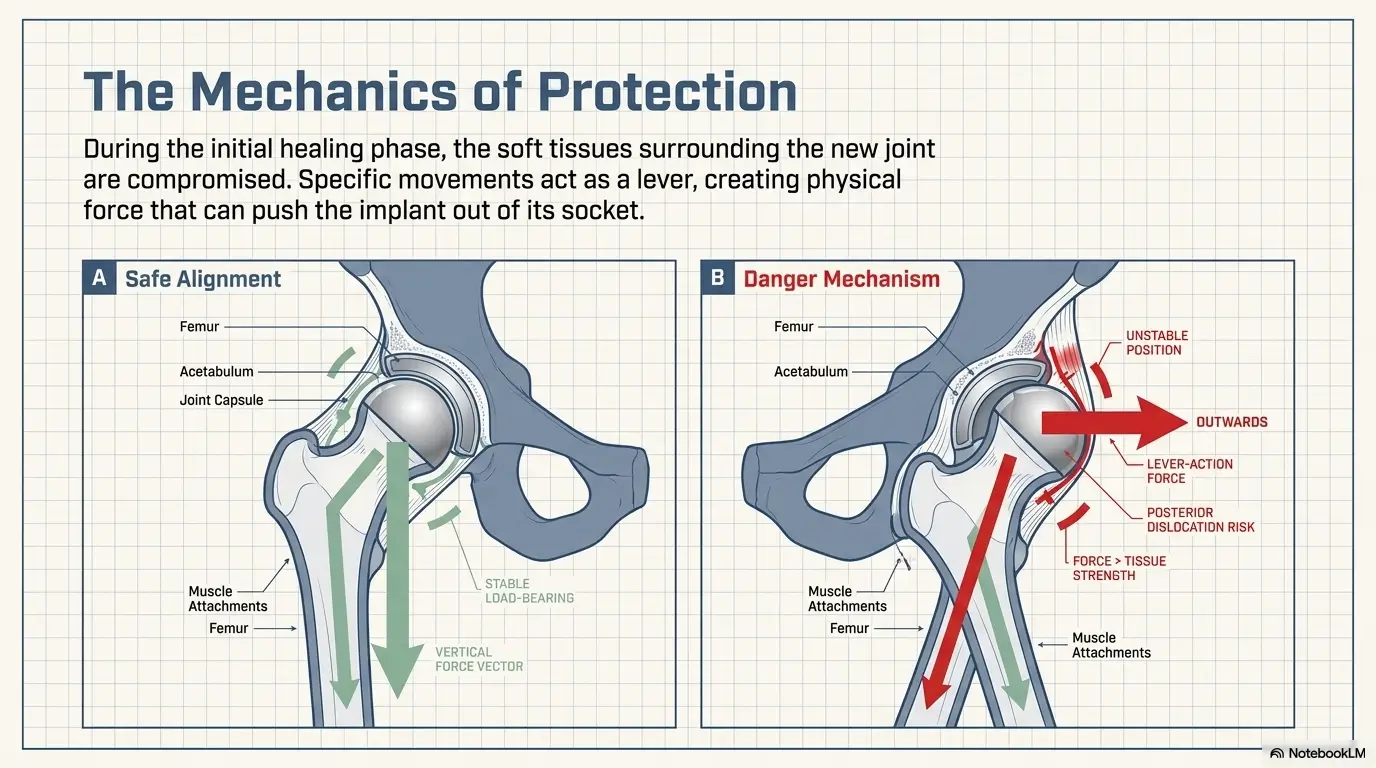
Measure Before You Buy: A 5-Minute Bathroom Check
Before you buy a toilet seat riser, grab a tape measure, your phone, and one patient chair that already feels safe. This is not glamorous. Neither is returning medical equipment while someone needs the bathroom.
Measure the current toilet height from floor to seat top
Measure from the floor to the top of the existing toilet seat. Many standard toilets are lower than comfort-height models, and that difference can change which riser makes sense.
Then check whether the current toilet is round or elongated. A mismatched riser can wobble or fit poorly. A wobbly riser is not a medical device. It is a tiny carnival ride.
Compare it with the patient’s chair height and knee position
Find a firm chair with arms that the patient can use safely. Measure from the floor to the seat surface. Then note how the patient’s knees and hips line up when seated.
If that chair height supports a safe transfer, it gives the OT or PT a useful comparison point. Not a perfect answer, but a better clue than “the toilet feels weird.” The same logic applies to other post-op decisions, including sleeping discomfort after hip replacement, where small setup details can make recovery feel less like a nightly engineering exam.
Check the “feet flat, hands supported” triangle
The triangle is simple:
- Feet flat on floor.
- Hands on stable support.
- Hips not folded too deeply.
All three matter. Remove one, and the transfer becomes a guessing game.
Photograph the setup for your occupational therapist
Take photos from the front and side. Include the toilet, nearby wall, sink, walker space, door swing, toilet paper location, and any existing grab bars.
Occupational therapists are bathroom detectives. Give them a clear photo and measurements, and they can often spot problems faster than a product page ever will.
| Input 1 | Current toilet seat height |
| Input 2 | Safe firm-chair seat height |
| Input 3 | Can feet stay flat at that height? |
| Output | Approximate riser height = safe chair height minus current toilet height, then confirm with OT/PT. |
Neutral action: Use this only as a conversation starter, not as a medical prescription.
Hip Precautions Change the Answer
Hip surgery recovery is not one single script. It is more like sheet music with handwritten notes from the surgeon. The melody may be familiar, but the exact tempo matters.
Posterior-approach precautions may make low seating riskier
Many patients with posterior hip precautions are told to avoid bending the hip deeply, crossing the legs, or twisting the operated leg. Low toilets can make that harder, especially during toileting, clothing management, and standing.
In this situation, a raised toilet seat is often recommended because it helps reduce the depth of the bend. But the care team still needs to confirm height and support.
Anterior-approach patients may still need transfer help
Some anterior-approach patients receive fewer traditional hip precautions. That does not mean the bathroom is automatically safe.
Pain, swelling, walker use, low blood pressure, weakness, and nighttime urgency can still make transfers awkward. “No posterior precautions” is not the same as “please freestyle the bathroom.” For readers comparing the larger recovery picture, joint replacement pain management can help connect bathroom setup with medication timing, movement tolerance, and practical pain planning.
Revision surgery, weakness, or dizziness can change the setup
Revision surgery, fracture-related surgery, complex anatomy, nerve weakness, or dizziness can move the decision away from a simple riser and toward a commode, toilet safety frame, wall-mounted grab bars, or caregiver-assisted toileting.
If the patient has fainted before, gets lightheaded after standing, or uses both arms heavily, equipment choice needs more caution.
Here’s what no one tells you: the surgery type is only one variable
The safest setup depends on more than the incision location. It depends on the person at 6 a.m., in slippers, after pain medication, half-awake, trying to turn a walker in a narrow bathroom.
That is where real safety lives: not in the product description, but in the ordinary moment.
Show me the nerdy details
Toilet transfers combine hip flexion, trunk lean, knee extension, hand support, and balance recovery. A higher seat can reduce the amount of hip and knee motion needed to sit and stand, but too much height may reduce foot loading. Foot loading matters because the legs help generate force for standing. Arm support matters because it reduces the need to pitch the trunk forward. The safest setup balances joint protection with stable force production.
Who This Is For / Not For
This guide is for practical pre-discharge planning. It is the “let’s not discover the problem at midnight” version of home safety.
For patients using walkers, canes, hip precautions, or bathroom aids
If the patient is using a walker, cane, raised chair, reacher, sock aid, shower chair, or other adaptive tools, toilet height deserves attention. The bathroom is one of the highest-friction rooms after surgery because it combines privacy, urgency, clothing, water, and tight spaces.
That is a crowded little orchestra. Everyone needs the right chair.
For caregivers preparing a safer first week at home
Caregivers often want to help but do not know what to buy. A riser seems obvious until there are 47 models, three attachment styles, two bowl shapes, and one patient saying, “I’m fine,” while clearly not fine.
Start with measurements and the discharge instructions. Then decide whether height, arms, grab bars, or a bedside commode best solves the actual transfer problem. Caregivers who are building a full home setup may also want to review orthopedic home care equipment basics so the toilet plan does not clash with walkers, shower chairs, and hallway clearance.
Not for anyone with unclear discharge instructions or new severe pain
If the instructions are unclear, do not guess. Call the care team. If new severe hip pain, popping, instability, a fall, fever, chest pain, calf swelling, wound drainage, or sudden shortness of breath occurs, follow the emergency guidance in the discharge paperwork.
Not for DIY guessing when balance, cognition, or wound complications are involved
If the patient has confusion, severe dizziness, poor balance, significant weakness, or wound concerns, equipment decisions should be supervised by professionals. The goal is dignity, not daredevil toileting.
- Use discharge instructions as the main rulebook.
- Escalate unclear symptoms quickly.
- Ask for OT/PT input when transfers feel scary.
Apply in 60 seconds: Circle the bathroom-equipment line in the discharge packet and write down one question for the care team.
The Support Question: Riser Alone vs Riser With Arms
Height gets the attention. Support does the work.
A toilet riser without stable hand support may solve one problem while leaving another untouched. If the patient still has to pull on the sink, twist toward a towel bar, or push from an unstable surface, the transfer is not truly solved.
Why armrests often matter as much as height
Armrests can give the patient a predictable place to push during sitting and standing. That can reduce the need to lean forward too far or grab unsafe fixtures.
For many patients, arms are not a luxury. They are the difference between “I can do this calmly” and “everyone please leave the room but also somehow help me.” Similar support logic shows up in walker pain management for seniors, where the device only helps when height, hand placement, and real movement habits line up.
Raised toilet seat, safety frame, or 3-in-1 commode?
A raised toilet seat increases seat height. A toilet safety frame adds hand support around the toilet. A 3-in-1 commode can work as a bedside commode, a toilet frame over the existing toilet, or a shower-adjacent aid depending on the model and instructions.
The right choice depends on the transfer problem:
| Option | Best when | Watch out for |
|---|---|---|
| Riser only | Height is the main issue and stable supports already exist | No help for pushing up |
| Riser with arms | Patient needs both height and hand support | Fit, width, and weight limit |
| Toilet safety frame | Toilet height is close, but hands need stable rails | Floor space and walker clearance |
| 3-in-1 commode | Bathroom is far away, too low, or difficult to access | Cleaning, privacy, and placement |
Neutral action: Match the aid to the failed part of the transfer: height, hands, distance, or balance.
When grab bars beat suction handles, and why that matters
Properly installed grab bars can be excellent. Suction handles are different. Some are intended only for balance reminders, not weight-bearing transfers. Always follow the manufacturer’s limits and the care team’s advice.
If a patient is pulling hard, a wall-mounted grab bar installed into appropriate structure is usually a more serious solution than a gadget with heroic packaging.
Common Mistakes That Make a “Safe” Riser Unsafe
A toilet riser can be the right product and still be unsafe if installed poorly, matched incorrectly, or used in a cluttered bathroom. Safety is annoyingly holistic. It refuses to stay in one box.
Mistake 1: Buying the tallest model just in case
The tallest model may not be the safest model. If it causes dangling feet, sliding, or awkward scooting, it can create balance risk. Choose the lowest riser that supports the care team’s hip-position goals and allows stable foot contact.
Mistake 2: Ignoring foot contact with the floor
Feet should feel grounded. If the patient cannot press down through the feet before standing, the arms may take too much load. That can make the transfer jerky.
Mistake 3: Letting the riser wobble after installation
After installation, check the riser gently from several directions. It should not shift, rock, or lift. Recheck it daily during the first week, especially if multiple people use the bathroom.
Mistake 4: Using nearby towel bars as transfer handles
A towel bar is for towels. This sounds obvious until a tired person reaches for it. If the patient naturally grabs it, change the environment. Put proper support where the hand wants to go.
Mistake 5: Forgetting nighttime bathroom trips
Nighttime changes everything. Lighting is lower. Pain medication may be active. Urgency is higher. Slippers appear from nowhere like tiny hazards with opinions.
Add a nightlight, clear the path, position the walker, and make sure the riser can be used safely when the patient is not fully alert.
- Check wobble after installation.
- Remove trip hazards.
- Plan for nighttime, not just daytime.
Apply in 60 seconds: Walk the path from bed to toilet and remove one obstacle today.
Don’t Do This: Bathroom Shortcuts That Backfire
Shortcuts are tempting after surgery because everyone is tired. But bathroom shortcuts can turn a solvable setup issue into a fall risk.
Don’t stack cushions, pads, or loose boosters on the toilet
Loose padding can shift. Shifting is the enemy. Use equipment designed for toileting and installed according to instructions.
A toilet seat is already a small target. It does not need a loose cushion auditioning for slapstick.
Don’t twist while reaching for toilet paper
Place toilet paper within easy reach on the non-operated side if the care team recommends it, or wherever the patient can reach without twisting. Also consider wipes only if allowed and disposed of properly. Plumbing is not a fan of ambition.
Don’t install equipment after surgery if bending or kneeling is restricted
Install and test equipment before discharge whenever possible. If the patient is already home, have a caregiver or professional install it. Many post-surgery instructions limit bending, kneeling, twisting, and awkward reaching. The same pre-planning mindset applies to showering after hip surgery, where wet surfaces and rushed movements can turn tiny setup gaps into big recovery headaches.
Don’t assume one bathroom setup works for every user
If two people use the same bathroom, the riser may help one and annoy another. That annoyance matters if it leads someone to loosen, remove, or work around the device.
Discuss the plan with everyone in the home. Label temporary equipment if needed. A small note can prevent a large grumble.
| Toilet bowl shape | Round or elongated |
| Current seat height | Floor to top of seat |
| Patient height and foot contact | Can feet stay flat at proposed height? |
| Support needs | Arms, frame, grab bars, or commode |
| Weight rating | Must match user and manufacturer guidance |
Neutral action: Gather these details before calling the medical supply store, OT, or discharge planner.
The First Week Home: Test the Setup Before It Tests You
The first week home is when theory meets socks, pain pills, pets, bathroom rugs, and the sudden realization that hospital bathrooms are designed by people who expect bodies to need help.
Practice one supervised transfer before the first solo bathroom trip
Before the patient needs the toilet urgently, practice the transfer with supervision. Move slowly. Use the same walker, footwear, clothing, and support points expected during real use.
This is not a performance. It is a rehearsal. Rehearsals are allowed to be awkward. That is why they exist.
Check clothing, walker placement, and turning space
Clothing management can be the hidden problem. Loose pants, robes, compression garments, and underwear all require balance and hand use. If both hands are busy with clothing, what is supporting the body?
Place the walker where it can be reached without twisting. Make sure the patient can turn using small steps rather than pivoting on the operated leg if that is part of their instructions.
Plan for pain meds, grogginess, and urgency
After hip surgery, pain medication, sleep disruption, and urgency can shrink decision-making. The setup should be safe when the patient is tired, not only when everyone is wide awake and using their best voice.
The tiny detail: where the walker waits
The walker should not block the knees, force twisting, or sit too far away. Mark a spot with painter’s tape if helpful. It sounds fussy. It is also exactly the kind of fussy that prevents chaos.
Short Story: The Painter’s Tape Bathroom
On a Tuesday morning before discharge, a daughter measured her father’s bathroom with the seriousness of an architect and the patience of a person who had slept badly in a vinyl hospital chair. The toilet was low, the sink was too tempting, and the towel bar sat exactly where his right hand wanted to reach.
She installed a riser with arms, moved the toilet paper, cleared the bath mat, and put a small square of blue painter’s tape where the walker should park. Her father laughed at the tape. Then, during the first groggy nighttime trip, he saw the blue square, placed the walker there, and stood without grabbing the towel bar. The lesson was not that tape is magic. The lesson was quieter: a safe bathroom is made before fear arrives.
- Test with real footwear.
- Place the walker deliberately.
- Keep the path lit and clear.
Apply in 60 seconds: Choose the walker parking spot and mark it temporarily.
When to Seek Help
Sometimes the riser is not the problem. The body is sending a louder message. Listen early.
Call the surgeon or care team for new hip pain, popping, instability, or a fall
New severe hip pain, a popping sensation, sudden instability, inability to bear weight, or any fall should be reported according to the discharge instructions. If the paperwork says a symptom is urgent, treat it as urgent.
Ask an occupational therapist if transfers feel awkward or scary
If toileting feels frightening, awkward, or dependent on pulling, ask for OT input. Occupational therapists are trained to match daily activities with adaptive equipment and safer movement strategies.
You do not get extra points for suffering through a bad setup. This is recovery, not a medieval character test.
Recheck the setup if feet dangle, the riser shifts, or standing needs pulling
These are practical red flags:
- Feet dangle or heels lift.
- The riser moves during use.
- The patient pulls on unstable fixtures.
- The patient twists to reach paper, clothing, or the walker.
- The patient avoids the bathroom because the transfer feels scary.
Get urgent help for signs your discharge paperwork labels as emergency symptoms
Emergency symptoms may include chest pain, shortness of breath, signs of blood clot, fever, uncontrolled bleeding, wound changes, or sudden severe pain, depending on the discharge packet. Follow the instructions from the hospital or surgical team. For readers unsure whether ongoing symptoms are part of normal recovery or need another look, what to do when physical therapy is not helping orthopedic pain can offer a useful next-step framework.
FAQ
How high should a toilet seat riser be after hip replacement?
There is no single correct height for every patient. Many people use risers in the 2-inch to 6-inch range, but the safer choice depends on the current toilet height, patient leg length, hip precautions, balance, and whether the feet stay flat. The best height usually keeps the knees slightly lower than the hips when instructed, while still allowing stable foot contact and hand support.
Is a 4-inch raised toilet seat enough after hip surgery?
A 4-inch riser may be enough for some patients, especially on a low standard toilet. It may be too much on a comfort-height toilet or for a shorter person. Test the full transfer: sit, pause, feet flat, hands supported, stand without pulling or twisting. Confirm with the care team.
Can a toilet seat riser be too high after hip replacement?
Yes. A riser can be too high if the patient’s feet dangle, heels lift, or the person feels perched. Too much height may reduce balance and make standing awkward. The goal is not maximum height. The goal is the safest transfer.
Should my knees be higher or lower than my hips on the toilet?
When hip precautions apply, many discharge instructions tell patients to keep knees lower than hips and avoid deep hip bending. Follow the surgeon, PT, or OT instructions because recommendations can vary by procedure and patient risk.
Do I need a raised toilet seat if I had anterior hip replacement?
Maybe. Some anterior hip replacement patients have fewer traditional restrictions, but they may still need a raised toilet seat because of pain, weakness, balance issues, walker use, or a low toilet. Ask the care team rather than assuming the surgical approach answers the whole question.
How long do people usually use a raised toilet seat after hip surgery?
Some people use it for a few weeks; others need it longer due to precautions, weakness, revision surgery, or home layout. MedlinePlus notes that the surgeon or physical therapist can tell patients when it is safe to return to a regular toilet seat after related hip recovery situations. Your own timeline should come from your care team.
Is a raised toilet seat with handles safer than one without handles?
It can be safer for patients who need help pushing up or lowering down. Handles may reduce reaching for unsafe fixtures. However, fit, width, weight rating, installation, and stability all matter. A poorly fitted model with arms is not automatically safe.
Can I use a bedside commode instead of a toilet riser?
Yes, if the care team approves. A 3-in-1 commode can sometimes be placed over the toilet or used near the bed. It may help when the bathroom is far away, the toilet is difficult to access, or nighttime trips are risky. Patients also comparing discharge destinations may benefit from reviewing how to choose rehab after surgery, especially when home bathroom transfers feel unsafe during the first week.
Next Step: Do the Sit-Test Before Checkout
The bathroom cliff from the opening is not solved by buying the biggest riser. It is solved by matching height, support, and human reality.
Measure the toilet, chair, and patient knee height today
Use a tape measure. Record the current toilet height, a safe chair height, and whether the patient’s feet stay flat at that height. Take photos. Boring? Absolutely. Useful? Deeply.
Choose the lowest riser that keeps hips safer and feet planted
The sweet spot is usually the lowest setup that respects hip precautions, reduces unsafe bending, supports standing, and keeps the patient grounded. Too low can strain the hip position. Too high can sabotage balance.
Send the measurements to the OT, PT, or surgeon’s office before buying
Within the next 15 minutes, take the measurements, photograph the bathroom, and write one message: “Does this toilet height and planned riser look safe for my discharge instructions?” That tiny step can prevent a wobbly purchase and a frightening first week home. If cost or coverage is part of the decision, readers can also check Medicare Advantage orthopedic care considerations before assuming every bathroom aid or therapy visit is handled the same way.
Last reviewed: 2026-05.
Tags: hip replacement recovery, toilet seat riser, bathroom safety, caregiver checklist, raised toilet seat
Meta description: Toilet seat riser height after hip surgery explained: too low vs too high, safe transfer checks, caregiver setup, and when to call the care team.