
Navigating the Recovery Plateau: Turning Frustration into Clear Signals
A recovery plateau can feel like a betrayal by your own calendar. You do the ankle pumps, the hallway walks, the careful stair practice, the ice pack ritual, the “I am being reasonable” bedtime. Then Tuesday looks exactly like Monday. And Wednesday arrives wearing the same gray coat.
How to spot recovery plateaus at home starts with one honest shift: stop asking, “Am I healing fast enough?” and start asking, “What pattern is my body showing me?” For adults recovering after injury, surgery, physical therapy, illness, or a mobility setback, slow progress may be normal. But guessing can cost you momentum, sleep, confidence, and sometimes medical time you should not lose.
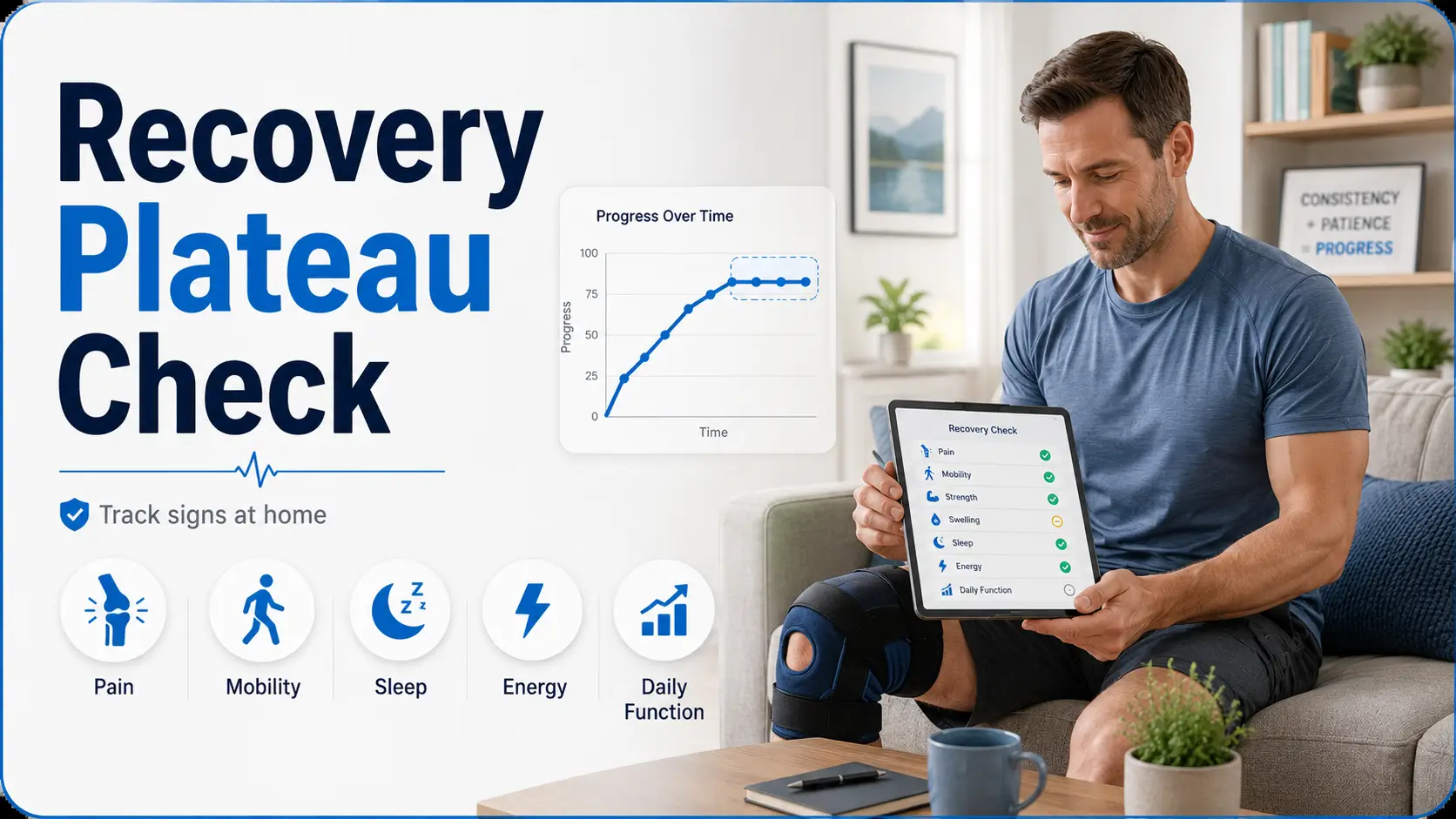
A recovery plateau is a stretch where pain, mobility, strength, energy, swelling, or daily function stops improving for roughly 1–2 weeks despite consistent, appropriate recovery habits. The goal is not to become your own doctor. The goal is to bring better evidence to the doctor, physical therapist, surgeon, or care team who already knows the map.
- • Separate normal healing pauses from warning signs.
- • Track pain, function, mobility, sleep, swelling, and fatigue without turning your life into a spreadsheet dungeon.
- • Know when to ask for a plan adjustment instead of simply pushing harder.
At-a-Glance: The Home Plateau Rule
A true plateau is not one bad day. It is a pattern: similar effort, similar symptoms, similar limits, and no meaningful gain across your chosen markers.
- Green: symptoms fluctuate, but weekly function is inching forward.
- Yellow: the same task stays stuck for 7–14 days despite consistency.
- Red: worsening pain, fever, spreading redness, new weakness, numbness, inability to bear weight, chest pain, stroke-like symptoms, or post-surgical concerns.
Use this guide as a practical tracking tool, not a diagnosis machine. Your clinician’s instructions outrank every online paragraph, including this well-behaved one.
Table of Contents
Safety First: What This Guide Can and Cannot Do
This guide is for general education. It is not medical diagnosis, physical therapy advice, post-surgical clearance, medication guidance, or a substitute for care from a licensed professional.
Recovery timelines vary by injury, procedure, age, baseline strength, nutrition, sleep, medical history, medication use, stress, and whether the cat has chosen your walker as its new throne. A plateau after a shoulder procedure is not the same as a plateau after pneumonia, hip surgery, concussion, sciatica, or a flare of a chronic condition.
Use the ideas below to observe patterns and prepare better questions. If your surgeon, physician, or physical therapist gave you limits, those instructions are the rulebook. This article is a flashlight, not the referee.
- Do not treat worsening symptoms as a motivational problem.
- Follow post-op restrictions and weight-bearing limits exactly.
- Contact your care team sooner for new or unusual symptoms.
Apply in 60 seconds: Write your clinician’s top three restrictions on one sticky note and place it where you do your exercises.
Plateau or Patience? The First Question Most People Skip
Define “stuck” before your brain turns it into a verdict
“I’m stuck” is a feeling. It may be true, but it is too foggy to guide a recovery plan. A better sentence is: “For 10 days, I have walked the same distance before knee swelling increases,” or “My shoulder pain is lower, but I still cannot reach the second kitchen shelf.”
That kind of sentence gives you traction. It turns worry into a usable signal. It also helps your physical therapist or clinician adjust the plan without playing detective through a keyhole.
If pain is the main issue, practice describing it clearly. A simple pain diary can capture location, timing, triggers, relief, and function. For a deeper approach, use a guide like how to describe pain to a doctor so your next appointment is less “it hurts somewhere” and more “this is the pattern.”
The 7-day pattern test: same effort, same result, same limitation
One bad day can be noise. Weather, sleep, errands, stress, missed meals, and overconfidence can all turn a normal day into a tiny circus. A pattern begins when similar effort leads to similar limits across several days.
Try this for one week:
- Choose one pain marker, such as pain after walking for 5 minutes.
- Choose one movement marker, such as knee bend, shoulder reach, grip, or balance time.
- Choose one daily task, such as showering, stairs, dressing, cooking, or getting into a car.
If all three markers stay flat despite consistency, you may not be failing. You may simply need a plan adjustment.
Slow healing is not failure, but drifting without data is a fog machine
Recovery often moves in ledges, not ladders. You improve, pause, improve again, pause again. The pause is not automatically a disaster. But drifting for weeks with no record can make every decision feel emotional, and emotion is a famously dramatic bookkeeper.
Data does not need to be cold. It can be kind. It says, “Let’s look at what actually happened.”
Money Block: Plateau Eligibility Checklist
Use this yes/no check before calling something a plateau.
- Yes / No: Have you followed your prescribed limits and exercises consistently?
- Yes / No: Have your chosen markers stayed mostly flat for 7–14 days?
- Yes / No: Are symptoms stable rather than worsening?
- Yes / No: Are you tracking function, not only pain?
- Yes / No: Have you avoided changing several routines at once?
Neutral action: If you answered “yes” to most items, prepare a short update for your clinician instead of guessing harder.
Your Home Recovery Dashboard: Five Numbers Worth Tracking
A good home recovery dashboard should be simple enough to survive real life. No one recovering from surgery wants a spreadsheet that behaves like a second job with fluorescent lighting.
Track five things. Same time of day. Same basic conditions. Same scale.
Pain score: not just “how bad,” but when and after what
A 0–10 pain score is useful only when paired with context. “Pain is 4” is a postcard. “Pain is 4 after 10 minutes of walking and settles to 2 after 20 minutes of rest” is a map.
Track:
- Morning pain before activity.
- Pain during the most important daily task.
- Pain 1–2 hours after exercises or walking.
- Night pain, especially pain that wakes you.
For many people, a functional pain assessment is more helpful than chasing a perfect zero. The question becomes: “What can I safely do today that I could not do last week?”
Function score: what daily task still feels expensive?
Function is the receipt. Pain may fluctuate, but function tells you whether recovery is buying back your life.
Choose one task that matters. Not twelve. One. Getting dressed. Walking to the mailbox. Standing long enough to cook eggs. Carrying a plate with a walker. Getting into an SUV. Sitting through a work call without shifting every three minutes like a nervous accordion.
If walker use is part of your recovery, practical skills can reduce frustration. For example, carrying a plate with a walker is not glamorous, but it is exactly the kind of daily task that reveals whether function is returning.
Mobility marker: stairs, walking distance, grip, bend, reach, or balance
Pick a marker that matches your recovery. A hip patient may track safe walking distance. A shoulder patient may track assisted range of motion or reaching a safe height. A wrist patient may track grip tolerance during typing.
Keep the test repeatable:
- Same surface.
- Same shoes or support.
- Same time of day.
- Same stopping rule.
If stairs are involved, be conservative. A hinged brace, cane, railing, or walker may change your mechanics. If stairs remain a major barrier, compare your pattern with practical resources such as hinged knee brace use for stairs or ask your therapist for a stair-specific check.
Sleep and fatigue: the quiet recovery accountants
Sleep tracks recovery like a stern librarian. If pain is lower but sleep is falling apart, your body may still be under-recovered. Poor sleep can raise pain sensitivity, reduce energy for exercise, and make every symptom feel larger.
Track sleep in plain terms:
- Hours slept.
- Number of wake-ups from pain.
- Morning energy: low, medium, high.
- Whether positioning helped or aggravated symptoms.
After hip, shoulder, spine, or knee procedures, positioning can become its own nighttime opera. A wedge pillow, recliner, or pillow between the knees may help some people, depending on procedure and instructions. If positioning is part of the problem, review practical setup ideas like using a wedge pillow after surgery and confirm what is safe for your case.
Swelling, heat, color, and tenderness: the body’s dashboard lights
Swelling is not automatically bad. After many injuries or procedures, some swelling is expected. But swelling that increases, becomes hot, comes with spreading redness, drainage, fever, color change, or severe tenderness needs attention.
Do not rely only on “looks swollen.” Use a consistent check:
- Compare both sides if appropriate.
- Measure at the same point with a soft tape if your clinician approves.
- Note whether swelling increases after specific activities.
- Record whether elevation, ice, compression, or rest changes it, if these were recommended for you.
Money Block: 3-Input Plateau Calculator
Use this tiny calculator to organize your weekly trend. It does not diagnose anything. It simply turns scattered notes into a clearer question.
Result: Enter your numbers, then check the trend.
Neutral action: Save the result with your actual notes and use it to start a clearer conversation with your care team.
The Sneaky Plateau: When Pain Improves but Function Does Not
Less pain can hide weaker movement habits
One of the trickiest plateaus is the polite one. Pain drops, everyone cheers, and yet your life remains strangely narrow. You still avoid stairs. You still cannot stand through a shower. You still brace before getting into the car. You still move like the floor has a lawyer.
Pain improvement is real progress. But pain is not the whole story. After injury or surgery, people often develop protective movement habits. Some are useful at first. Later, they may become outdated software running in the background.
This is where functional markers matter. Can you prepare a simple meal? If one hand or one arm is limited, one-handed meal prep strategies can reveal whether your recovery plan is supporting daily independence or only gym-style movements.
The “I feel better, so I stopped” trap
Feeling better often arrives before full capacity returns. This is unfair, but very common. The first taste of relief can make a person cancel the boring basics: gentle mobility, prescribed strengthening, safe walking, rest pacing, nutrition, and sleep.
The body then does what bodies do. It files a complaint.
A plateau may appear not because healing ended, but because the recovery routine quietly disappeared.
Let’s be honest: comfort can become a very polite cage
Comfort is not the enemy. Comfort is a mercy. But when comfort becomes avoidance, your world can shrink by inches. First you skip stairs. Then you stop cooking. Then you stop visiting. Then the couch gets promoted to regional manager.
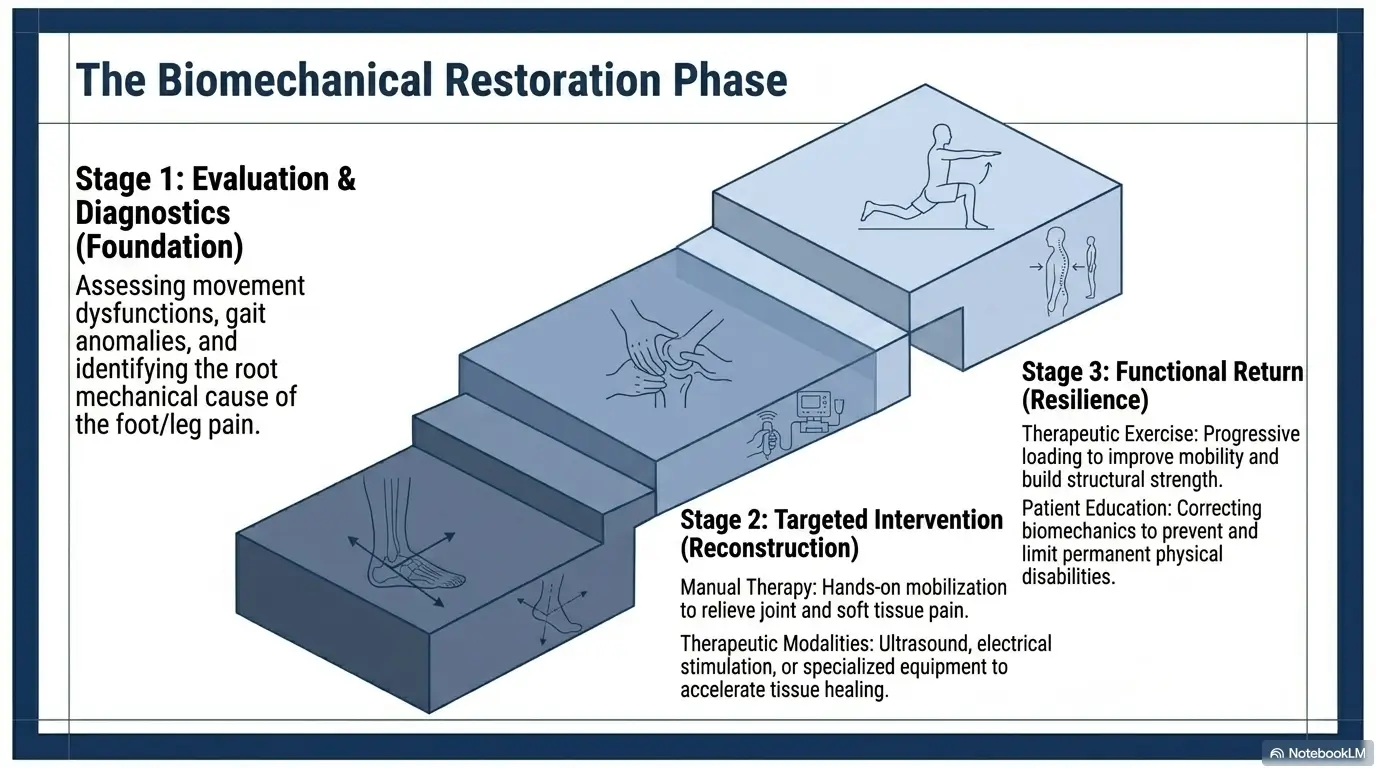
The solution is not reckless pushing. It is graduated exposure: small, repeatable, safe challenges approved by your clinician or therapist.
- Track one daily task that matters.
- Notice avoidance that continues after pain improves.
- Ask for task-specific therapy help when life skills lag behind exercise progress.
Apply in 60 seconds: Name the one normal task you most want back, then write today’s honest difficulty score from 0–10.
Don’t Do This: Comparing Your Timeline to Someone Else’s Miracle Reel
Why recovery stories online flatten the messy middle
Online recovery stories often jump from “I had surgery” to “I climbed a mountain and made soup for thirty people.” The messy middle gets edited out. No one wants to post, “Day 23: negotiated with a sock for six minutes.”
That missing middle matters. Recovery is full of tiny negotiations: bathroom setup, car entry, medication timing, ice versus heat questions, sleep positions, and the grand drama of reaching something from a low cabinet without turning into a cautionary diagram.
If you are preparing your home after a procedure, physical setup can change your day more than motivation does. Examples include bathroom setup after shoulder surgery, knee replacement apartment setup, and getting into an SUV after hip surgery.
Age, surgery type, injury severity, meds, sleep, and stress all bend the timeline
Two people can share a diagnosis and still have different recovery curves. One has better sleep. One has stairs at home. One has diabetes. One has caregiving duties. One has a job that demands standing. One has a dog who believes leash pulling is a constitutional right.
Comparison may offer questions, but it should not deliver verdicts.
Use comparison only for questions to ask, not conclusions to swallow
Helpful comparison sounds like this: “People with similar procedures often mention swelling after walking. Is my swelling pattern expected?” Unhelpful comparison sounds like this: “A stranger online was walking three miles by week two, therefore I am doomed.”
Bring your own markers to the appointment. Your body is the primary document.
Money Block: Recovery Comparison Decision Card
| When you compare | Use it for | Do not use it for |
|---|---|---|
| Same procedure, same age range | Questions for your clinician | Declaring your recovery “behind” |
| Different injury or surgery | General awareness | Timeline decisions |
| Social media success story | Motivation, maybe | Medical judgment, never |
Neutral action: Convert any comparison into one appointment question instead of one self-criticism.
Who This Is For / Not For
This is for at-home recovery that is stable but frustrating
This guide is for the person whose recovery feels stuck but not suddenly dangerous. Maybe you are walking the same distance every day. Maybe your shoulder range stopped improving. Maybe your low back pain is calmer, but sitting still feels impossible. Maybe knee swelling returns every time you try to increase activity.
Stable but frustrating is exactly where home tracking helps. It gives your care team cleaner information and gives your own mind fewer shadows to chase.
This is not for new severe symptoms, post-op complications, chest pain, stroke symptoms, or infection signs
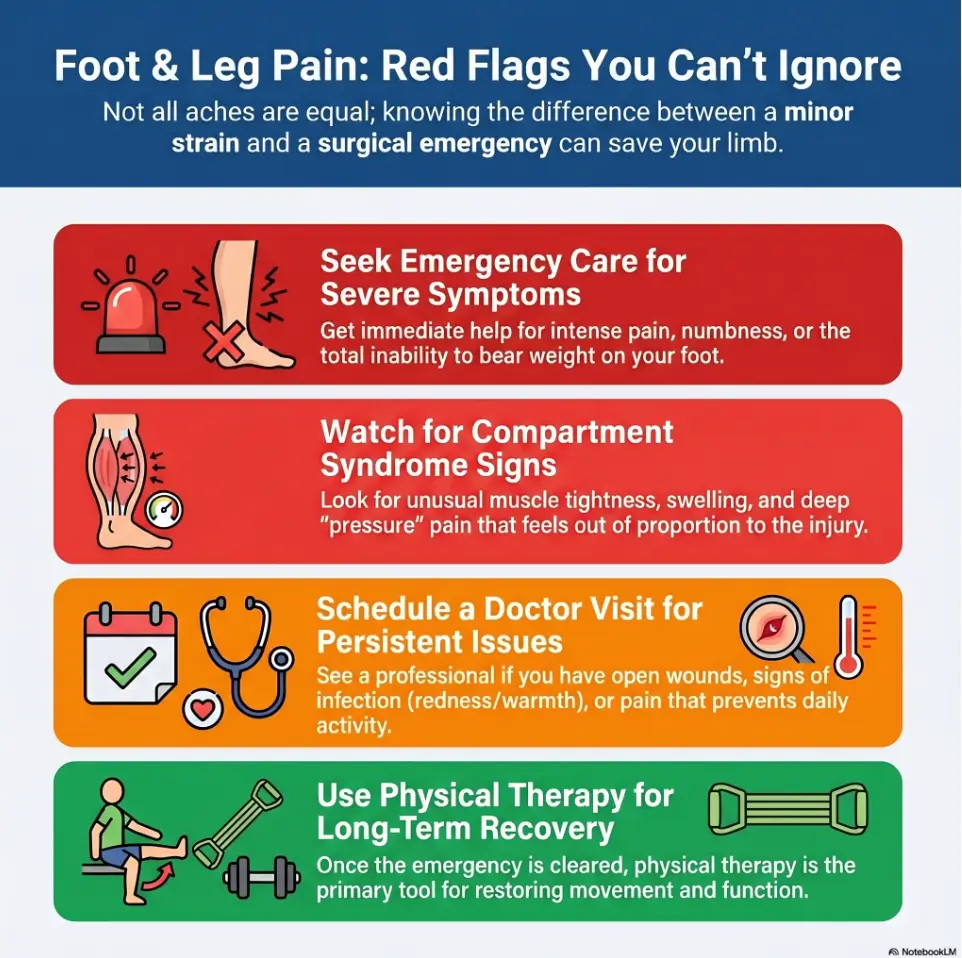
Some symptoms should not be sorted into “plateau” at all. New severe pain, sudden weakness, facial drooping, trouble speaking, chest pain, shortness of breath, fever after surgery, spreading redness, drainage, a hot swollen joint, calf swelling with shortness of breath, or inability to bear weight needs timely medical attention.
If you are post-op and something feels wrong, contact your surgeon or care team. Post-op instructions exist because the body, while miraculous, sometimes sends messages in smoke signals.
If your clinician gave specific limits, those instructions outrank internet wisdom
Weight-bearing restrictions, brace rules, sling use, bending limits, incision care, medication timing, and return-to-driving rules should be followed exactly as given. For example, a person recovering from shoulder surgery may need different sleep, bathing, and sling guidance than someone recovering from hip surgery.
If you are unsure whether a device or setup is safe, ask before improvising. A toilet seat riser, shower chair, wedge pillow, walker tray, brace, or ice wrap can be helpful in the right situation and unhelpful in the wrong one. Practical setup guides, such as choosing toilet seat riser height or heating pad versus ice wrap decisions, can help you form better questions.
The “Same Exercise, Same Result” Clue That Signals a Real Plateau
Your reps increased, but your life did not
More repetitions can be progress. But reps are not the crown. Function is.
If you can do more exercises but still cannot walk to the mailbox, climb one step safely, get dressed, shower, cook, type, or sleep, your plan may need more task-specific work. This does not mean the exercises are wrong. It may mean the bridge from exercise to life needs planks.
Your range improved, but your confidence stayed frozen
Confidence is not imaginary. Fear after pain, falls, surgery, or a scary flare can change how you move. Someone may have enough range to step into a shower but still feel unsafe doing it. Someone may have enough strength to get into a car but still brace because the memory of pain arrives before the movement does.
For hip or spine recovery, safe transfer practice can matter. If car entry remains difficult, resources such as lumbar fusion car ride pain strategies or hip surgery car-entry guidance can help you identify what to ask your clinician.
Your pain calmed down, but swelling keeps returning
A swelling pattern can reveal load tolerance. If swelling reliably returns after a specific distance, step count, stair session, or exercise, your body may be saying, “That dose is still too much.” Not forever. Just right now.
Record what happened before swelling, how long it lasted, and what helped. That gives your physical therapist something usable: a dose-response pattern.
Show me the nerdy details
Recovery plateaus are easiest to evaluate when you track both symptoms and load. Symptoms include pain, swelling, stiffness, heat, fatigue, sleep disruption, numbness, and function. Load includes walking distance, standing time, stairs, repetitions, resistance, speed, work hours, household chores, and total daily activity. A useful plateau note pairs the two: “After 12 minutes of walking, swelling increases by evening and returns to baseline by morning,” or “Shoulder reach has stayed at the same shelf height for 10 days despite prescribed exercises.” This helps your clinician adjust intensity, frequency, rest, or technique instead of guessing from a vague summary.
Infographic: The Three-Zone Plateau Check
Symptoms fluctuate, but weekly function improves.
Action: Keep following the plan.
Same effort, same limits, 7–14 days flat.
Action: Ask about adjustment.
Worsening pain, fever, weakness, numbness, infection signs, or inability to bear weight.
Action: Seek timely medical care.
Common Mistakes That Turn a Normal Pause Into a Longer Setback
Mistake 1: doing more because progress feels too quiet
When progress is subtle, the temptation is to add more. More steps, more reps, more stretching, more errands, more “I’m probably fine.” This can backfire. Recovery tissue, joints, nerves, and stamina do not always appreciate surprise parties.
Increase only one variable at a time when possible: distance, duration, resistance, speed, or frequency. If symptoms spike, you will know which knob you turned.
Mistake 2: resting completely when gentle movement was prescribed
The opposite mistake is total retreat. Pain or fear appears, so the person stops all movement. Sometimes rest is medically required. But if your clinician prescribed gentle movement, stopping completely can increase stiffness, weakness, fear, and dependence.
If you are unsure whether to continue, ask. Do not rewrite your plan in panic ink.
Mistake 3: changing three things at once and losing the evidence trail
Suppose you change your exercises, add a brace, sleep in a recliner, start walking farther, switch shoes, and begin icing more often. Then symptoms change. What caused it? Nobody knows. The evidence trail has been trampled by a parade.
Change one major thing at a time when safety allows. Give it a few days. Record what happens.
Mistake 4: ignoring sleep, protein, hydration, and medication timing
Recovery is not only exercise. It is also food, fluids, sleep, medication timing, and pacing. A person may blame a plateau on their knee when the real problem is a week of poor sleep, skipped meals, and trying to do laundry like a competitive sport.
For older adults and people managing joint pain, practical pain-management planning can matter. Guides such as orthopedic pain management for older adults and joint replacement pain management can help organize safer conversations with a clinician.
- Increase one recovery variable at a time.
- Do not stop prescribed movement without asking.
- Track sleep and daily load, not just formal exercises.
Apply in 60 seconds: Circle the one variable you changed most recently: distance, reps, chores, sleep, medication timing, or support device.
Don’t Push Through This: Red Flags That Are Not Plateaus
This section matters most. Some symptoms are not “slow progress.” They are warning lights. If they appear, do not turn recovery into a toughness contest. Toughness is useful for folding fitted sheets. It is not a treatment plan.
Pain that worsens, spreads, or wakes you at night
Pain that becomes more intense, spreads down a limb, feels constant at rest, or wakes you repeatedly deserves attention. Back pain paired with leg weakness, numbness, tingling, fever, trauma, or bowel or bladder changes should be taken seriously.
If back or sciatic symptoms are part of your recovery picture, compare your symptoms with practical red-flag guidance such as when low back pain may be an emergency and cauda equina syndrome red flags.
New numbness, tingling, weakness, loss of balance, or foot drop
New neurological symptoms are not a plateau. Numbness, tingling, weakness, loss of balance, foot drop, or changes in coordination need medical guidance, especially after spine problems, injury, surgery, or a fall.
Nerve symptoms can be confusing. Muscle soreness and nerve pain can feel very different, but people often blend them into one word: pain. If therapy seems to trigger burning, electric, or radiating symptoms, a resource like nerve pain versus muscle soreness after physical therapy may help you describe the issue more accurately.
Fever, spreading redness, drainage, unusual warmth, or worsening swelling
Infection signs need attention. Fever, spreading redness, warmth, tenderness, drainage, pus, odor, increasing swelling, or a wound that looks worse should not be tucked under “normal recovery.” If you are post-op, call your surgical team according to your discharge instructions.
Severe pain that feels out of proportion
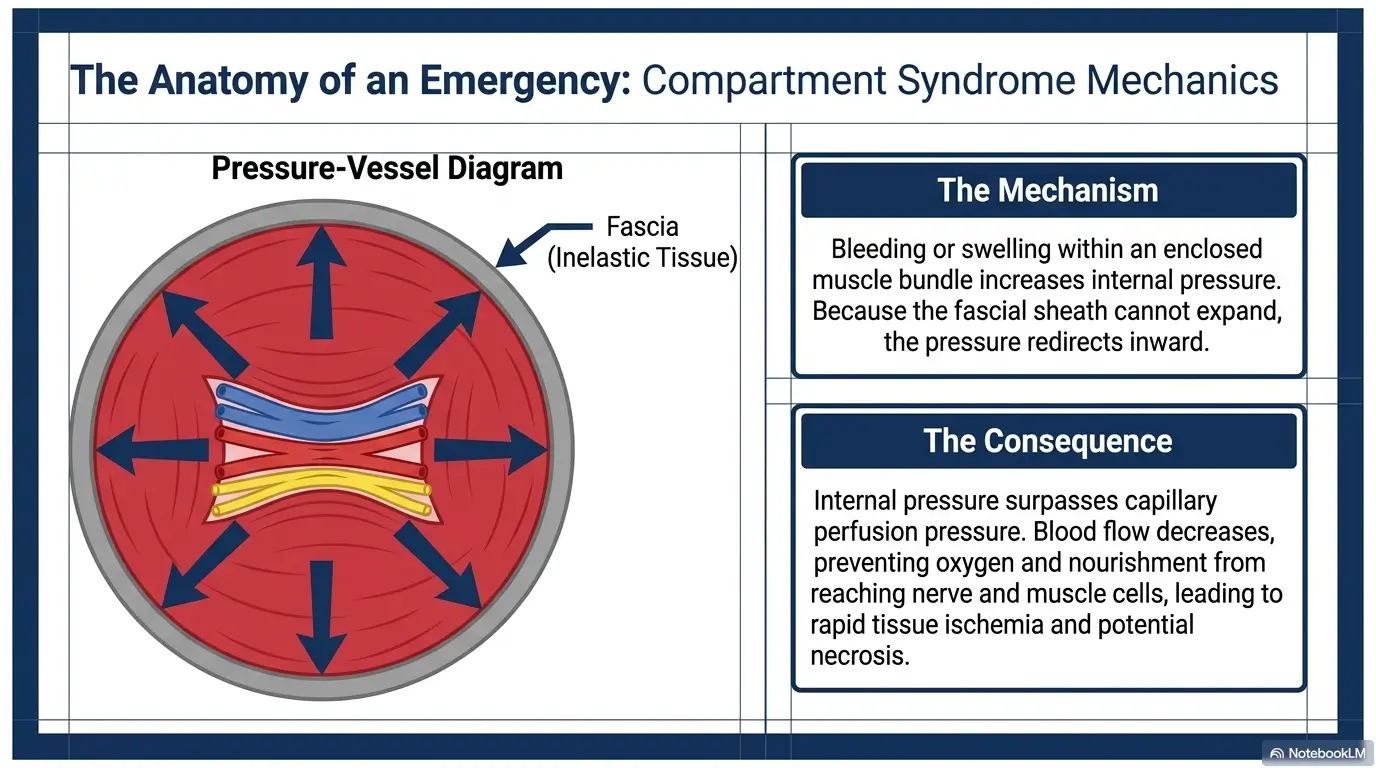
Severe pain that feels far beyond what you expected, especially with tight swelling, numbness, tingling, weakness, pale or cool skin, or inability to move the affected area, can signal a serious problem. MedlinePlus describes compartment syndrome as a serious condition where pressure builds in a muscle compartment and can threaten tissue health.
The Two-Week Rule: When “Wait and See” Becomes “Ask and Adjust”
Why one bad day is noise, but two flat weeks are information
Most recoveries have uneven days. A flat Monday is not a prophecy. But if two weeks pass with consistent effort and no meaningful improvement in pain, mobility, strength, energy, swelling, or daily function, you have enough information to ask for help.
The two-week rule is not a medical law. It is a practical threshold. It prevents endless waiting without turning one cranky afternoon into a medical emergency.
What to bring to your doctor or physical therapist
Bring a short, specific log. Not a novel. Not a courtroom transcript. A clean half page can be more useful than a foggy ten-minute speech.
- Your top concern in one sentence.
- Your three tracked markers.
- What makes symptoms better or worse.
- Any red-flag symptoms, even if they came and went.
- Medication, brace, assistive device, or exercise changes.
- Your most important daily task that is still limited.
If you are heading into orthopedic care, an orthopedic appointment checklist can help you avoid the classic parking-lot memory revival, when every important question returns after the visit ends.
Here’s what no one tells you: vague updates get vague help
“Still not better” may be emotionally accurate, but it is clinically thin. “I can walk 8 minutes before swelling increases, and that has not changed for 12 days” gives your clinician something to act on.
Money Block: Appointment Quote-Prep List
Bring these before comparing options, visits, tools, or next steps.
- Current diagnosis or procedure name, if known.
- Date of injury, surgery, flare, or therapy start.
- Three tracked markers from the past 7–14 days.
- Medication list and timing, including over-the-counter pain relievers.
- Photos of swelling, redness, wounds, or bruising if relevant.
- Insurance questions if cost may affect therapy frequency.
Neutral action: Put these notes in your phone before the appointment so they travel with you.
Build a Tiny Recovery Audit You Can Do in 10 Minutes
Pick three repeatable tests: one pain, one movement, one daily task
A tiny recovery audit should feel almost too easy. That is the point. If the audit is too elaborate, it will fail the first time your day gets crowded.
Pick:
- One pain test: pain after a safe, familiar activity.
- One movement test: reach, bend, grip, walk, balance, or stairs.
- One daily task: dressing, showering, cooking, car entry, typing, or standing.
If home equipment is part of the plan, track whether it actually improves function. A walker, raised toilet seat, brace, cushion, sling, or recliner should make a specific task safer or easier. For broader setup thinking, orthopedic home care equipment can help you sort practical tools from clutter with handles.
Record before-and-after notes, not heroic essays
Your note can be tiny:
- “Walked 6 minutes. Pain 3 during, 5 two hours later. Swelling mild by evening.”
- “Shoulder reach to counter height. No sharp pain. Still cannot reach shelf.”
- “Stairs: up with rail okay. Down still scary. Needed pause.”
That is enough. You are not writing a memoir of the ankle, though frankly some ankles have dramatic range.
Use a simple traffic-light system: green, yellow, red
Traffic-light tracking makes decisions simpler:
- Green: continue the current plan if your clinician has cleared it.
- Yellow: keep tracking and ask for adjustment if flat for 7–14 days.
- Red: contact medical care promptly based on symptom severity and instructions.
Short Story: The Mailbox Walk
Martin was six weeks into recovery after a knee procedure and convinced he had failed. Every morning he walked to the mailbox, came back irritated, and announced to the kitchen, “Still not there.” His daughter finally asked what “there” meant. He did not know. So they made a tiny log: distance, pain during the walk, swelling at dinner, and whether he needed the railing on the porch step.
The first three days looked flat. By day seven, a small pattern appeared. Pain was not lower, but swelling settled faster. By day ten, he could step onto the porch without pausing. His therapist used the notes to adjust strengthening and pacing. Martin had not been stuck. He had been measuring the wrong victory. The lesson was quiet but durable: recovery sometimes whispers before it sings.
When to Seek Help
Call your healthcare provider if progress stalls despite consistency
If you have followed your plan and your markers remain flat for about 1–2 weeks, contact your provider, physical therapist, or surgeon. Ask whether your plan needs a change in intensity, form, frequency, load, assistive device use, medication timing, or follow-up evaluation.
If insurance or visit limits make therapy decisions stressful, you are not alone. Cost can shape care in very real ways. Articles such as Medicare Part B physical therapy and physical therapy copay versus coinsurance can help you prepare practical questions before reducing visits on your own.
Seek urgent care for severe swelling, infection signs, inability to bear weight, or new neurological symptoms
Seek urgent medical advice for severe or worsening swelling, fever, spreading redness, drainage, unusual warmth, severe pain, inability to bear weight, new numbness, new weakness, loss of balance, or symptoms that feel dramatically different from your usual recovery pattern.
For possible compartment syndrome, severe swelling or pain that does not improve with usual measures is especially concerning. This is not the time to bargain with the calendar.
Contact your surgeon or care team for any post-op change that feels unusual
Post-op changes deserve a lower threshold. New drainage, wound changes, fever, worsening swelling, calf pain, shortness of breath, new severe pain, or a sudden drop in function should be discussed with your care team according to your discharge instructions.
If you are choosing next-step care after a procedure, choosing rehab after surgery may help you think through home health, outpatient therapy, equipment, transportation, and support needs.
Ask for a plan adjustment, not just reassurance
“Is this normal?” is a fair question. But the stronger question is: “Given my log, what should change?” That invites a plan.
Ask:
- Should I change exercise dose, frequency, or technique?
- Is my swelling response expected?
- Do my symptoms suggest a different evaluation?
- Should I keep using this brace, walker, sling, cushion, or ice routine?
- What specific marker should improve next?
- Bring dates, triggers, limits, and recovery responses.
- Report red flags clearly and early.
- Ask what should change next, not only whether to worry.
Apply in 60 seconds: Write one sentence that begins, “For the past ___ days, I have noticed ___ after ___.”
FAQ
How long should a recovery plateau last before I worry?
One flat day is usually not enough to call a plateau. A practical threshold is 7–14 days of no meaningful improvement in your chosen markers despite consistent, appropriate recovery habits. Contact your clinician sooner if symptoms worsen or red flags appear.
Is it normal for recovery to improve one week and stall the next?
Yes, many recoveries move in uneven steps. Healing can pause while tissues adapt, stamina rebuilds, or daily activity increases. The key is whether your overall weekly trend is stable, improving, or worsening.
Can doing too much exercise cause a recovery plateau?
Yes. Too much load can keep swelling, pain, fatigue, or irritation cycling. If you increased distance, reps, resistance, chores, or standing time and then stalled, record the timing and ask your therapist whether the dose needs adjustment.
What should I track during at-home rehab?
Track one pain marker, one movement marker, and one daily function marker. Add sleep, fatigue, swelling, heat, color change, and symptom timing if relevant. Keep it simple enough to repeat every day.
Should pain go away completely before I increase activity?
Not always. Some recovery plans allow mild, expected discomfort while activity gradually increases. But sharp, worsening, radiating, neurological, or night-waking pain should be discussed with a clinician. Follow your specific instructions.
How do I know if swelling is normal or a warning sign?
Some swelling can be expected after injury or surgery. Worsening swelling, severe swelling, spreading redness, warmth, tenderness, drainage, fever, color changes, or swelling with new pain or weakness needs medical guidance.
When should I call my physical therapist instead of waiting?
Call when your tracked markers stay flat for 1–2 weeks, when an exercise consistently triggers symptoms, when function is not improving, or when you are unsure how to progress safely. Call sooner for concerning changes.
Can stress or poor sleep make recovery look stalled?
Yes. Poor sleep and stress can increase pain sensitivity, reduce energy, and make exercises feel harder. Track sleep and fatigue beside pain and function so you do not blame one joint for a whole-life recovery load.
What if physical therapy does not seem to be helping?
Bring specific examples: which exercise, what symptom, how long symptoms last, and which daily task is still limited. If progress remains flat, ask whether the plan, diagnosis, home routine, or referral pathway needs review. You may also find it useful to organize questions with what to do when physical therapy is not helping orthopedic pain.
Next Step: Run the 3-Point Plateau Check Today
Choose one pain score, one movement test, and one daily task
Today, choose three markers. Do not choose ten. Ten markers become a hobby, and you already have one: getting your life back.
- Pain: pain after one safe, familiar activity.
- Movement: distance, reach, bend, grip, balance, or stairs.
- Daily task: showering, dressing, cooking, car entry, typing, or walking outdoors.
Repeat them at the same time for seven days
Consistency beats complexity. Test at the same time of day when possible. Use the same shoes, support, and environment. Record what happened before and after.
If your recovery involves sciatica, back pain, hip pain, knee pain, or post-op limitations, choose markers that reflect life. Walking pain, sitting tolerance, stair confidence, sleep quality, and car transfers often say more than a single isolated exercise.
If the numbers are flat or worse, share the log with your clinician
If your markers are flat for a week or two, or worse at any point, do not simply grit your teeth and hope for a cinematic comeback. Share the log. Ask what should change.
Money Block: 10-Minute Recovery Audit Template
| Marker | Today’s note | Next step |
|---|---|---|
| Pain | Score before, during, and after one task | Watch timing and triggers |
| Movement | Distance, reach, bend, grip, or balance | Repeat under same conditions |
| Function | One daily task that matters | Share flat trend with clinician |
Neutral action: Copy this into a notes app and complete the first row before your next meal.
Conclusion: Trade the Fog for a Small Lantern
The hardest part of a recovery plateau is not always the pain. Sometimes it is the uncertainty. The calendar keeps moving, your body seems undecided, and every online recovery story appears to have been edited by a very optimistic trumpet section.
You do not need to solve the whole recovery today. You need to stop guessing in the dark.
Start with three markers: one pain score, one movement test, and one daily task. Track them for seven days under similar conditions. If they improve, you have evidence of momentum. If they stay flat for 1–2 weeks, you have a clear reason to ask for a plan adjustment. If symptoms worsen or red flags appear, seek medical guidance promptly.
Your 15-minute next step: open your phone, create a note titled “Recovery Plateau Check,” and record today’s pain, movement, and daily-task scores. Tiny evidence is still evidence. Sometimes that little lantern is enough to find the next step.
Last reviewed: 2026-05.